Pushing software updates
on Wednesday, March 20th, 2019 9:21 | by Anders Eriksson
Johann Schmid and I have been working on getting updates to the torque meter software. Small changes but with significant increase in user friendliness.
● Inability to overwrite the data
● Progress bar and a time bar implemented
● It resets the pattern from one period to another. This is of critical importance as this enables one to do basically any kind of experiment on the machine
I have also gotten hold of a free version of LabView. I thought it could be a good idea that we could to small changes ourself to the software. However, my version is 2017 and Mr Schmid mentioned that he will be transferring to LabView 2019, and thereby retiring the 2017 version. A student version of labview is affordable, less than 50 Euros. It could be worth getting a legal licence of this software.
● The A/D converter now connects directly to the PCB. Only problem is that it is inverted, meaning that the signal from the torque machine gives a positive signal it is registered as a negative signal in the software. Mr Schmid is aware of this and will invert the signal in the software, rather than resoldering the PCB connection.
Updates to the DTS
● DTS is now also better compatible wit the new kind of data we are getting. A conflict occurred because of differences in pattern. An easy fix by just ignoring this parameter.

Category: flight, Lab, Operant learning, operant self-learning, R code | No Comments
Isolated operant component in the flight simulator
on Monday, January 21st, 2019 2:43 | by Anders Eriksson
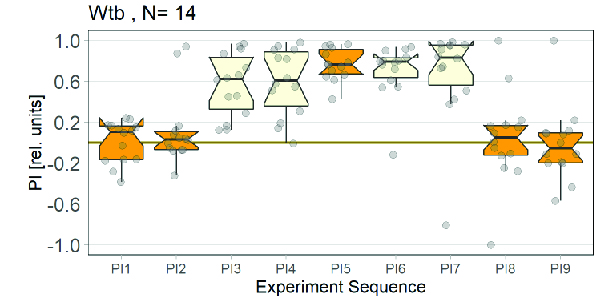
Each period is set to 120 seconds, meaning that the flies are getting a total of 8 minutes of training. The flies are performing two initial pre-tests, one test after 4 minutes of training and two final test periods. For the entire duration of the experiments flies are given a color indication if they are being punished or not as a result of left or right turning, this is a composite learning control. For the final test periods the colors have been removed, meaning that we are isolating the operant component. This is different from the previous tests that has been done where flies were not challenged with colors but just relied on their own behavior to determine which side is being punished. A removal of the helping colors resulted in a lack of preference for left- or right-turning maneuvers.
Category: flight, Memory, Operant learning, operant self-learning, Uncategorized | No Comments
Come work with us on FoxP!
on Wednesday, December 19th, 2018 2:52 | by Björn Brembs
We are looking for a PhD student for behavioral experiments with Drosophila fruit flies with manipulated FoxP function.
The human orthologues of the fly FoxP gene are the FOXP1-4 genes. Mutations in the FOXP2 gene cause verbal dyspraxia, a form of articulation impairment. Humans learn to articulate phonemes and words by a form of motor learning we can model in flies. Supporting the conceptual analogy of motor learning in humans and flies, manipulations of the fly FoxP gene also lead to impairments in motor learning.
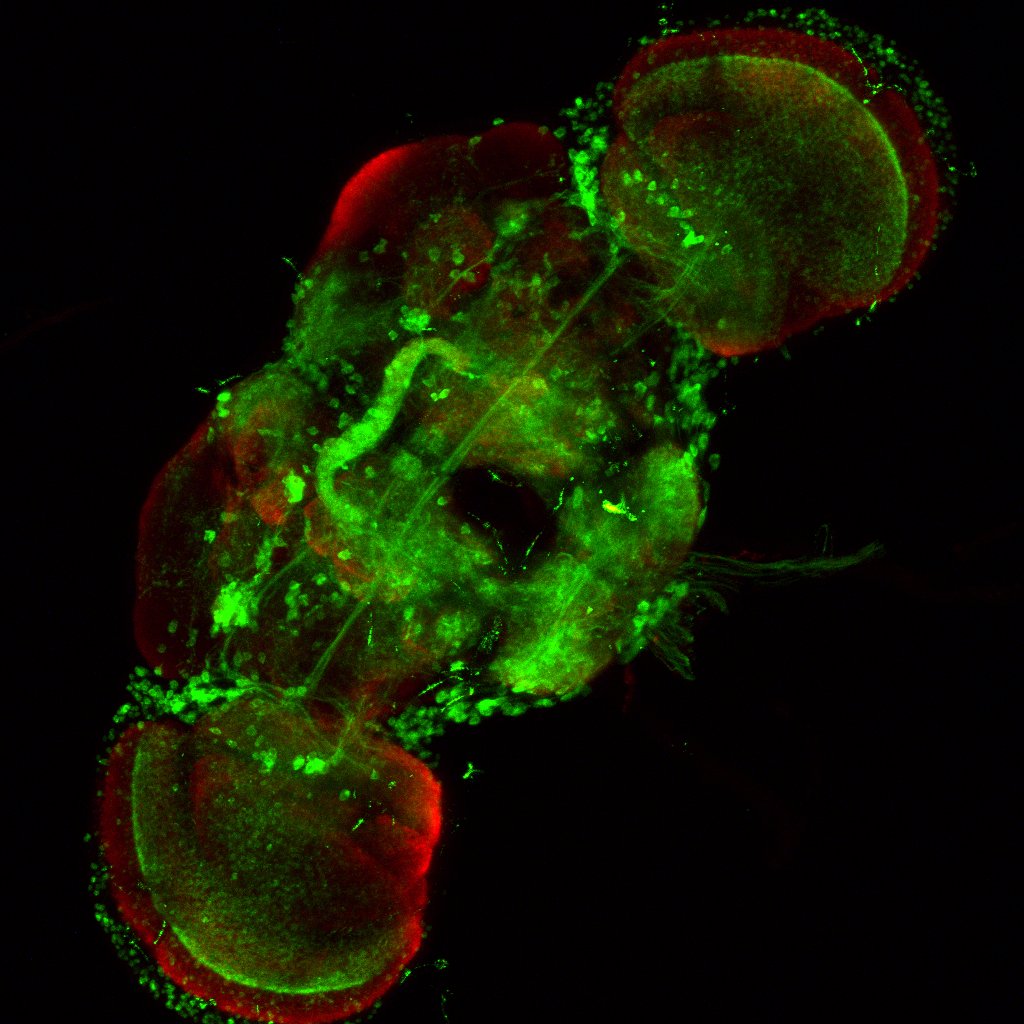
In the past year, graduate student Ottavia Palazzo used CRISPR/Cas9 to edit the FoxP gene locus, tagging the gene with reporters. These reporters allow us to manipulate not only the gene, but also the neurons which express FoxP. The candidate will work closely with Ottavia to design behavioral experiments characterizing the various manipulations of the different neuronal populations for their involvement in the form of motor learning we use, operant self-learning at the torque meter:
The position is fully funded by a grant from the German funding agency DFG, with full healthcare, unemployment, etc. benefits. It includes admission and tuition to the “Regensburg International Graduate School of Life Sciences“. Starting date is as soon as convenient.
The successful candidate will have a Master’s degree or equivalent. They will be proficient in English as our group is composed of international members. The ideal candidate will have some training in behavioral experiments in Drosophila or other animals, some coding experience and an inclination towards electronics. However, all of these skills can also be learned during the project.
We are a small, international group consisting of a PI (Björn Brembs), a postdoc (Anders Eriksson), one more graduate student besides Ottavia (Christian Rohrsen) and a technician. We are an open science laboratory and so one aspect of the project will involve a new open science initiative in our laboratory, where we have developed a simple method to make our behavioral data openly accessible automatically, i.e., without any additional efforts by the experimenter. This entails at least two advantages for the candidate in addition to doing science right: the data are automatically backed up and there is no need for a data management plan.
Regensburg is a university town in Bavaria, Germany with about 120k inhabitants and a vibrant student life, due to the 20k students enrolled here. The University of Regensburg is an equal opportunity employer.
Interested candidates should contact Björn Brembs with a CV and a brief letter of motivation.
Category: Foxp, Lab, open science, Operant learning, operant self-learning | 2 Comments
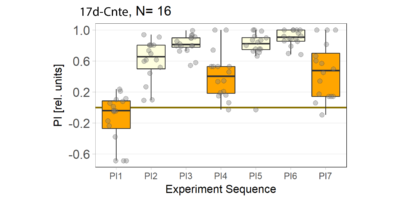
17d flight simulator
on Monday, October 1st, 2018 2:58 | by Anders Eriksson
Category: crosses, flight, genetics, Memory, Operant learning, operant self-learning | No Comments
Joystick Update
on Monday, July 30th, 2018 2:08 | by Amanda Torres
Category: Lab, Operant learning, Operant reinforcment, operant self-learning, Optogenetics | No Comments
Role of dopaminergic neurons in operant behaviour
on Friday, July 27th, 2018 3:54 | by Gaia Bianchini
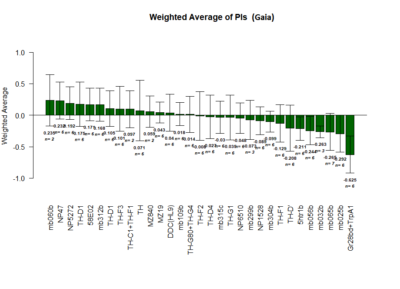
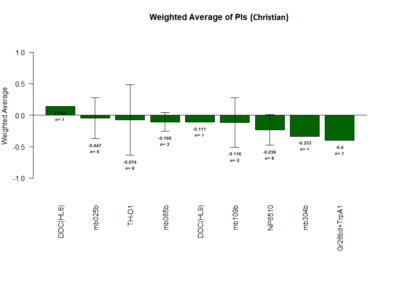
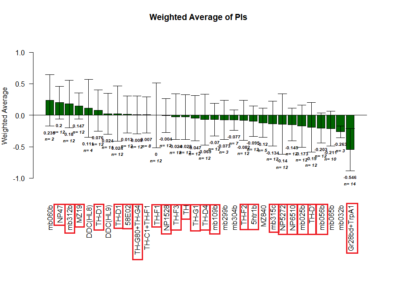
Positive Control: Gr28bd-G4, TrpA1-G4
Parameters: Light: intensity (500 Lux side, 1000 Lux bottom); frequency = 20Hz; Delay = 1 ms; Duration = 9.9 ms; volts = 6.4
Red lines: completed
mb025b: not selected against tubby
reinforcement scores
on Monday, July 23rd, 2018 2:21 | by Saurabh Bedi
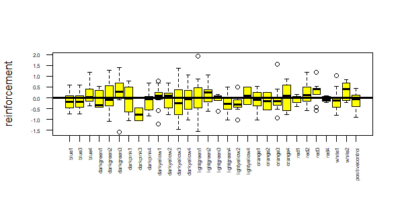 genotypes. On the y-axis are the PI values for learning effect sizes. These scores are calculated by taking the average of PI values of training periods and then subtracting pretest PI values from it.
Reinforcement scores = mean of training score – pretest PI score
Category: Operant learning, Optogenetics, Uncategorized | No Comments
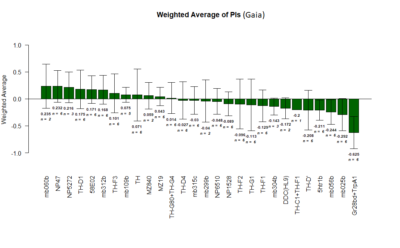
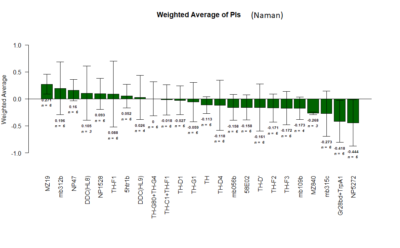
The Tmaze Experiments : Screen results as on 22-7-18
on Sunday, July 22nd, 2018 6:41 | by Naman Agrawal
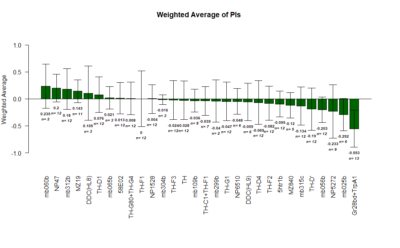
Yellow 1 (Positive Control): Gr28bd-G4, TrpA1-G4
Parameters: Light: intensity (500 Lux side, 1000 Lux bottom); frequency = 20Hz; Delay = 1 ms; Duration = 9.9 ms; volts = 6.4
Category: neuronal activation, open science, Operant learning, Optogenetics | No Comments
Finding the interesting lines
on Friday, July 20th, 2018 3:46 | by Christian Rohrsen
I would say blue 1 is a line that was negative for all the tests I have so far seen. So this might be an interesting line. What to do next?
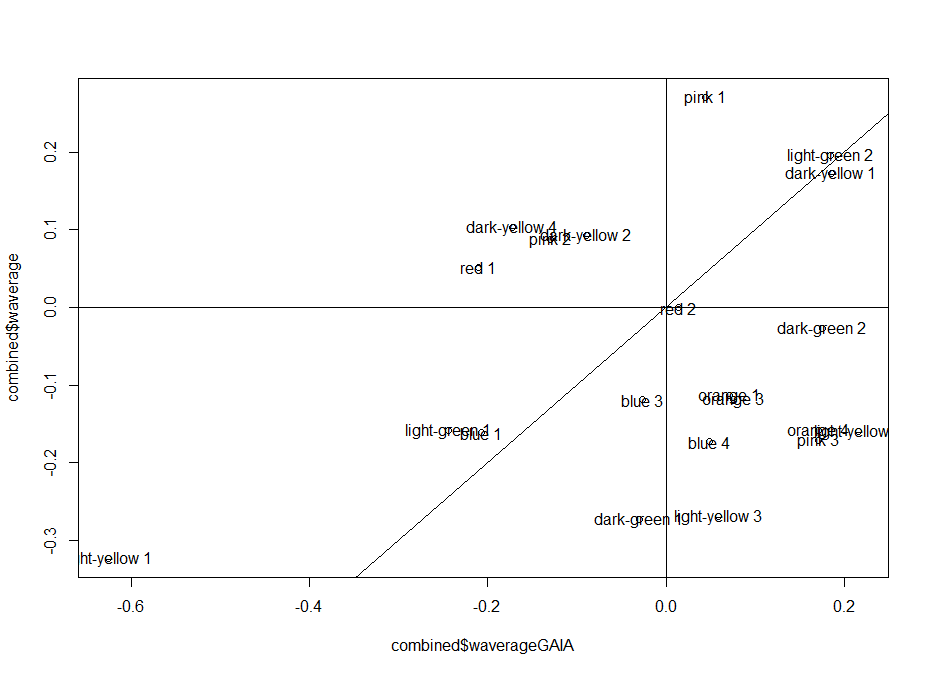
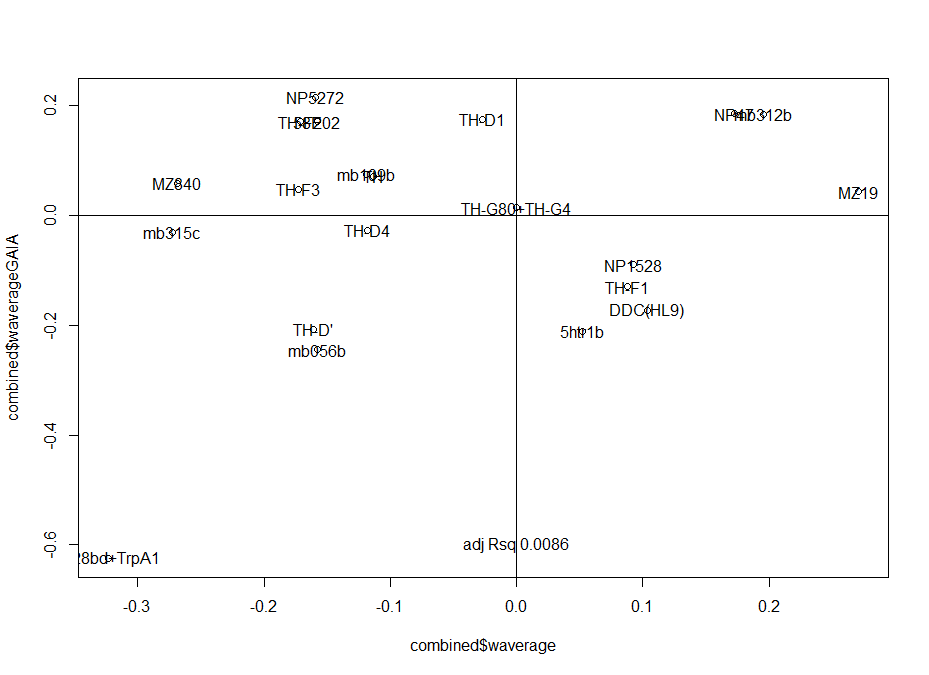
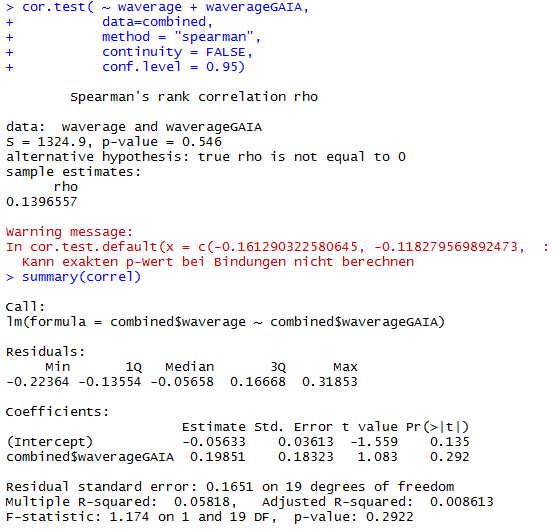
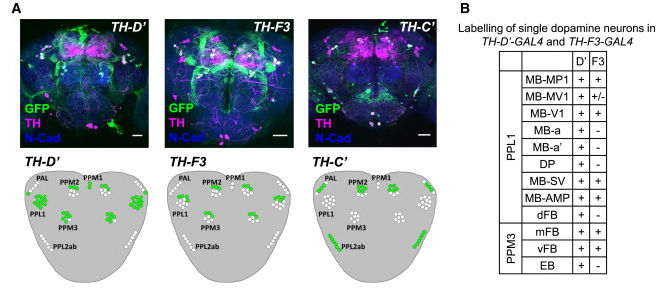
I would unblind the blue1, which is TH-D’. It was shown to be required for classical conditionning in shock and temperature learning (Galili et al. 2014). Another interesting observation is that th-g4+th-g80 seems to have like zero PI scores in all of the experiments (Naman and Gaia in the Tmaze, Joystick and Y-mazes). So could it be that all of these neurons have indeed a meaning, but is depending every time in the context?? Maybe Vanessa Ruta´s work might be interesting for that.
wiggle difference
on Monday, July 16th, 2018 3:26 | by Saurabh Bedi
NOTE: The flies have not yet been separated into 2 categories based on pretest values.
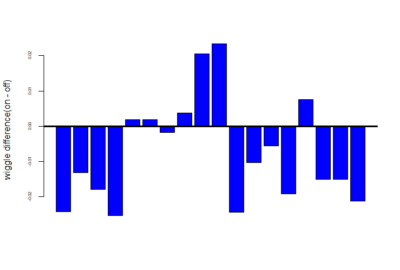
Now we wanted to measure the difference in on wiggle and off wiggle. On wiggle is the wiggle for when the fly was in the part which is supposed to have light on and similarly off wiggle is the wiggle when light is supposed to be off(that is in the portion in which we want to train it to be in). So below is the difference of on wiggle and off wiggle i.e – on wiggle – off wiggle:-
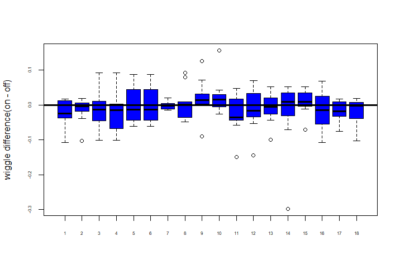
mean of this wiggle difference :-
Category: Operant learning, Optogenetics, Uncategorized | No Comments