Western blot analysis and quantification of HSP70 expression in response to heat shock
on Monday, September 21st, 2026 12:53 | by Jana Handfest
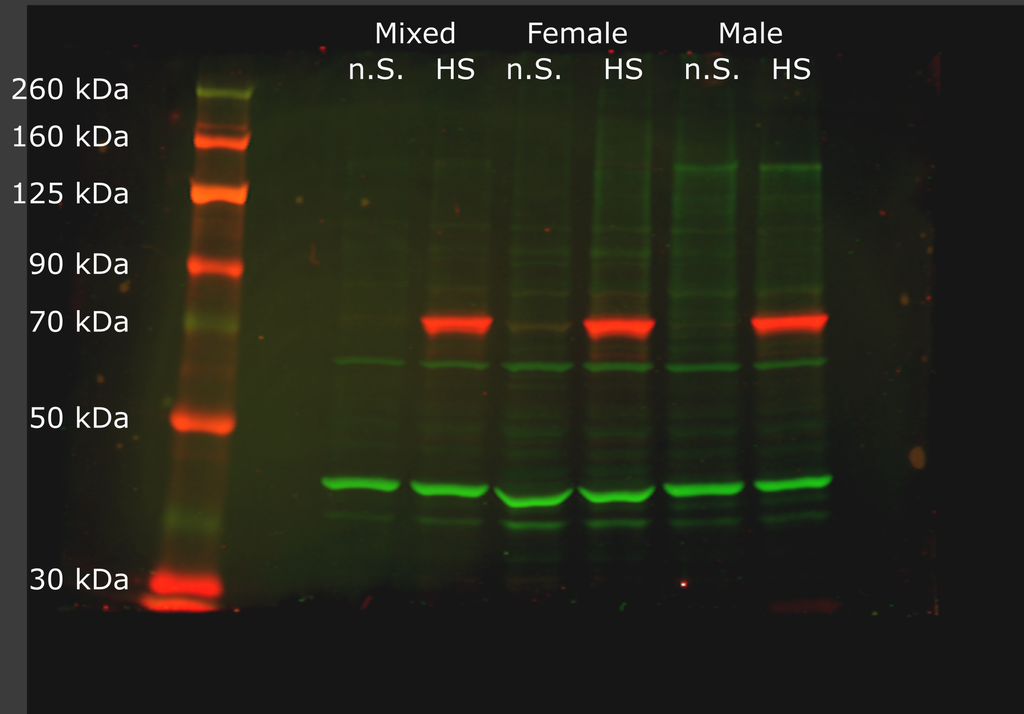
Six experimental groups were analyzed, consisting of male, female, and mixed samples under heat-shock (HS) and no-stress (n.S.) conditions. For heat-shock-treatment, samples were exposed to 37 °C for 1 h, followed by a 1 h recovery period at 25 °C. Control samples were treated exactly the same but not exposed to heat stress.
Western blot analysis was performed to determine HSP70 protein levels. HSP70 was detected using a rat anti-HSP70 primary antibody and a donkey anti-rat secondary antibody with fluorescence detection at 700 nm (red). Actin was used as loading control and detected using a rabbit anti-actin primary antibody and a goat anti-rabbit secondary antibody at 800 nm (green). HSP70 signal intensity was quantified and normalized to the corresponding actin signal.
A strong HSP70 signal was observed in all heat-shock groups, indicating a clear induction of HSP70 in all heat shocked groups and only very low levels of HSP70 in the no stress groups.
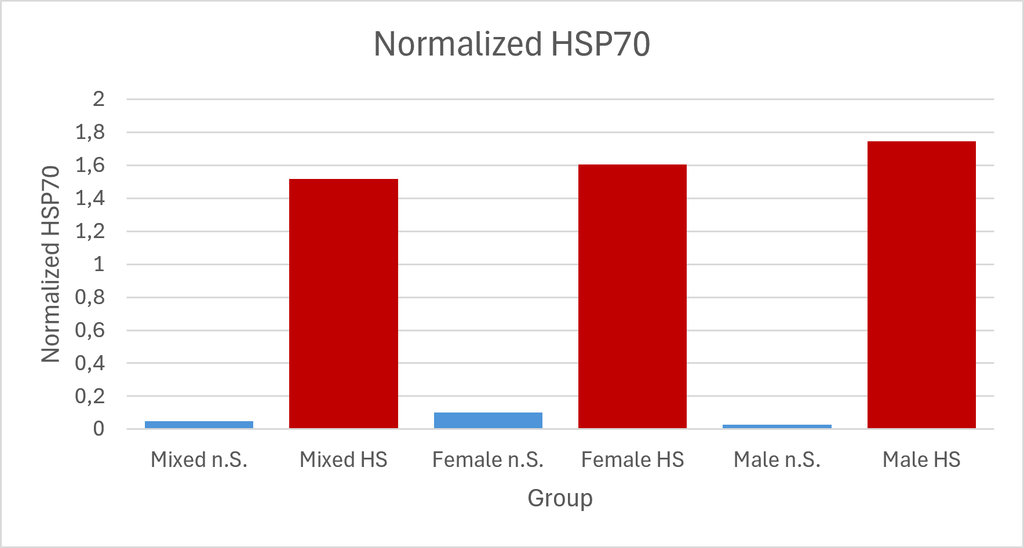
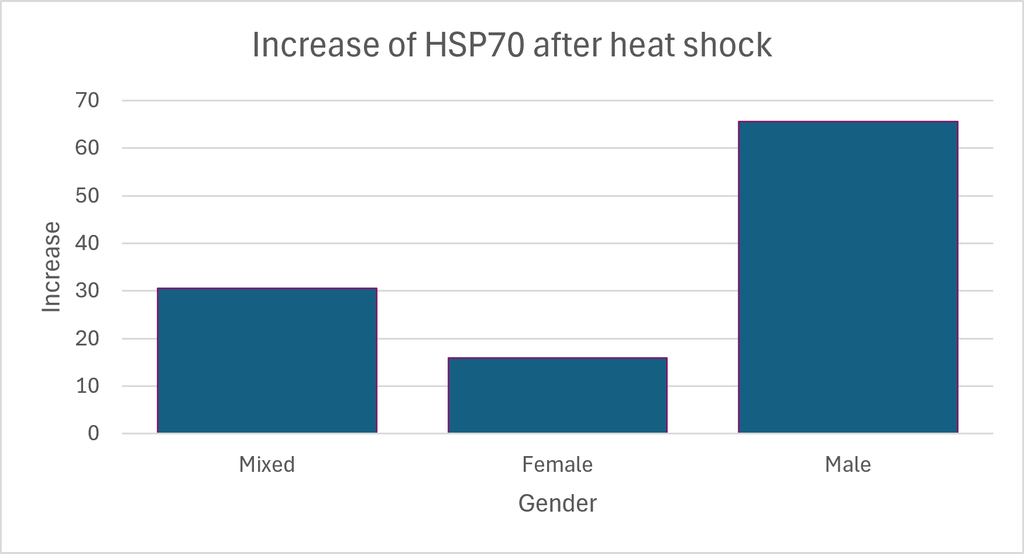
The male and female groups showed different increases of HSP70 expression following heat shock, with higher levels observed in males. This result was unexpected, as previous literature suggests that males may constituively express HSP70 in spermatogonia during certain development stages, which could have resulted in higher basal HSP70 signal in the male samples. In contrast, females are generally considered to have an higher heat tolerance, which may contribute to the comparatively smaller increase in HSP70 expression between the no stress and heat shock conditions detected in females. Interestingly, however, basal HSP70 levels in female no stress group were higher than those observed in males.
After the experiment, we noticed, that there were differences in the number of flies per tube used during the heat shock and recovery periods. Therefore, some groups may have experienced additional stress due to overcrowding, which could have incluenced HSP70 expression. Consequently, the observed differences cannot yet be attributed exclusively to the gender. To determine whether the differences are genuinely gender-dependent, the experiment will be repeated under standardized conditions.

Category: HSP70
Leave a Reply