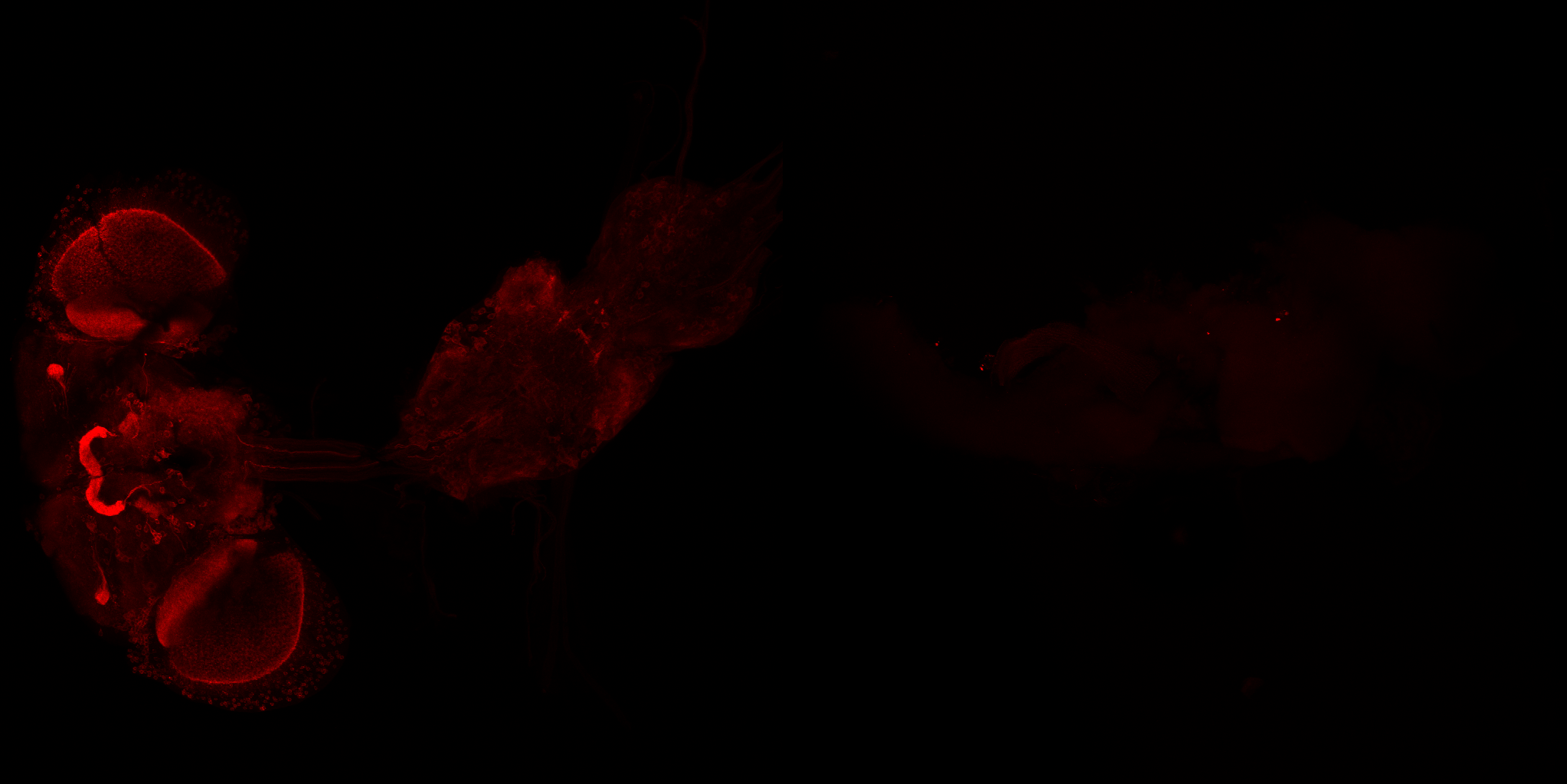
After some failed attempts at a visualizing co-localization of FoxP and aPKC using a cross of stock 504 and 539/550, I grew suspicious of the RFP co-expression of FoxP. I visualized the CNS’ of both 539 and 550 in the confocal microscope. The image on the left is stock 550 and the image on the right 539. Stock 539 doesn’t seem to express any RFP but 550 looks fine so I’ll be repeating the cross using 550 when I get a chance. Rat anti-RFP primary antibody and 555 anti-rat secondary antibody were used as opposed to mouse anti-mcherry from previous experiment.
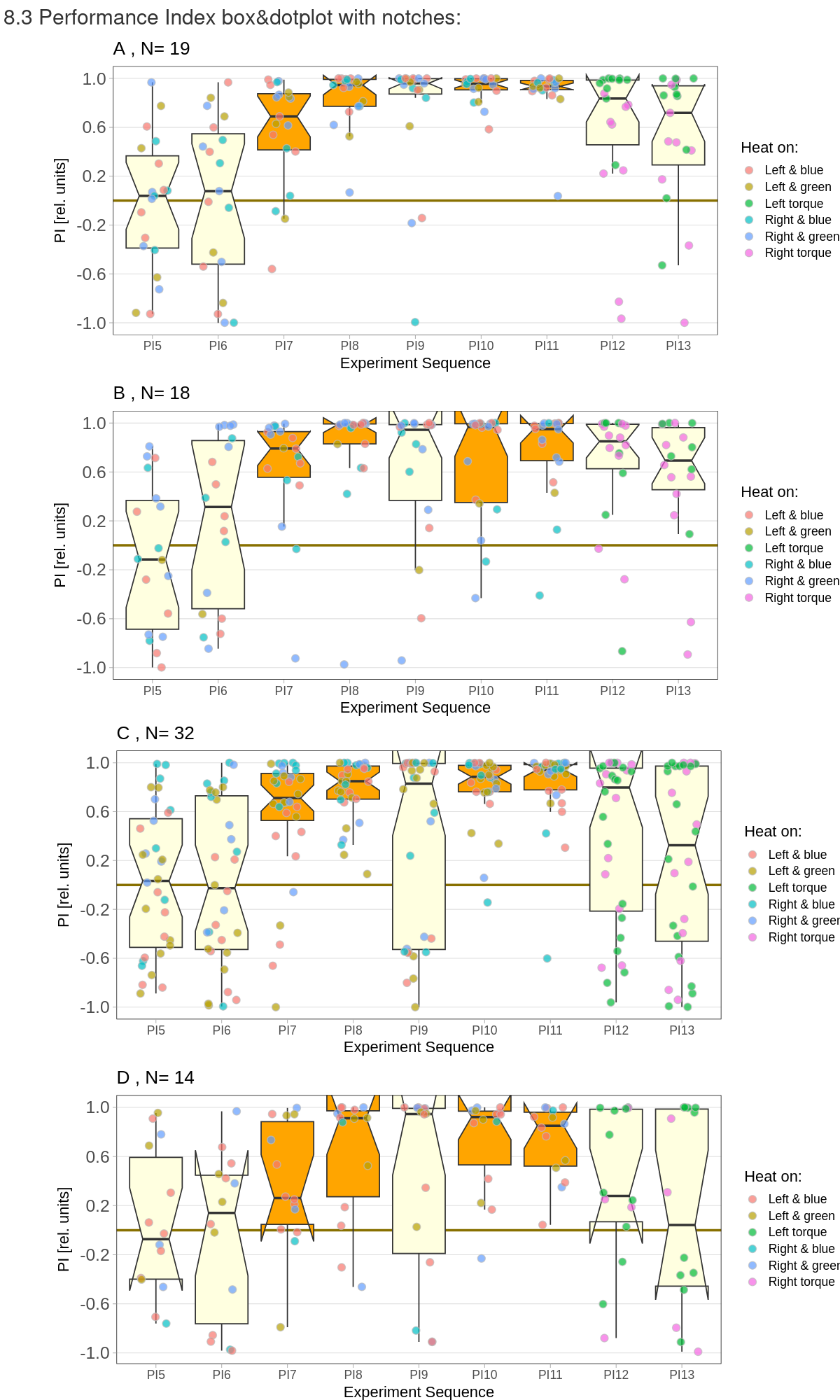
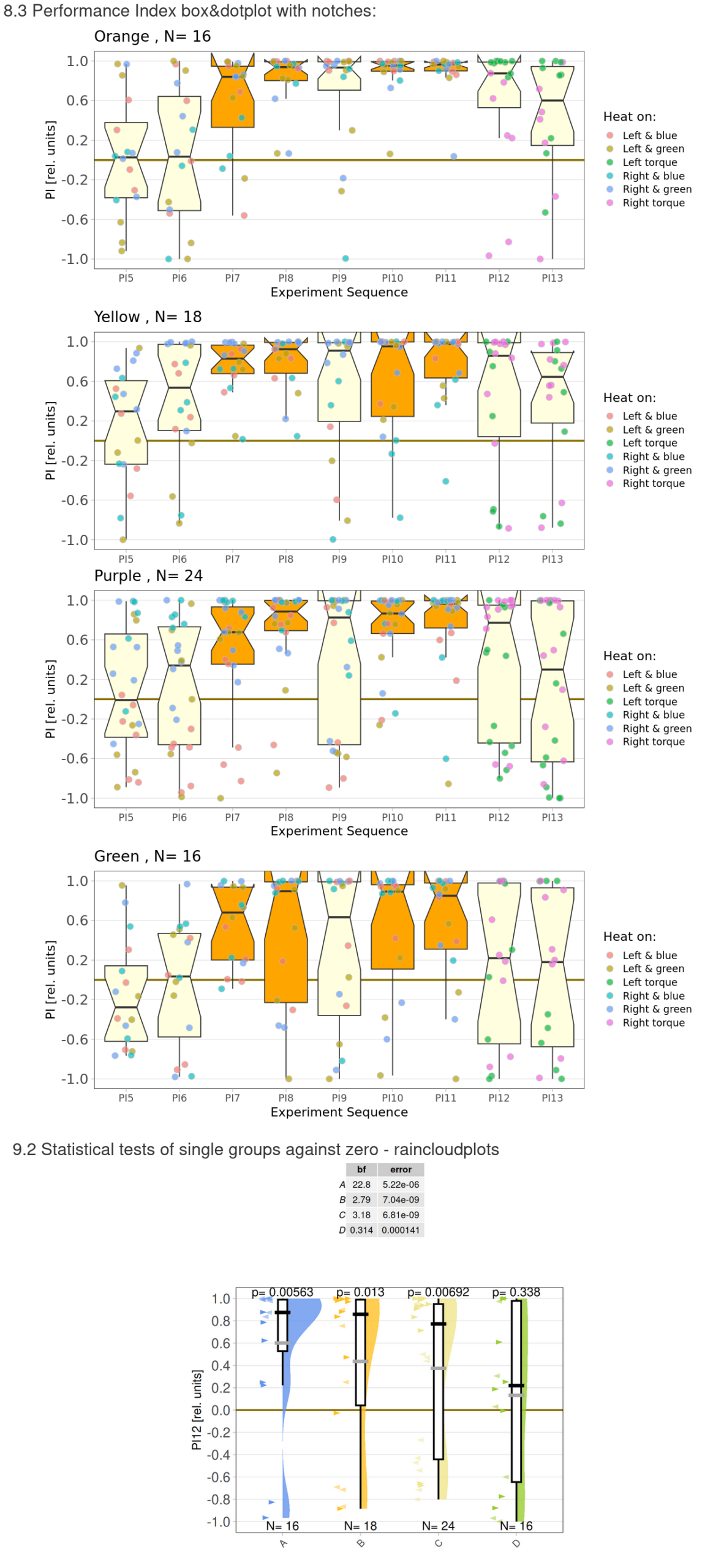
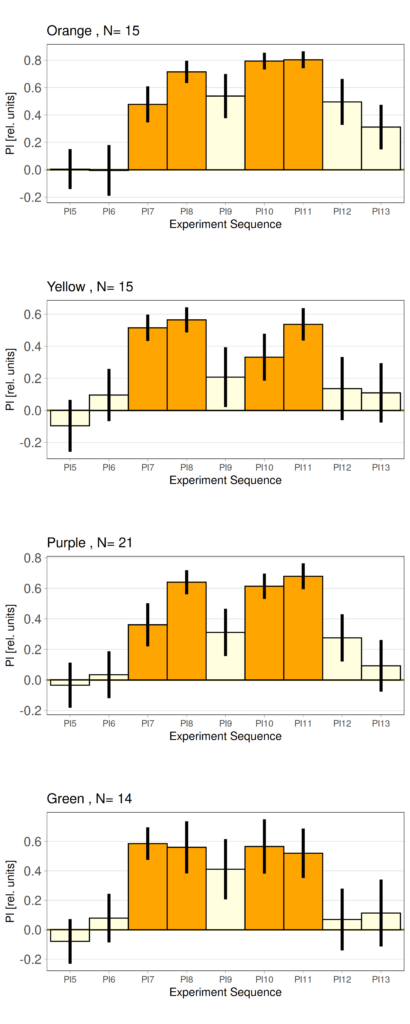
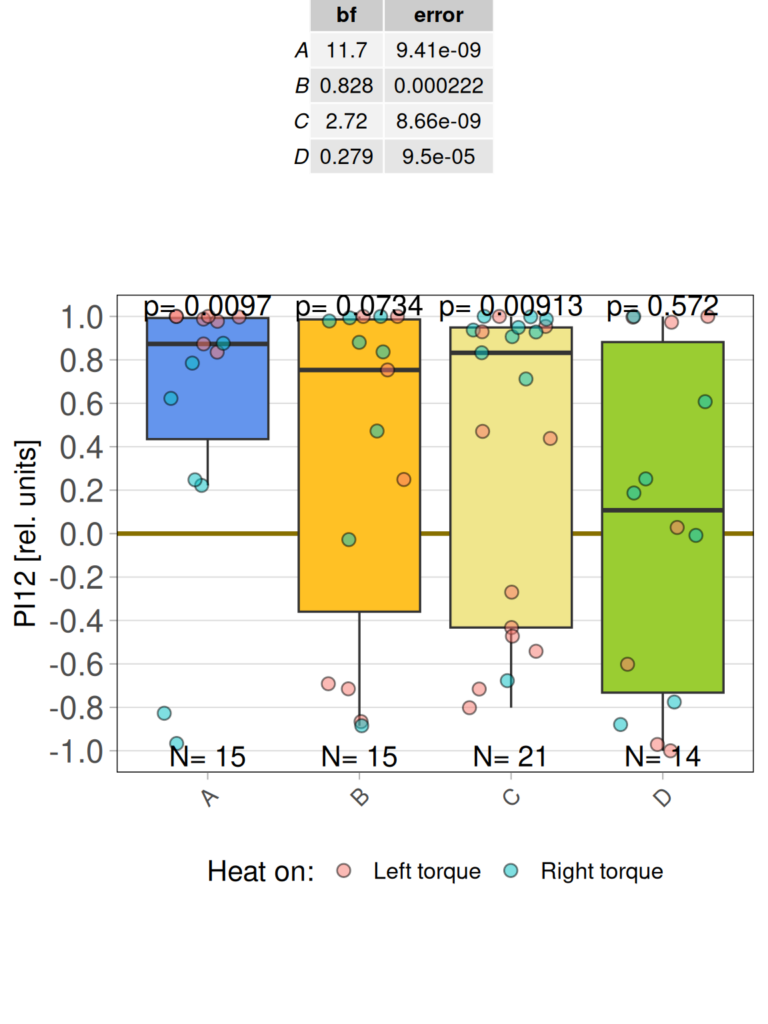
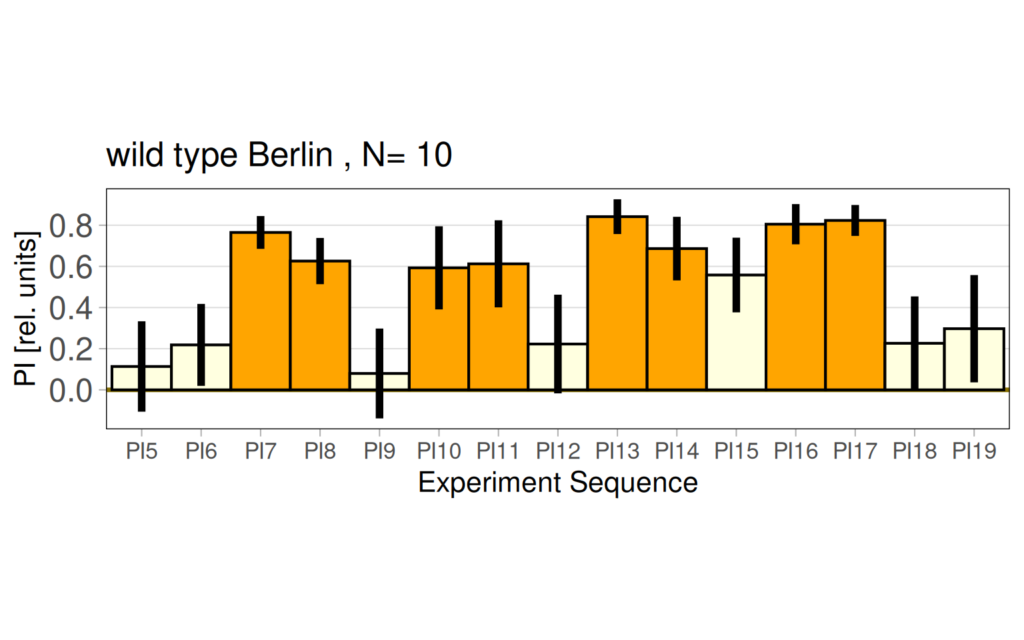
MBON screen of MB399 for MBON02, MB050B for MBON15, MB027B for MBON17 all crossed with TnTe and WTB x TnTe for the negative control. Flies are tethered in torque meter and one turning domain is punished with a hot laser invisible to the fly. Each turning domain is also associated with an arena color. The lights are turned off at the last two periods. Wild type flies fail to learn to avoid the punished domain after the training periods in these conditions. A positive PI-score in the 12th period indicates that the fly learned.
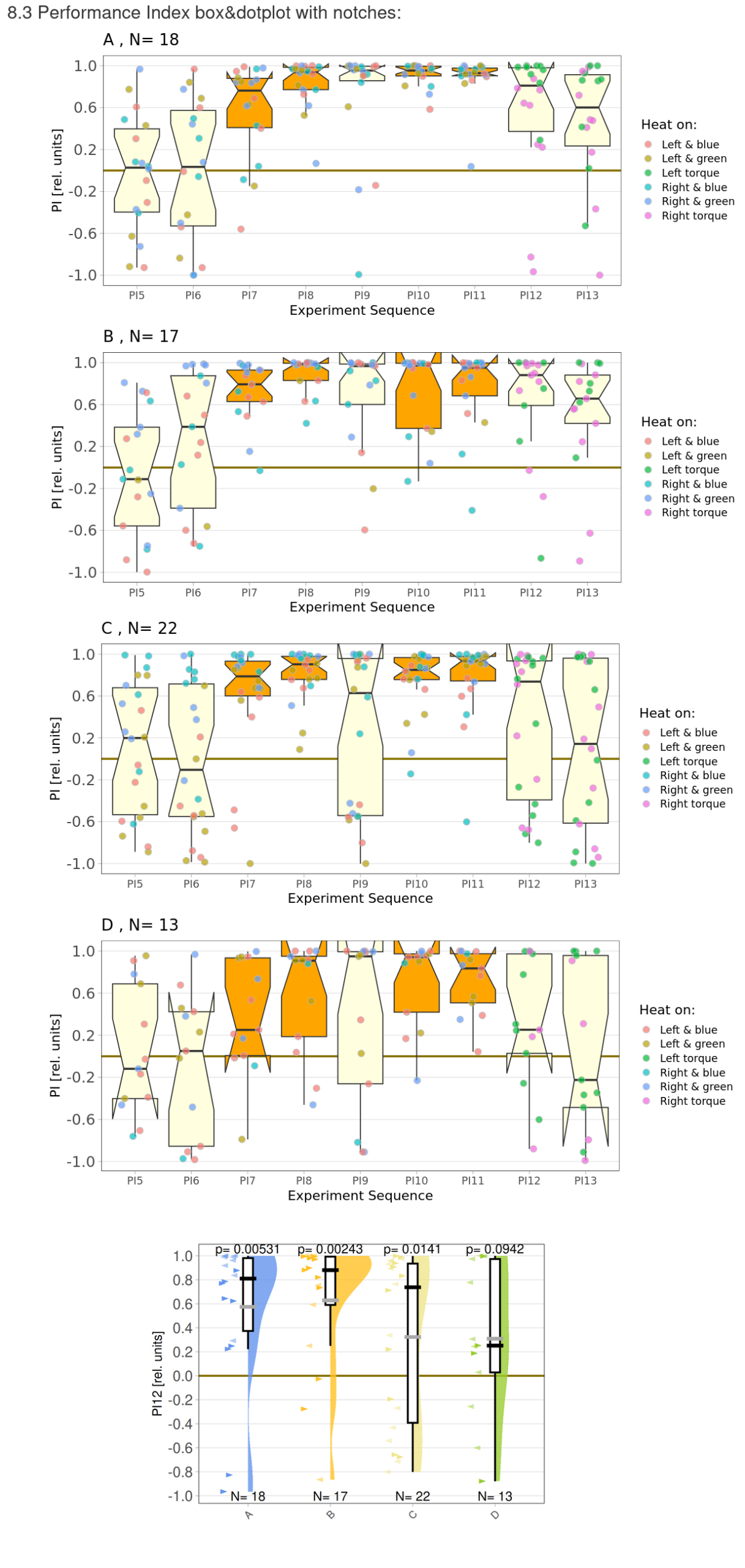
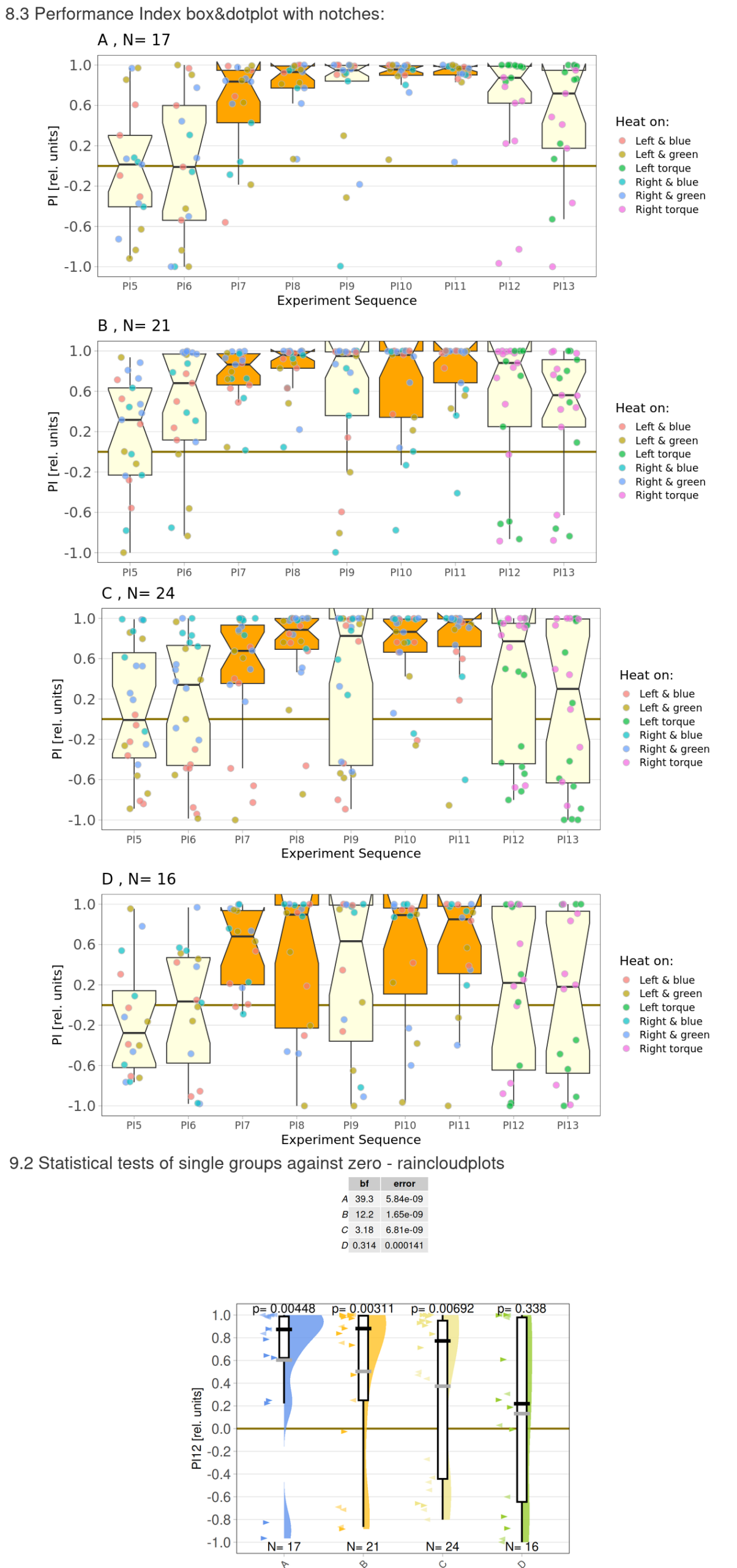
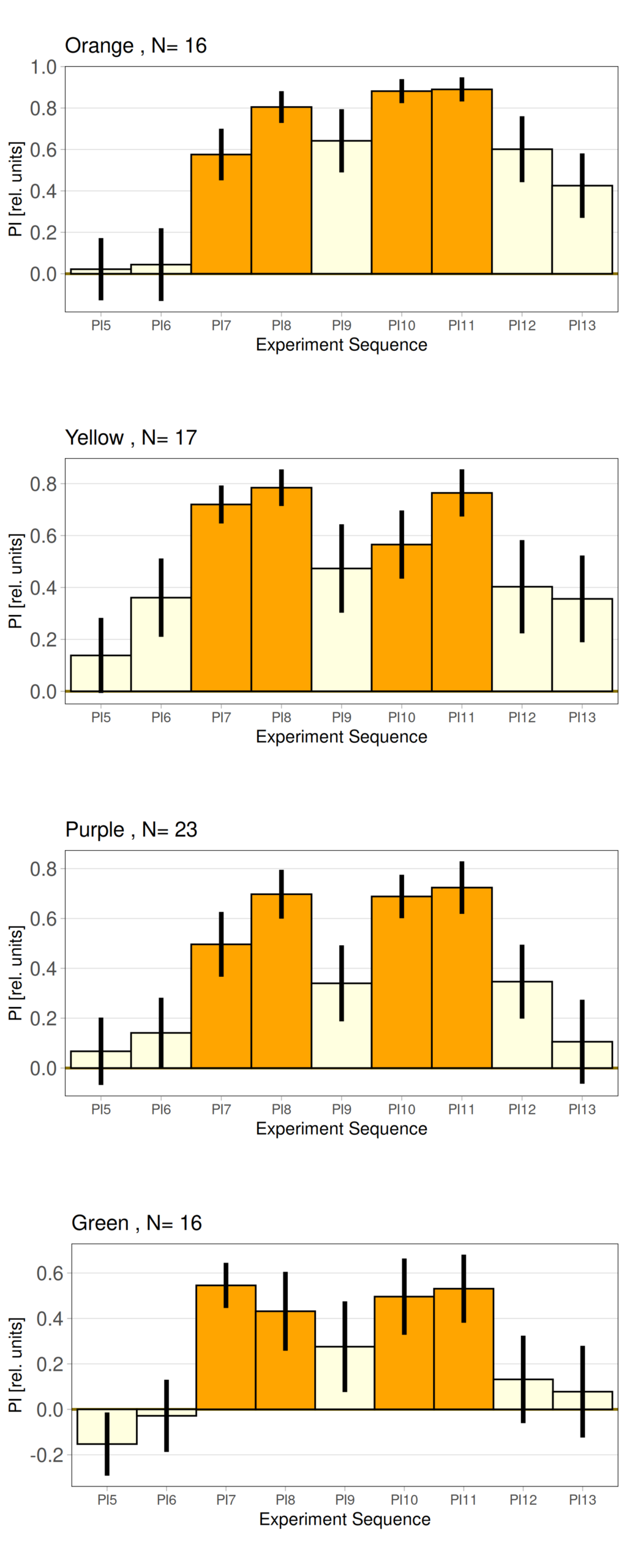
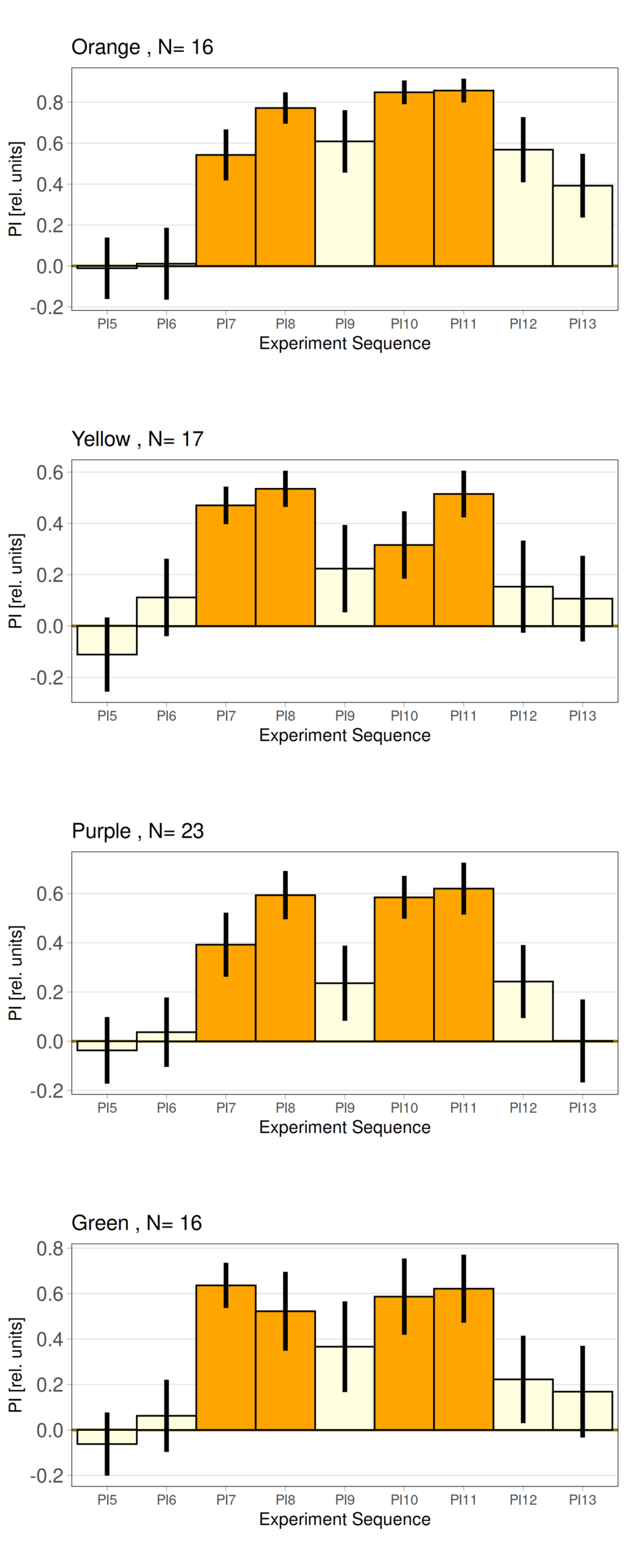
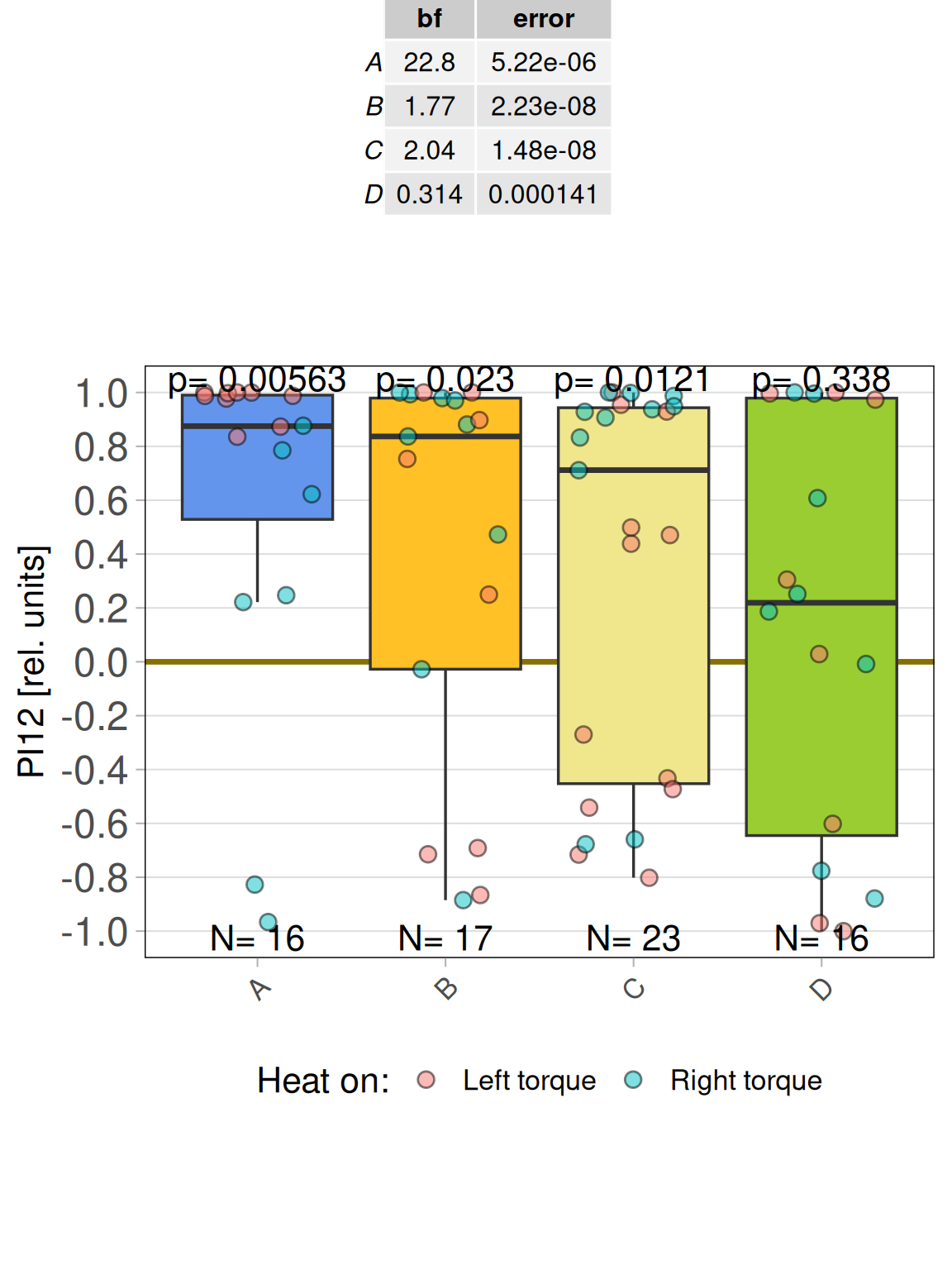
PI- values for world learning torque experiments. As usual the flies were tethered and subjected to adverse stimuli by laser dependent on torque domain, which also controlled arena color. Flies that show positive PI at the end indicate premature habit formation as WT flies don’t learn under these conditions in this time frame.Same as above except the pretest preference has been subtracedCurrent p-values for all the tested groups. Should be 25-30 flies at trial end.
Results from premature habit formation torque measurements of four drosophila crosses: MB399B, MB050B & MB027B gal4 driver lines crossed with UAS-Tetanus toxin lines and Wild type Berlin crossed with UAS-TnT as control. Which line is which is still unknown as the screen is incomplete and researcher must remain blind. It appears two crosses strongly form habits prematurely, one doesn’t and one is still on the borderline.
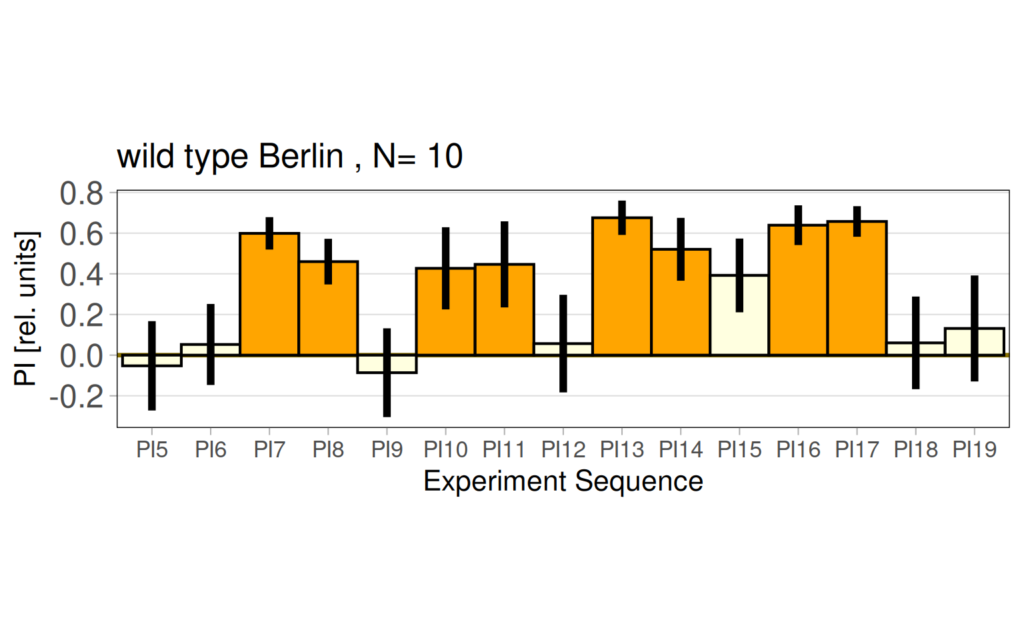
PI-values subtracted:
Same results as above except with pretest bias subtracted.