Gustatory preference results
on Monday, May 26th, 2025 12:29 | by Eva Schächtl
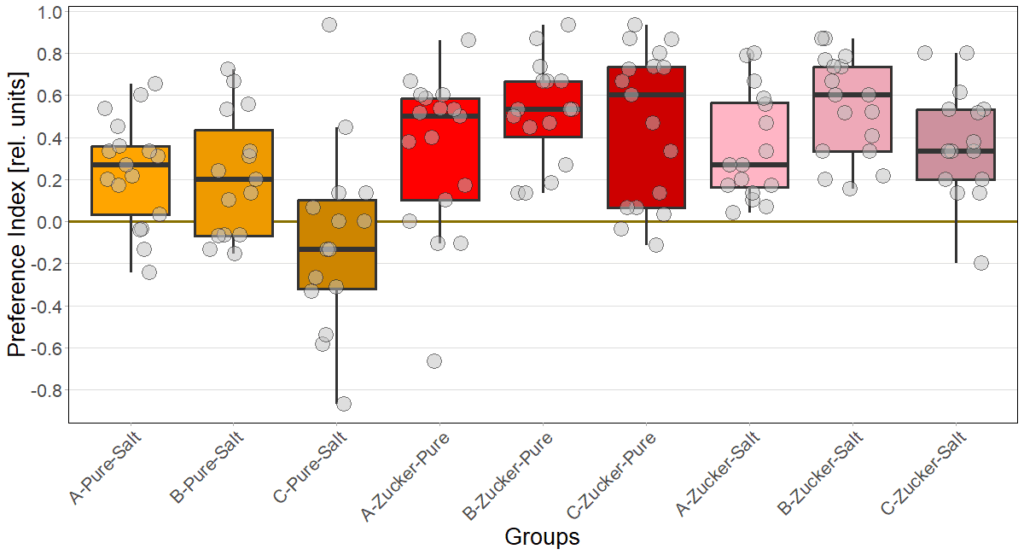
Gustatory preference under redlight

Category: Food preference, genetics, Lab, Larve, neuronal activation, Optogenetics | No Comments
Gustatory preference results
on Sunday, May 18th, 2025 11:45 | by Eva Schächtl
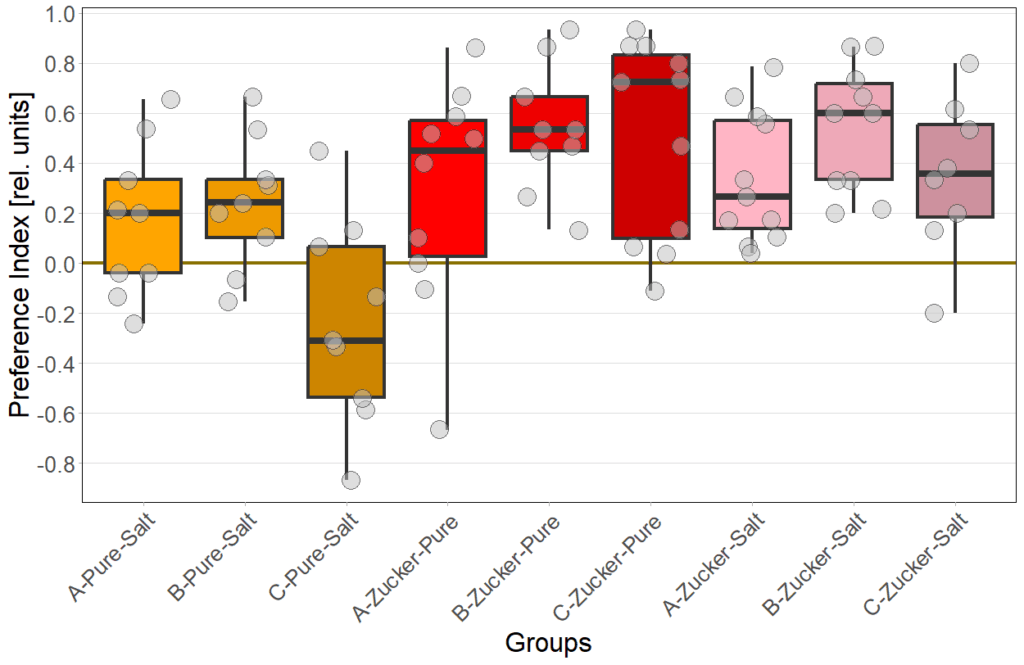
Gustatory preference under redlight
Category: Food preference, genetics, Larve, neuronal activation, Optogenetics, Uncategorized | No Comments
Salt Avoidance CantonS Final Results
on Sunday, April 27th, 2025 11:30 | by Eva Schächtl
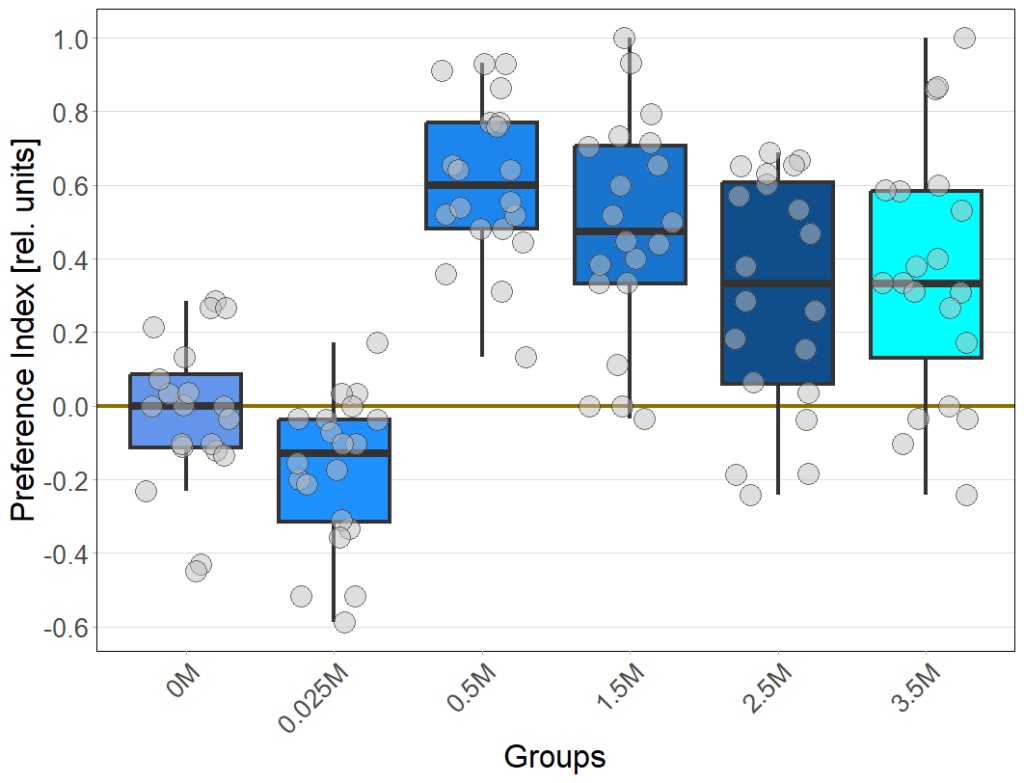
CantonS under bluelight
Preference Index: (Pur-Salz)/(Pur+Salz+Neutral)
Stichprobengröße N: 20 jeweils
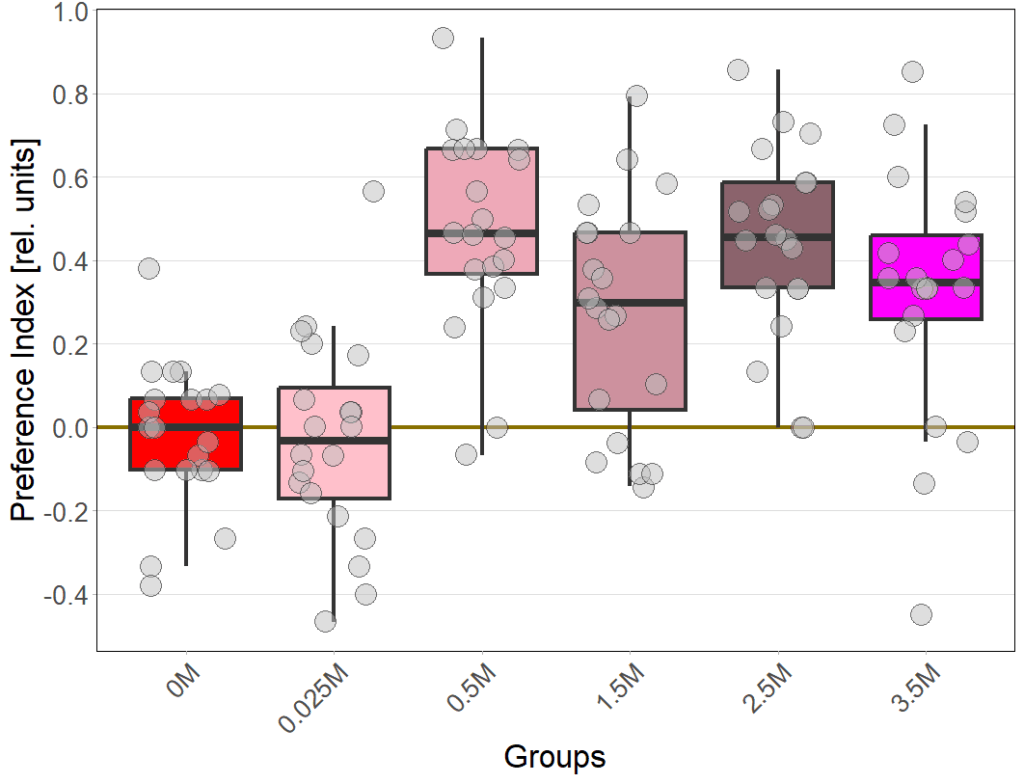
CantonS under redlight
Preference Index: (Pur-Salz)/(Pur+Salz+Neutral)
Stichprobengröße N: 20 jeweils
Category: Food preference, Larve, Optogenetics | No Comments
Salt Avoidance CantonS
on Monday, April 14th, 2025 1:37 | by Eva Schächtl
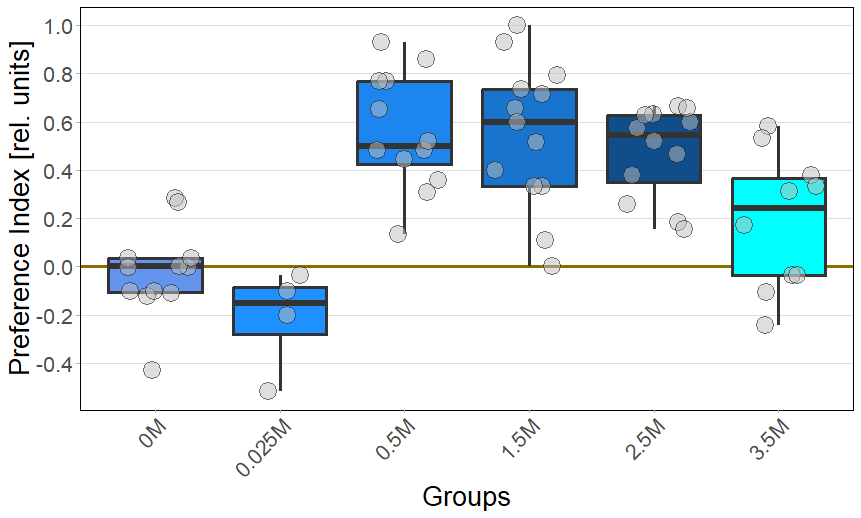
Bluelight
PI: (Pur-Salz)/(Pur+Salz+Neutral)
Stichprobengröße: N(0M) = 12; N(0,025M) = 4; N(0,5) = 12; N(1,5M) = 13; N(2,5M) = 12; N(3,5M) = 10
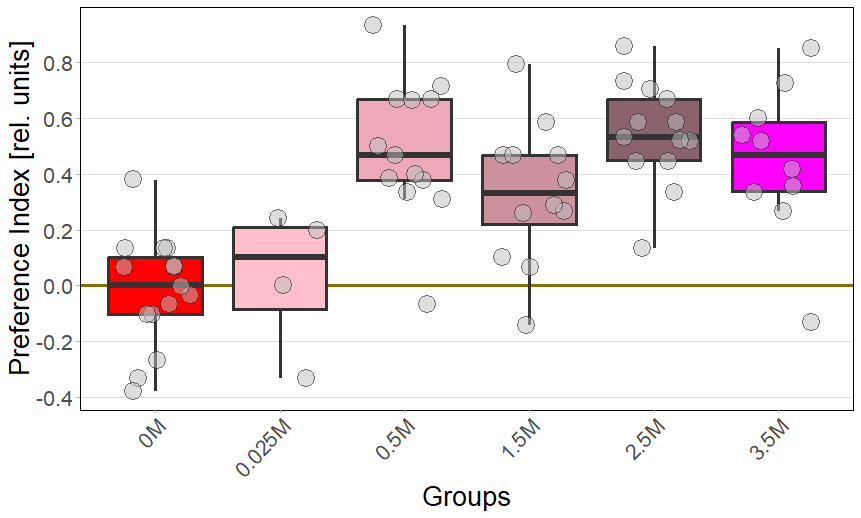
Redlight
PI: (Pur-Salz)/(Pur+Salz+Neutral)
Stichprobengröße: N(0M) = 14; N(0,025M) = 4; N(0,5) = 13; N(1,5M) = 12; N(2,5M) = 13; N(3,5M) = 10
Category: Food preference, Larve, Optogenetics | No Comments
Salt Avoidance CantonS
on Monday, April 7th, 2025 12:48 | by Eva Schächtl

Stichprobengröße pro Gruppe: N = 10
PI: (Pur-Salz)/(Pur+Salz+Neutral)

Stichprobengröße pro Gruppe: N = 10 und bei 0M N = 15
PI:(Pur-Salz)/(Pur+Salz+Neutral)
Category: Food preference, Lab, Larve, Optogenetics | No Comments
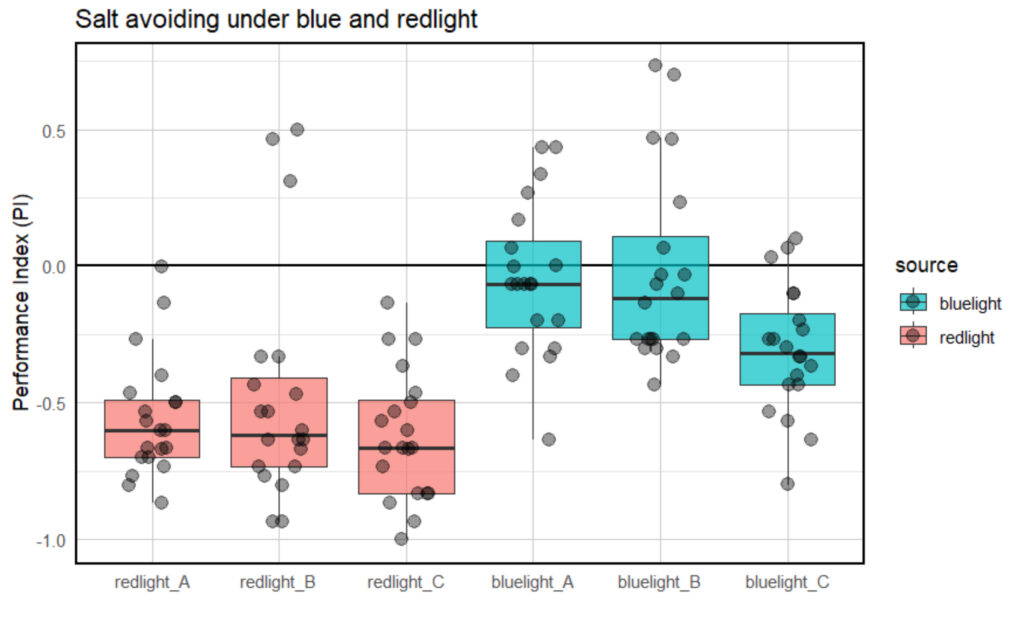
Salt avoidance under blue & redlight
on Sunday, March 9th, 2025 5:51 | by Eva Schächtl
Category: Food preference, Kenyon cells, Larve, Mushroom Body, neuronal activation, Optogenetics | No Comments
Comparison of 1 and 10 minute T-Maze for a DAN-PPM2 driver line.
on Friday, March 7th, 2025 4:16 | by Daniel Döringer
To investigate whether there are subsets of dopaminergic neurons that are responsible for “reward” or “punishment” in the absence of stimuli, different transgenic Drosophila lines were screened for approach or avoidance of neuronal activation. The different lines expressed the optogenetic “Chrimson” channel in different sets of dopaminergic neurons and were tested in different operant self-stimulating experiments (T-Maze (red light), T-Maze (yellow light), Y-Maze and JoyStick). Except for two, none of the tested lines displayed consistent preference or avoidance in all four different experiments. Both lines (TH-D’ and TH-D1) drive expression in the same DAN clusters including PPL1_FB, PPM2 and PPM3.
Since there are now more refined Gal4 driver lines, enabling expression of the optogenetic channel in only subsets of neurons compared to the original driver lines, T-Maze and JoyStick experiments were repeated with these new lines.
Rescreening in JoyStick and T-Maze showed that out of the three tested lines only one line displayed (tendencies for) light-avoidance as the original driver line. This was the line driving expression in the PPM2 cluster. (JoyStick data from other lines not shown, PPM3 could not be tested in T-Maze due to technical limitations). Interestingly in the JoyStick, this line displayed a shift in preference that was similar to the shift observed in the original TH-D’ driver line.
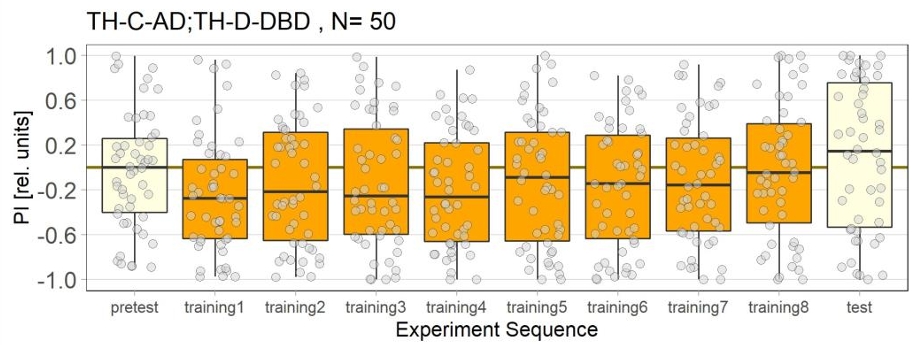

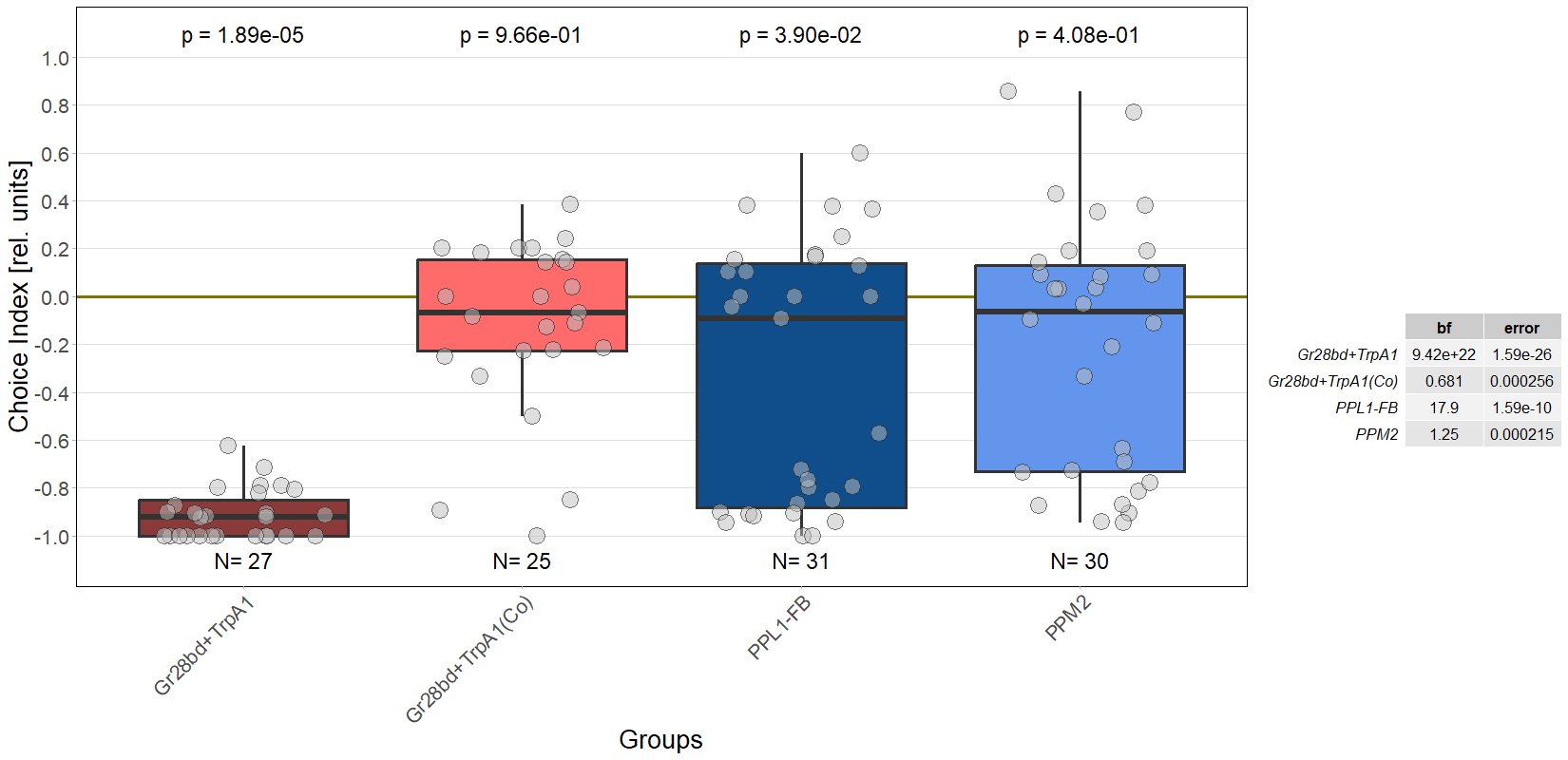
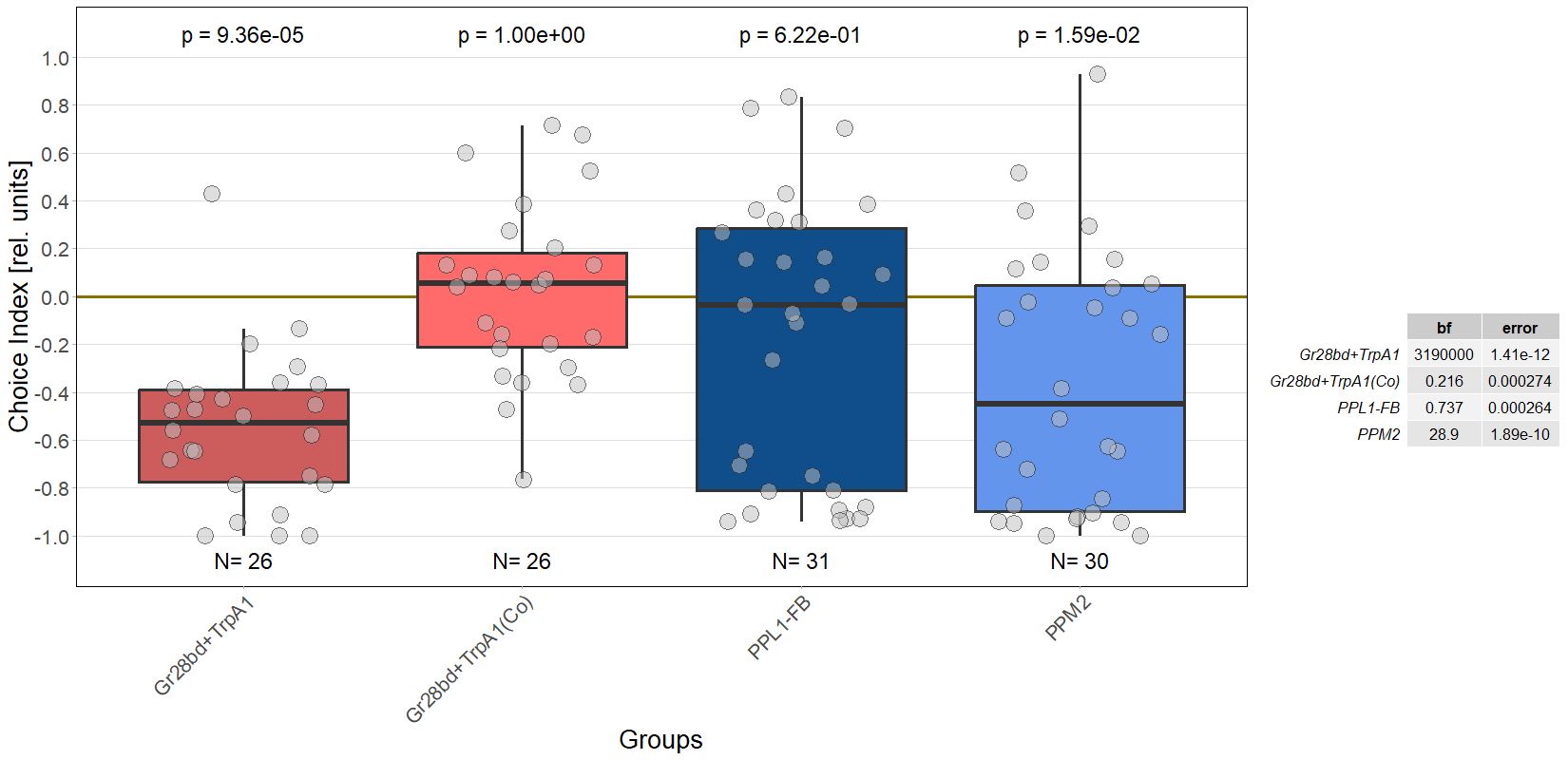
As mentioned above, JoyStick experiments had shown that after initial avoidance of the light (represented by negative PIs), in the last training periods flies would show PIs close to zero. In the T-Maze experiments flies are usually tested for only 1 minute. To find out whether fly preference would show a same development when choice time was extended, I conducted a set of T-Maze experiments, with a choice time of 10 minutes.
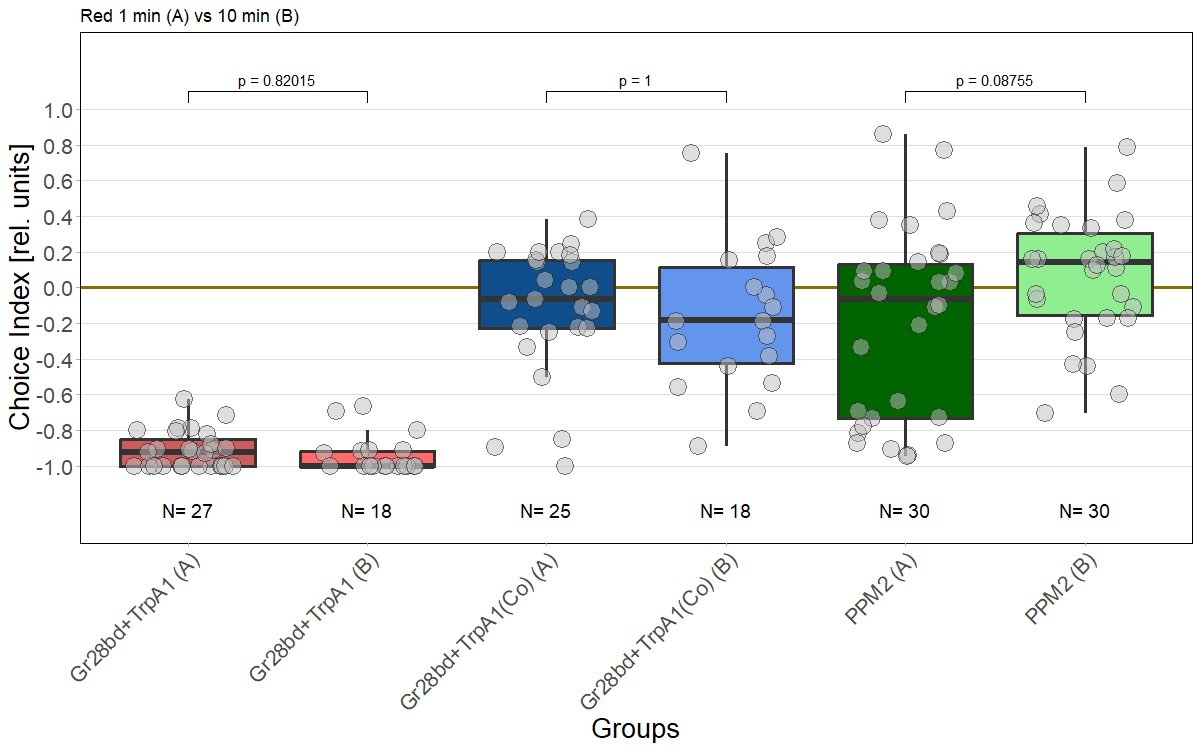
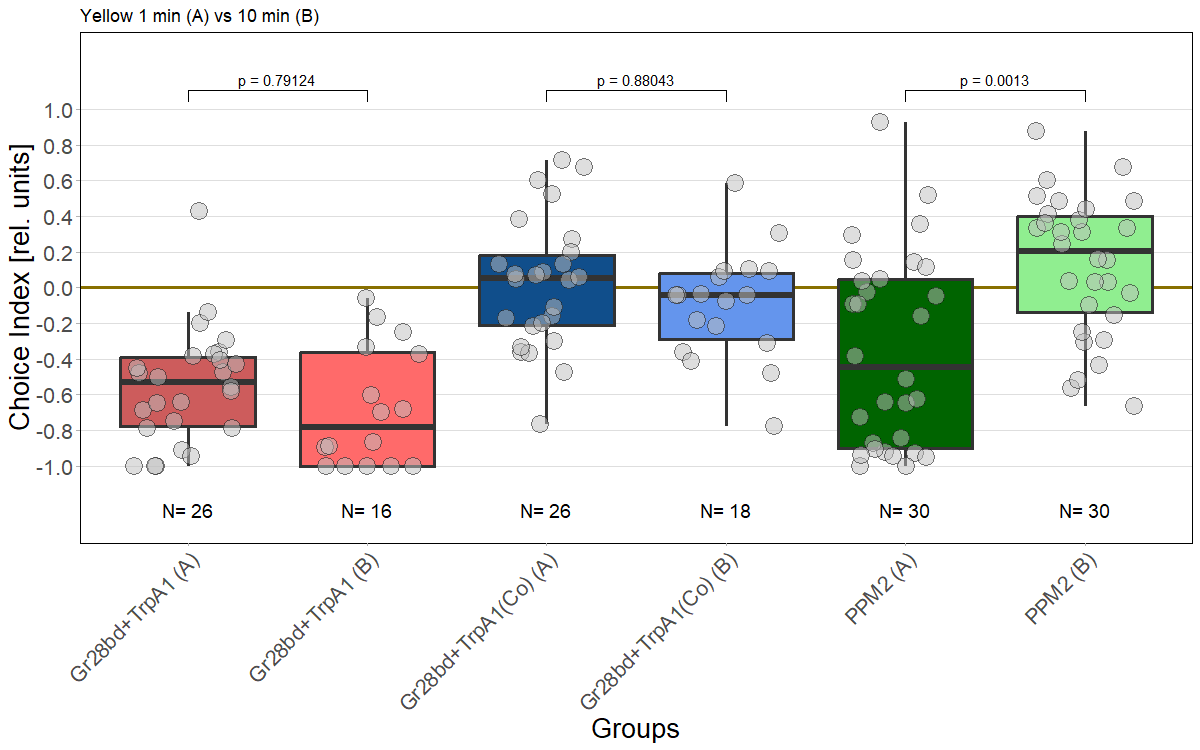
These results suggest that in the flies expressing the Chrimson channel in PPM2 DANs, prolonged choice time leads to a shift in “valence”, as also observed in the broadly expressing driver line TH-D’. This shift was only observed under yellow light.
Comparing control groups in yellow and red light, there seem to be differences in the activation of the Chrimson channel under red and yellow light. Whether this can be explained by different penetration capabilities due to the different wave lengths will be subject to further research.
Category: DAN, Optogenetics | No Comments
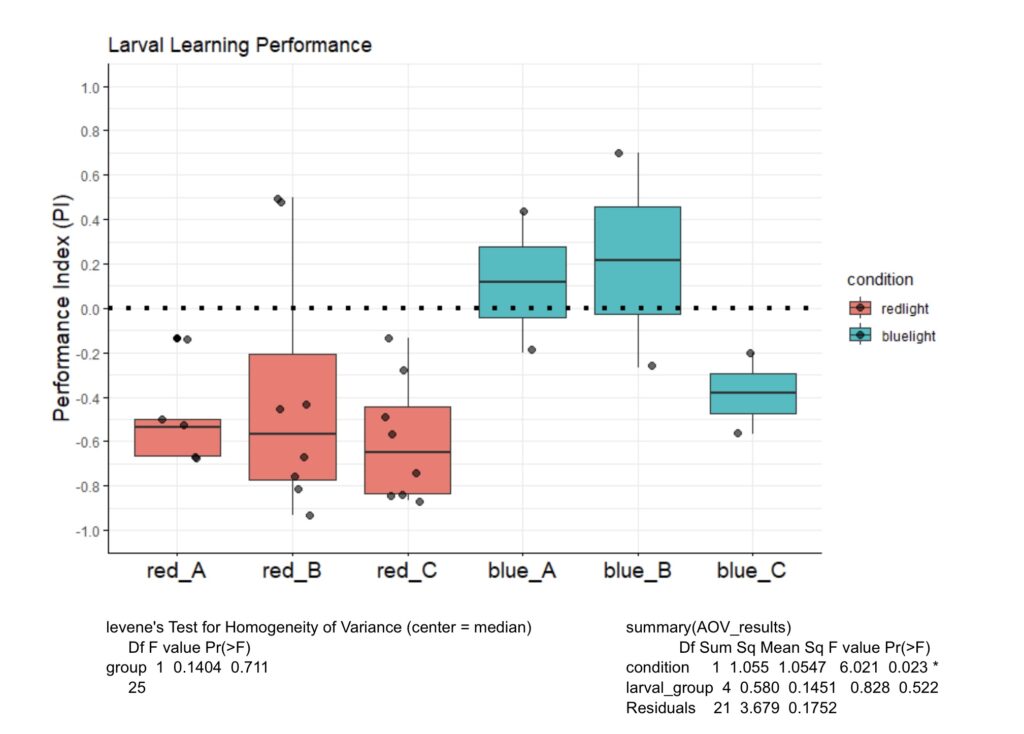
Salt Avoidance under blue & red light
on Monday, February 17th, 2025 11:25 | by Eva Schächtl
Category: Food preference, Larve, Mushroom Body, Optogenetics | No Comments
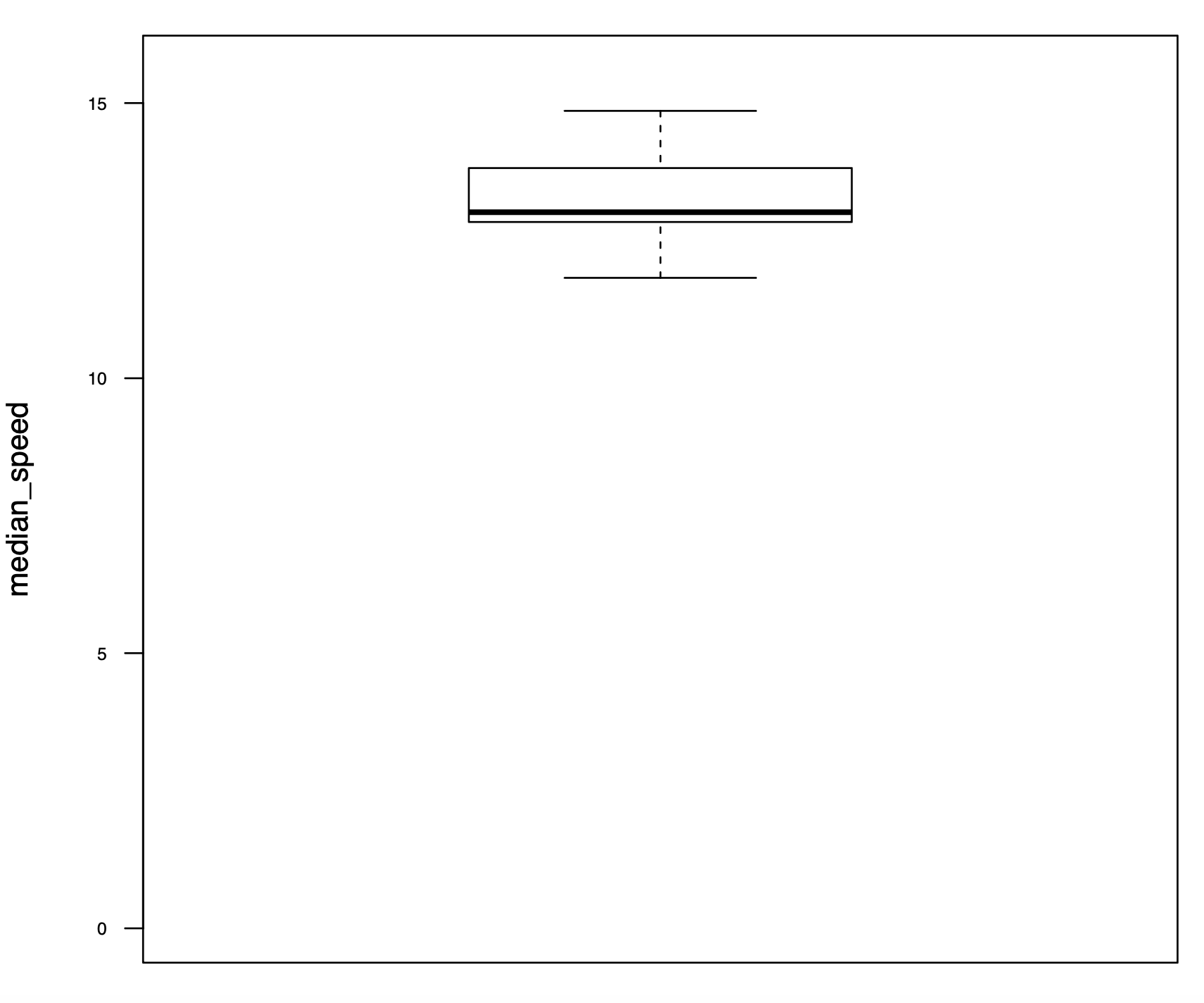
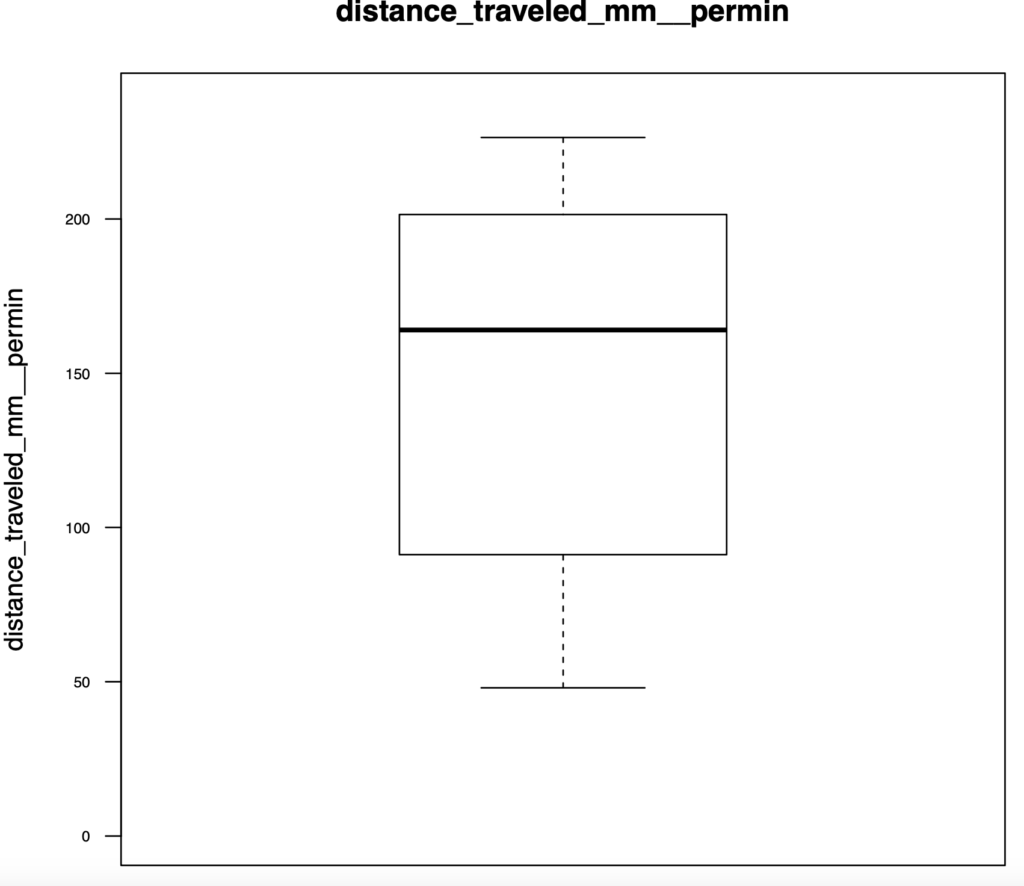
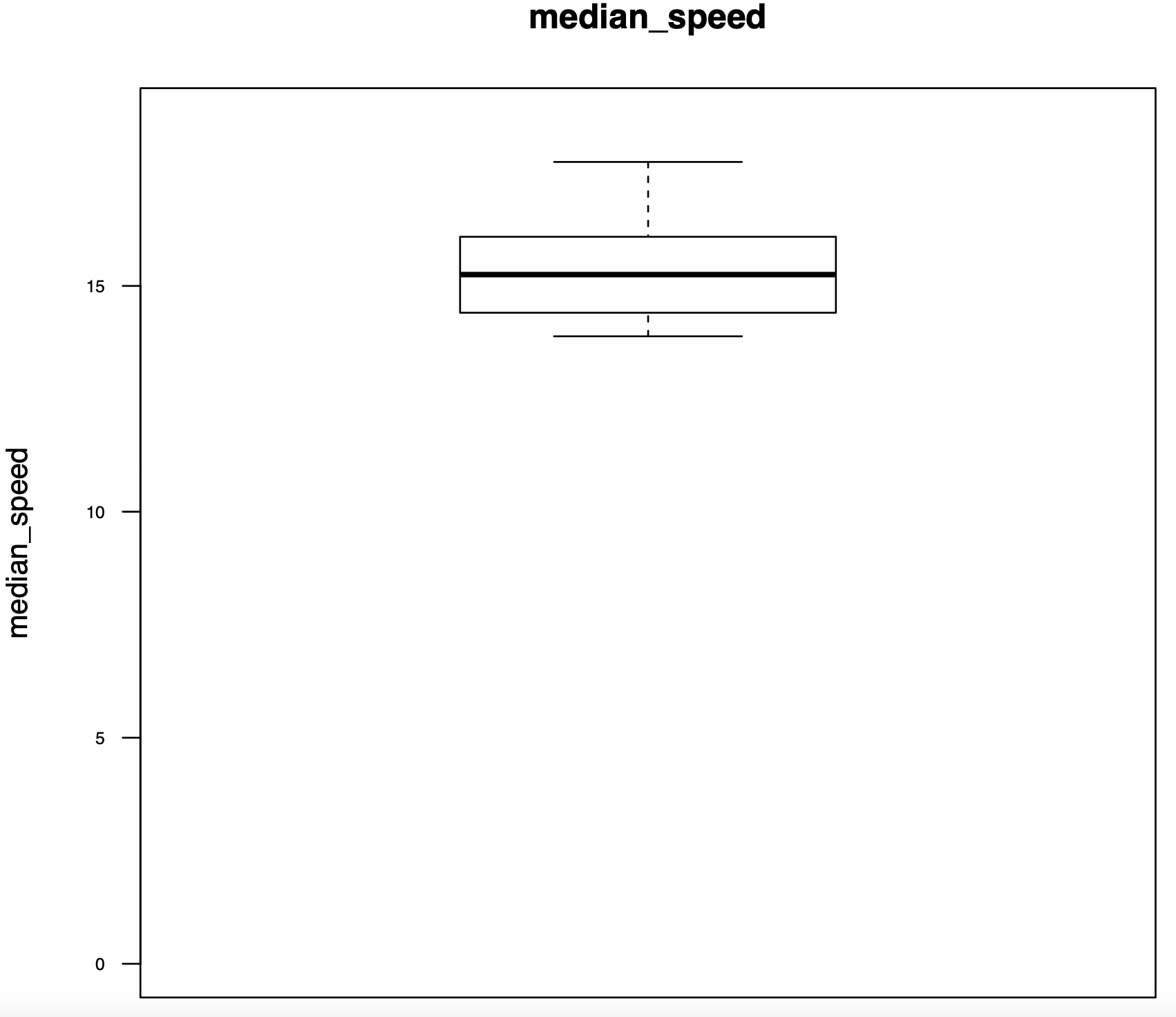
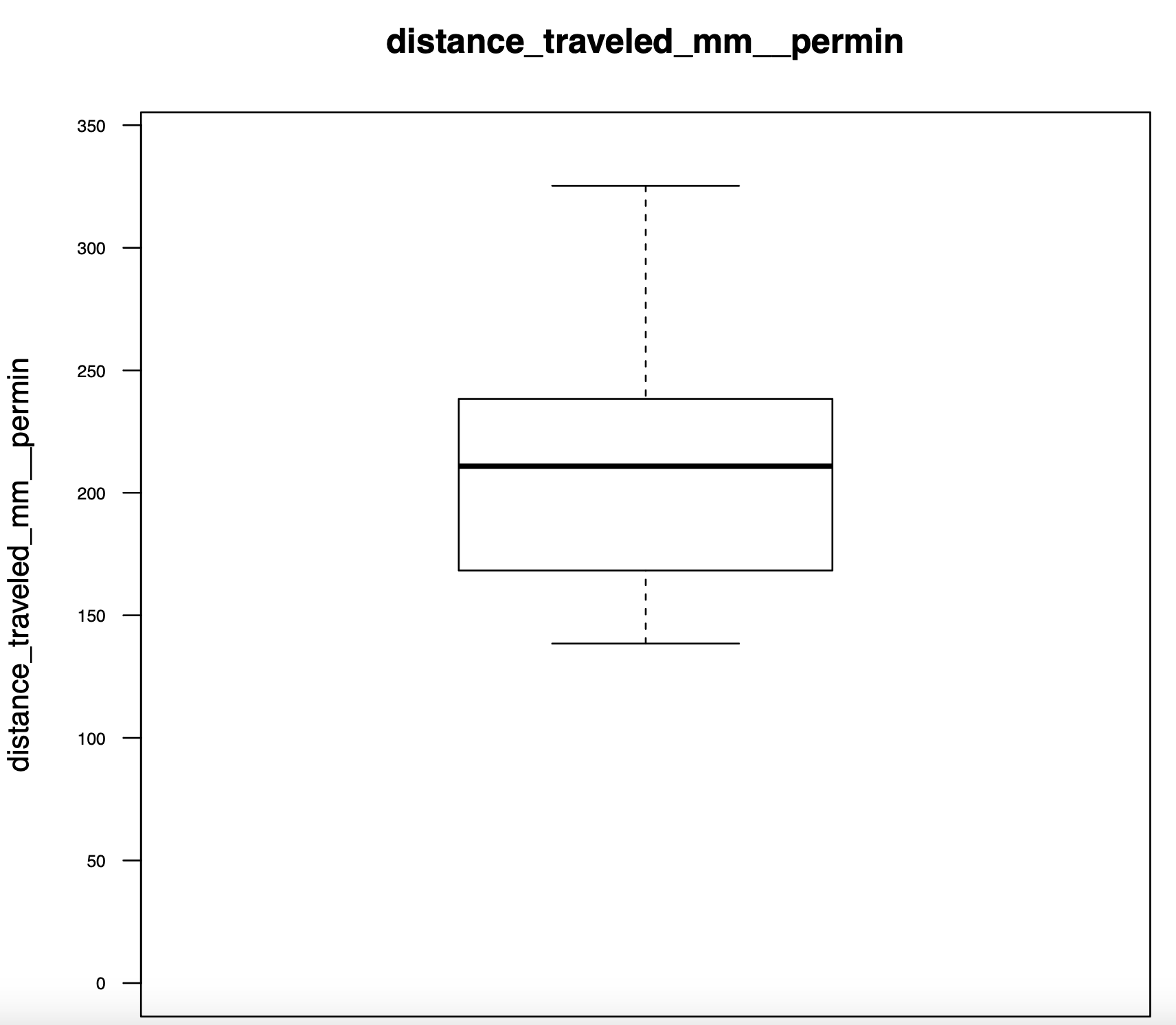
Buridan Test WTB; 3IY in 5%Sucrose
on Monday, January 27th, 2025 11:00 | by Philipp Doms
Final Results
3IY; N=16
Sucrose; N=16


Buridan Test WTB; 5%Sucrose
Category: buridan, Optogenetics | No Comments
PPM2 T-Maze results for 10 min testing
on Monday, January 20th, 2025 12:57 | by Daniel Döringer
PPM2 flies showed light-avoidance in T-Maze experiments when tested in yellow light for 1 minute. In the JoyStick setting, where flies are tested for 10 one-minute periods flies displayed a shift from negative (light-avoidance) values in the beginning to no preference in the last training period. For this reason I started a set of T-maze experiments where flies could decide between light and dark tubes for 10 minutes.
In the red light 1-minute test setting flies did not show avoidance of light as strong as in the yellow light setting, but still tendencies for avoidance were observable. Therefore another set of 10-minute experiments will also be conducted with red light.
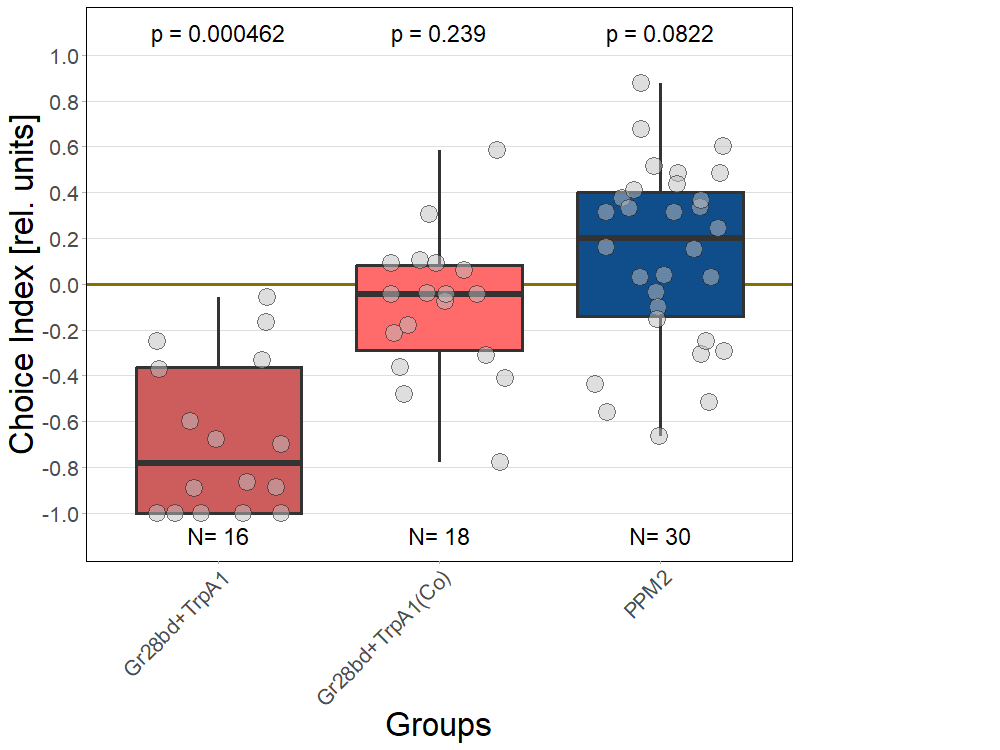
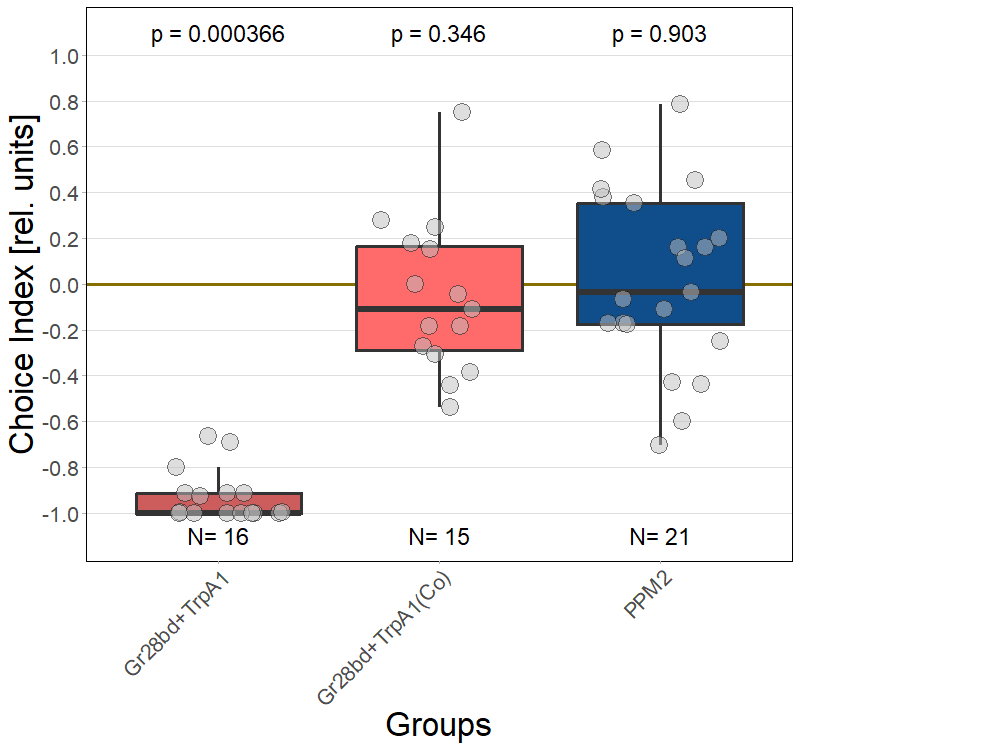
Update 03.02.25: Added more flies to the experiments and included some control flies.
Update 09.02.25: Added more flies; excluded all experiments where combined number of flies in light, dark and elevator tube was less than 30. Also added first red light results.
Update 14.02.25: Experiments with yellow light are almost finished, red light still needs some work
Update: 22.02.25: Added more flies to red light.
Category: Optogenetics | No Comments