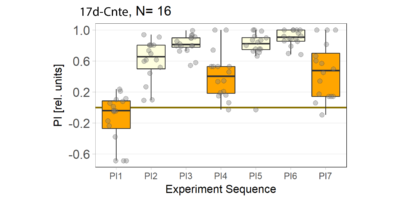
17d flight simulator
on Monday, October 1st, 2018 2:58 | by Anders Eriksson

Category: crosses, flight, genetics, Memory, Operant learning, operant self-learning | No Comments
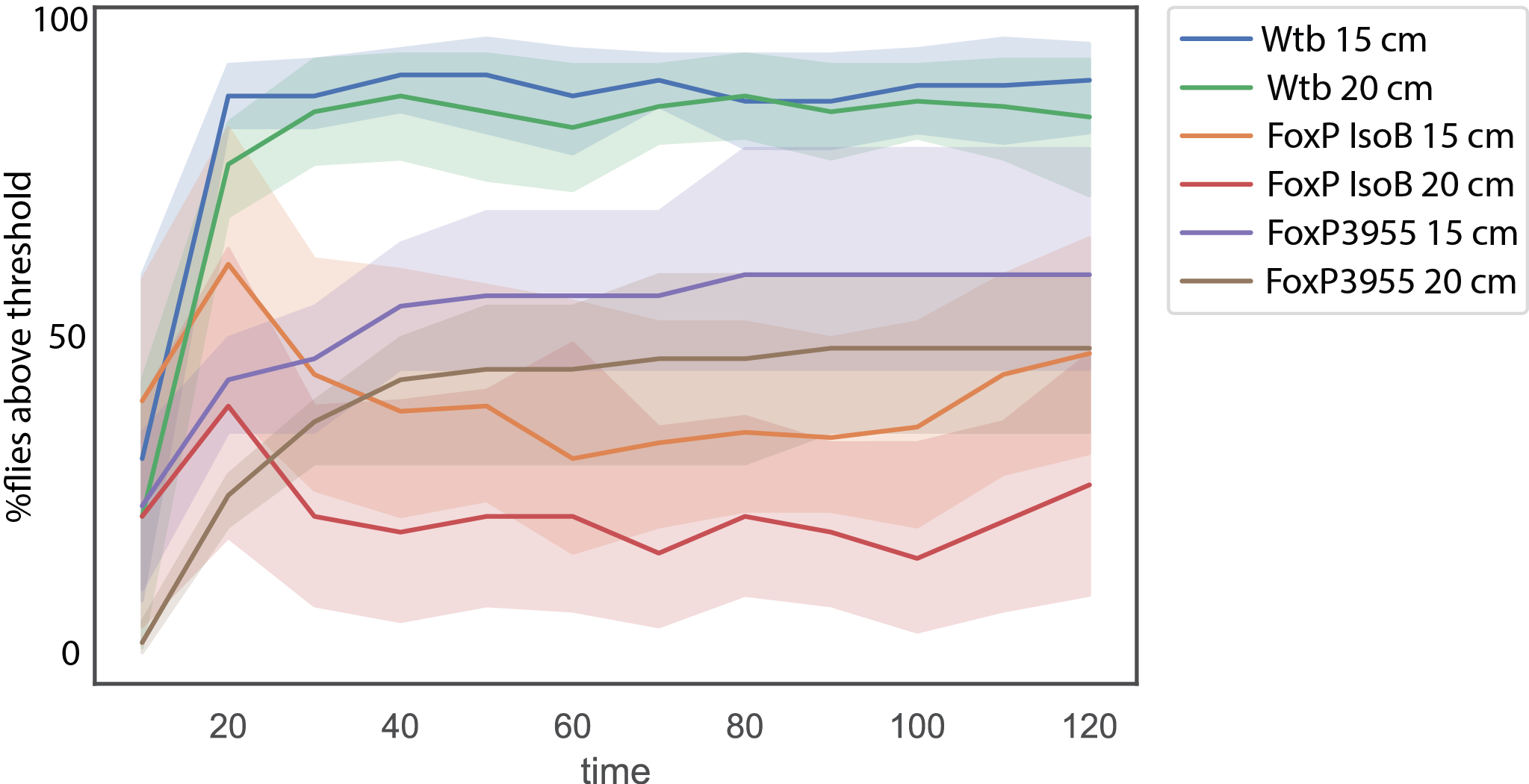
FoxP climbing assay
on Monday, October 1st, 2018 2:39 | by Anders Eriksson
Category: crosses, Foxp, genetics, Lab | No Comments
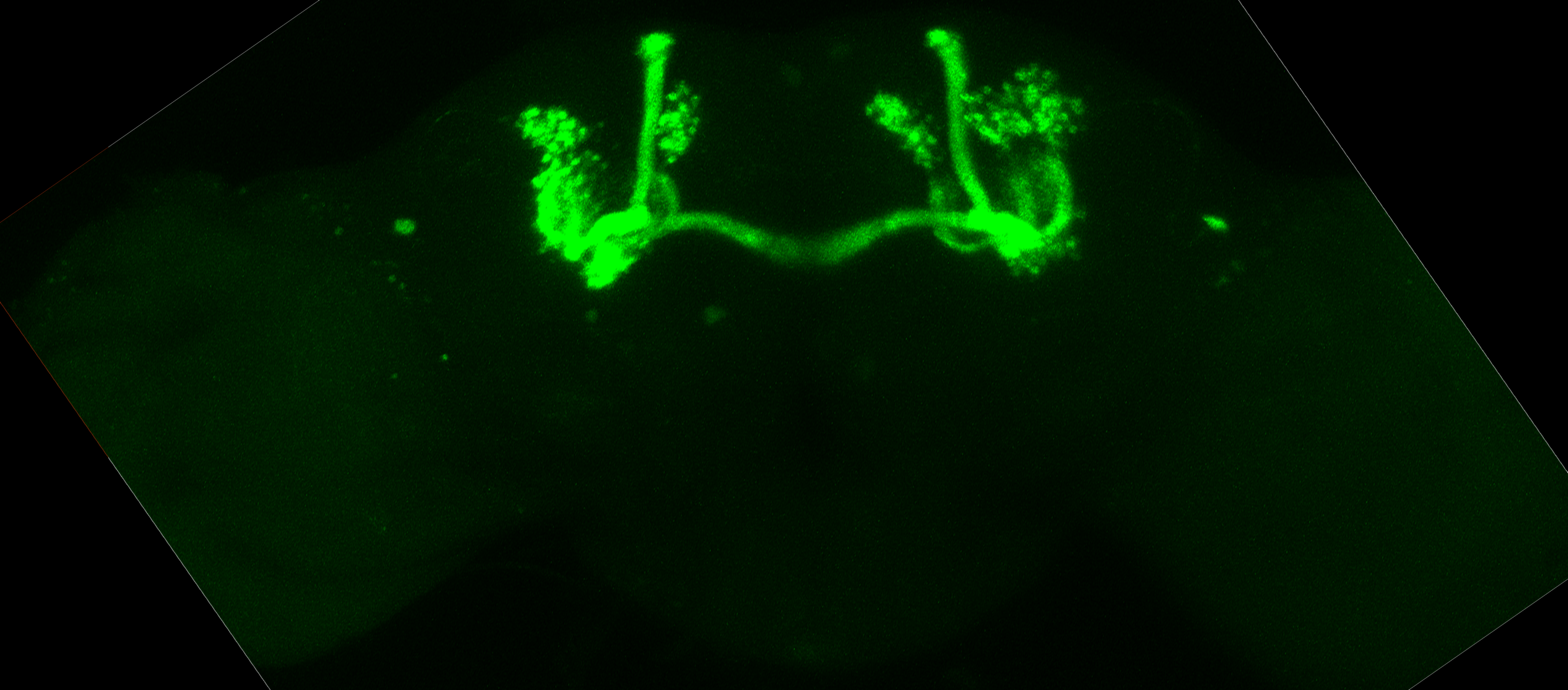
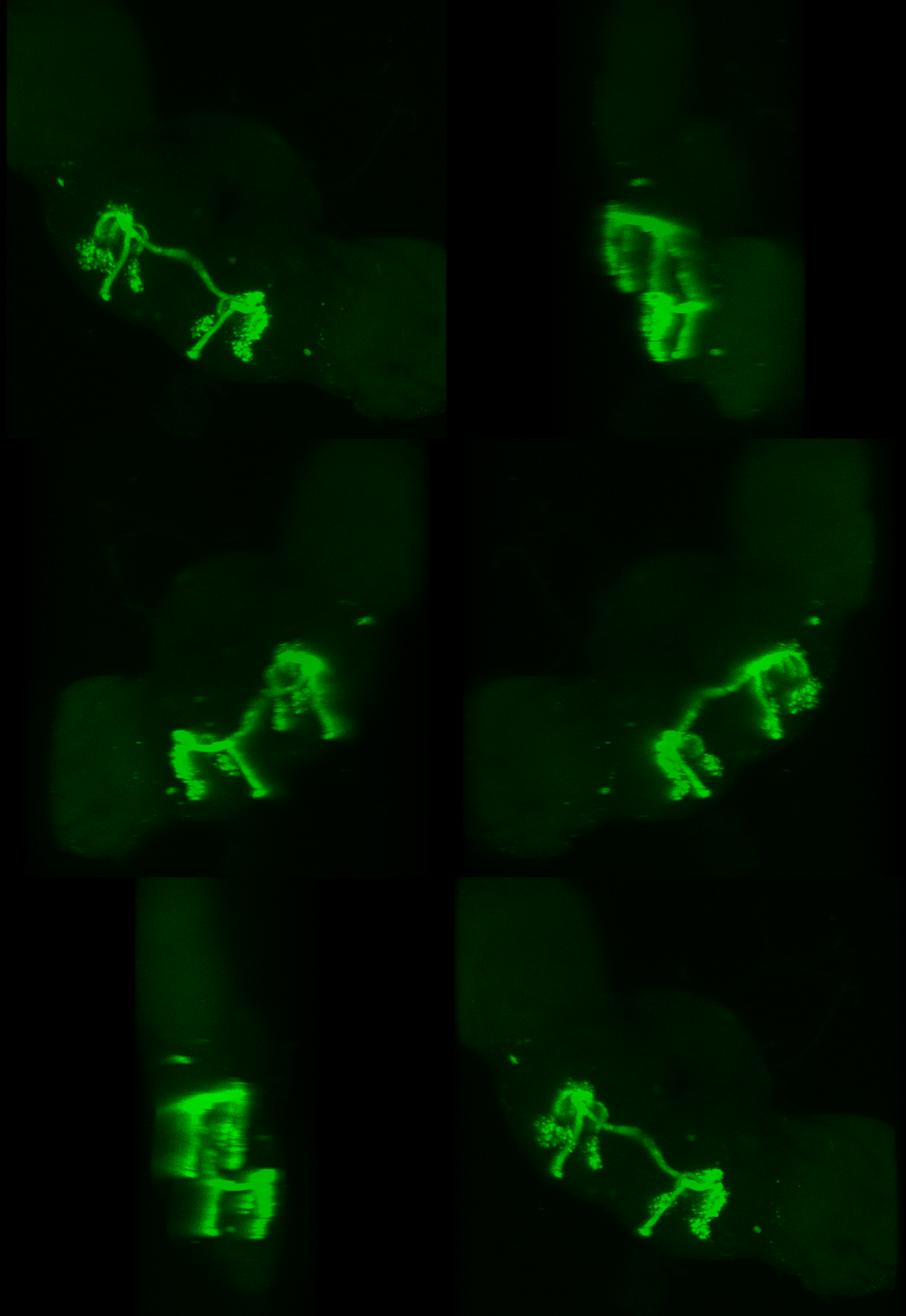
17d-GFP
on Monday, October 1st, 2018 2:37 | by Anders Eriksson
Category: Anatomy, crosses, genetics, Lab | No Comments
17d
on Monday, September 10th, 2018 1:03 | by Anders Eriksson
Been working on 17d for the past month.
The experiments in the flight simulator. Self-learning performance indices in a two-minute test with the heat switched off after 4 and 8 minutes of training, indicated impairment of 17d-TNT flies.

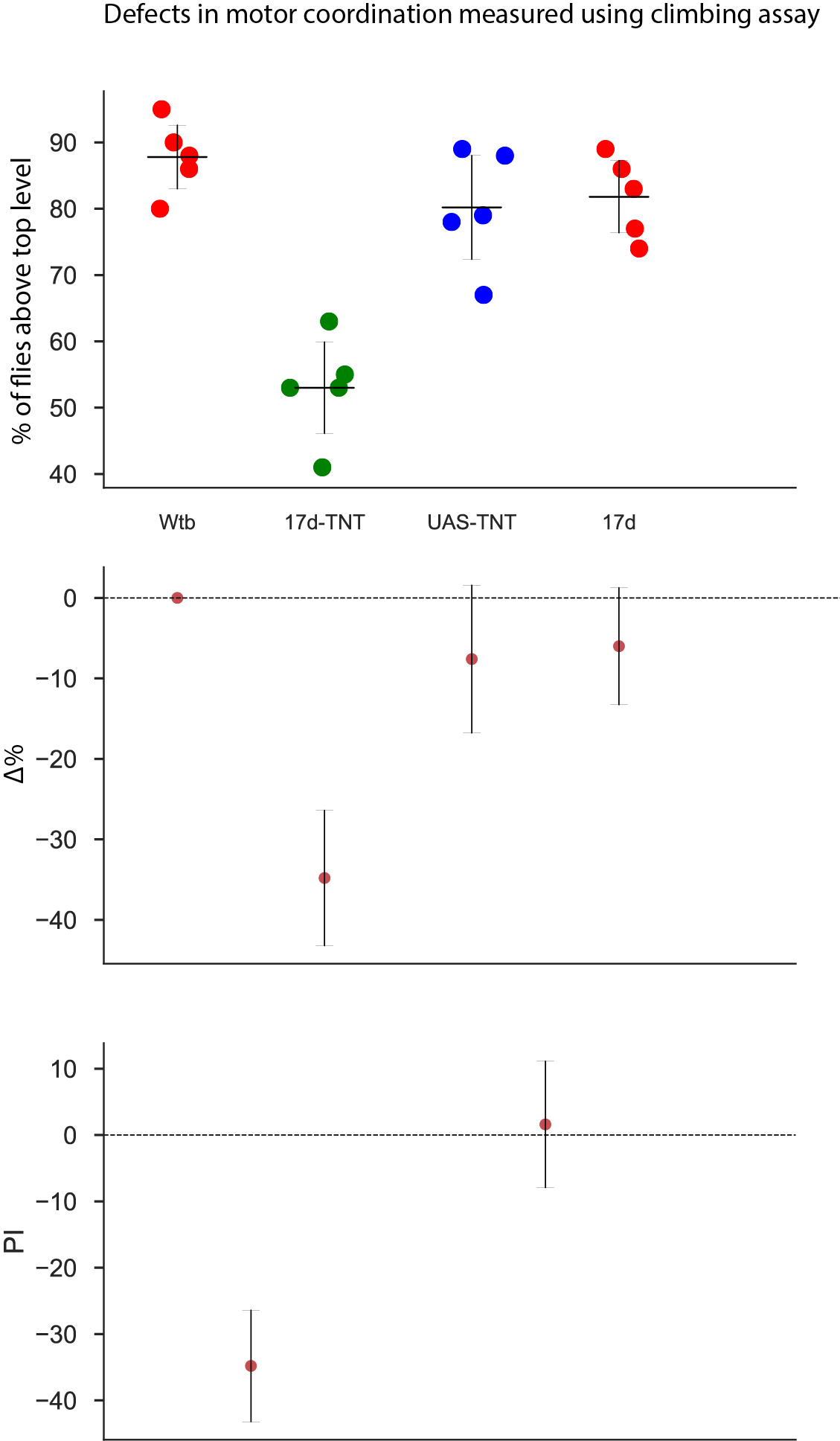
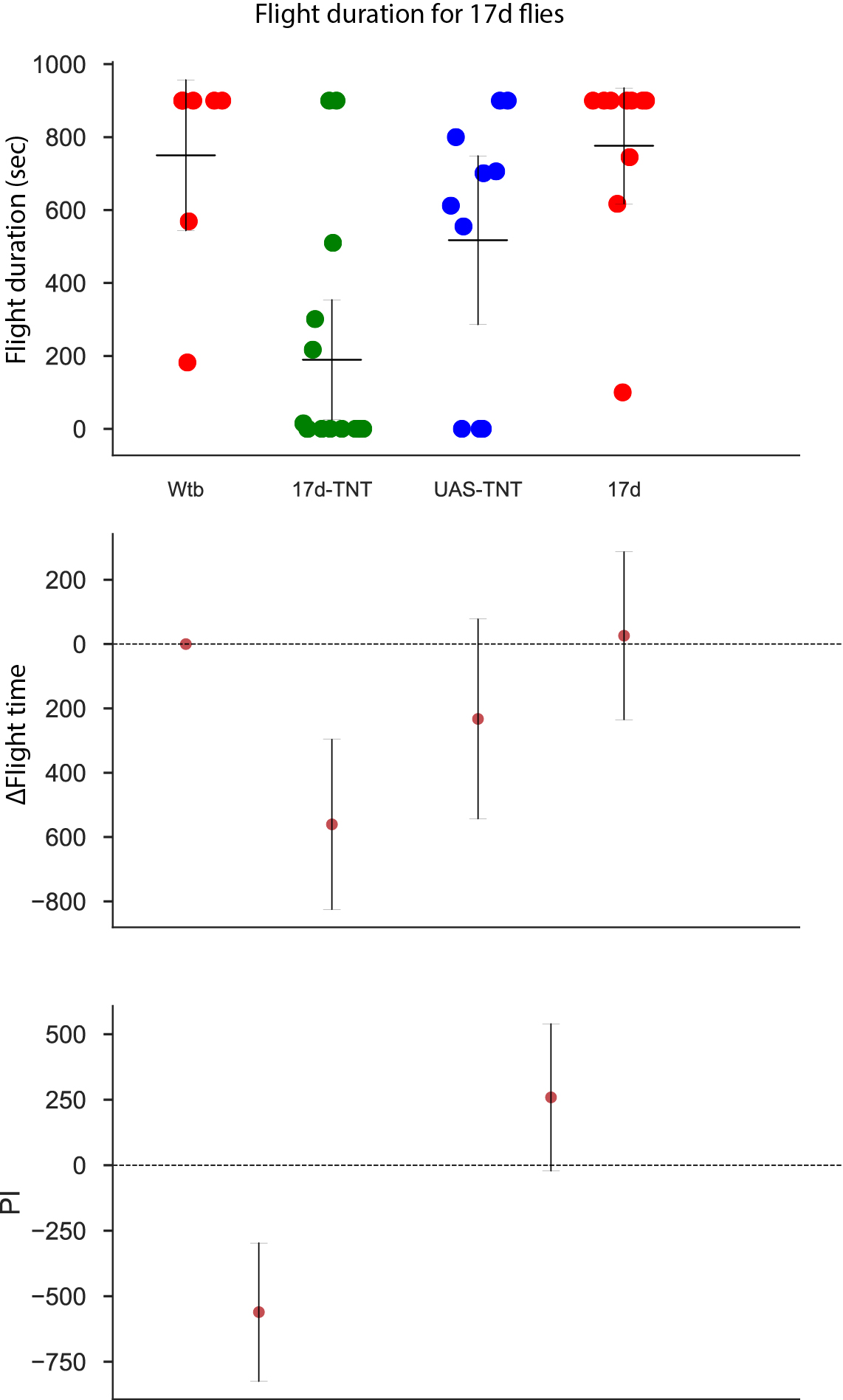
The flies also showed clear impairments in their flight performance. To quantify this I assessed both possible alterations in their motor coordination (using climbing assay) as well as flight performance. The climbing assay relies on walking rather than flying. Both experiments show reduced ability of motor coordination and flight performance.
To confirm the specificity of the 17d-Gal4 fly I used the trans-tango flies.
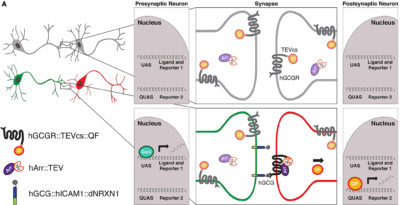
Neuron, 96 (2017) 783-799. doi:10.1016/j.neuron.2017.10.011
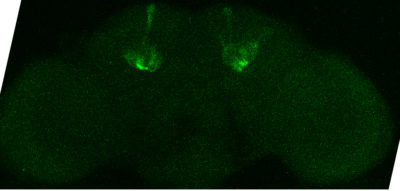
The trans-tango is notorious for having a low expression in adult flies, which was also observed by me. The image is taking without any GFP-antibody.
Category: Anatomy, crosses, flight, genetics, Memory, operant self-learning | No Comments
Fussl shows numerical difference in operant self learning
on Tuesday, August 7th, 2018 2:49 | by Anders Eriksson
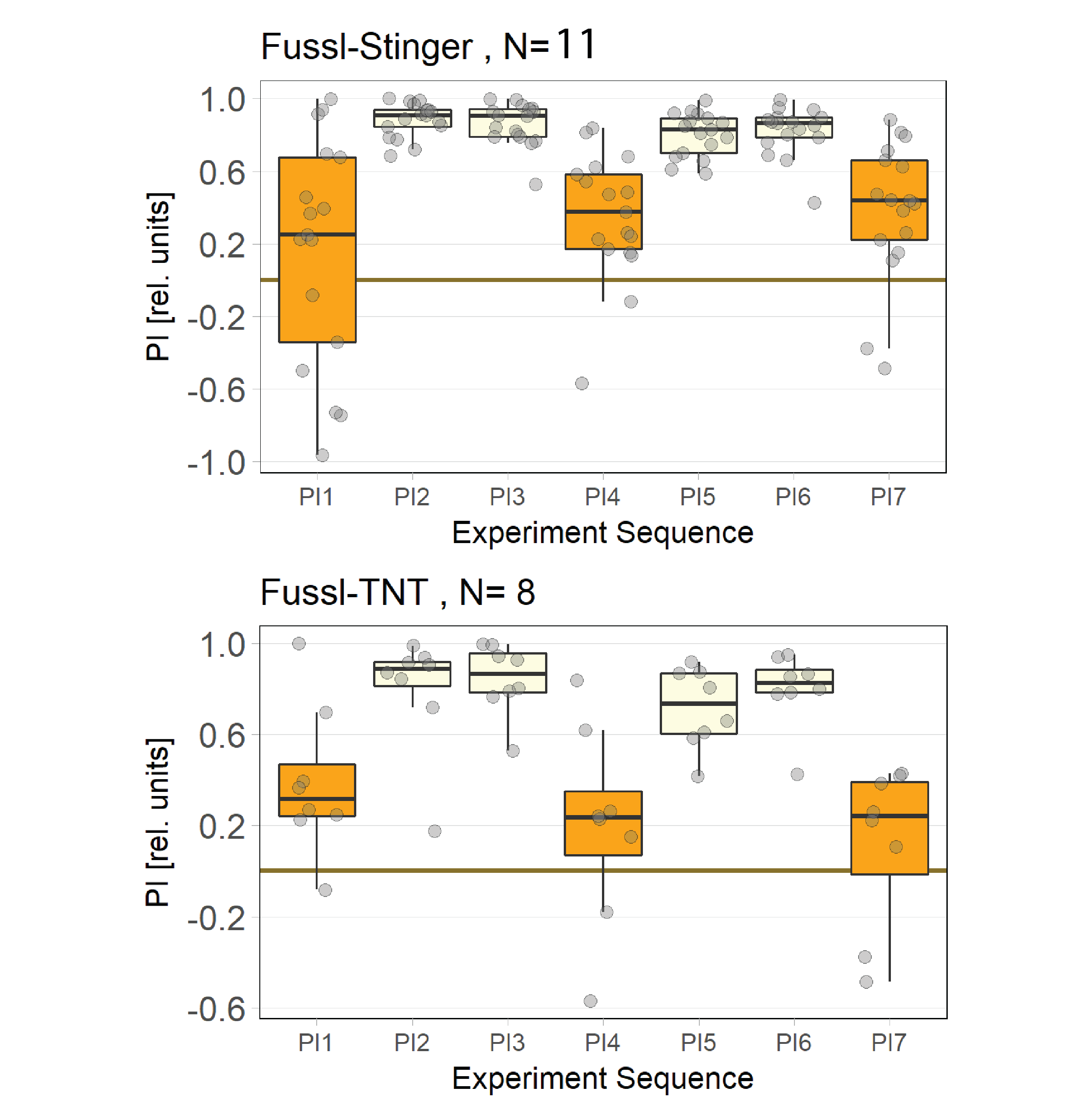
Fussl was crossed with either Stinger (ctrl) or a UAS-TNT line to block the synaptric transmission of the Fussl positive neurons. A third construct was used but did not yield any data due to difficulties with their flight performance. The Fussl-Stinger along with Fussl-TNT flies do also show difficulties in flying. These differences will be assessed.
The experiment was done as a pilot experiment before doing a larger scale.
The data is a bit inconsistent but shows a positive and reassuring numerical difference. The control is a bit lower than expected, compared to WTB flies (showing usually a PI 0f 0.6). The flies have a slightly different background than wtb flies and have pale orange eyes (still no apparent impairments in vision). Further experiments will be conducted before proceeding with a larger sample size of the flies.
Category: crosses, flight, genetics, Lab, Memory, operant self-learning | No Comments
Role of dopaminergic neurons in operant behaviour
on Friday, July 27th, 2018 3:54 | by Gaia Bianchini
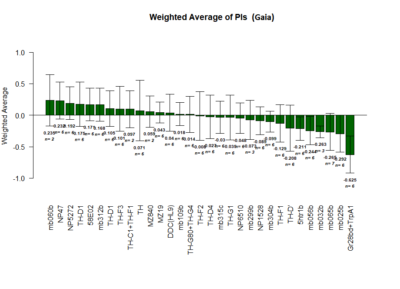
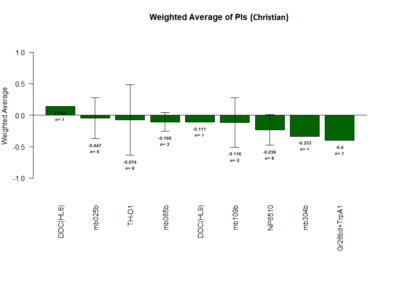
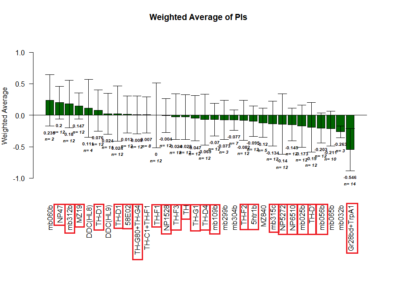
Positive Control: Gr28bd-G4, TrpA1-G4
Parameters: Light: intensity (500 Lux side, 1000 Lux bottom); frequency = 20Hz; Delay = 1 ms; Duration = 9.9 ms; volts = 6.4
Red lines: completed
mb025b: not selected against tubby
T-Maze experiments : screen results as on 16-07-2018
on Monday, July 16th, 2018 1:32 | by Gaia Bianchini
Results of the T-maze screen analysis, both individual and combined.
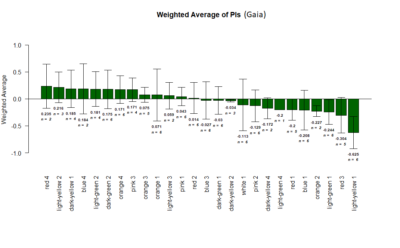
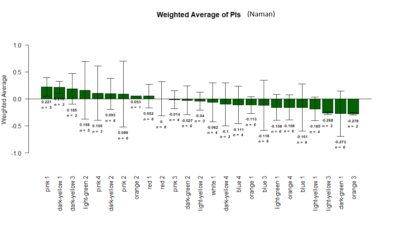
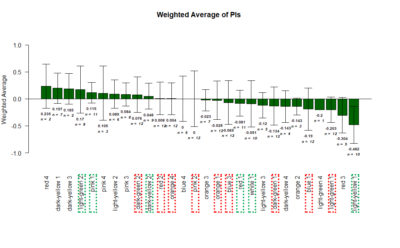
Yellow 1 (Positive Control): Gr28bd-G4, TrpA1-G4
Parameters: Light: intensity (500 Lux side, 1000 Lux bottom); frequency = 20Hz; Delay = 1 ms; Duration = 9.9 ms; volts = 6.4
Tmaze Exploratory analysis : Middle Flies
on Monday, July 2nd, 2018 2:08 | by Naman Agrawal
plotting the mean ratio of flies which stay in the middle during experiment.
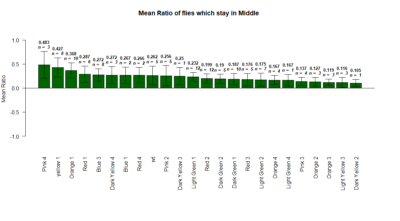
Yellow 1 (Positive Control): Gr28bd-G4, TrpA1-G4
Parameters:
Light: intensity (500 Lux side, 1000 Lux bottom)
frequency = 20Hz
Delay = 1 ms
Duration = 9.9 ms
volts = 6.4
Category: genetics, neuronal activation, open science, Optogenetics | No Comments
T-Maze experiments : screen results as on 25-06-2018
on Monday, June 25th, 2018 1:13 | by Naman Agrawal
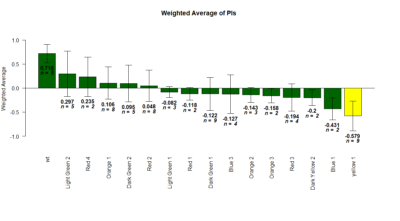
Yellow 1 (Positive Control): Gr28bd-G4, TrpA1-G4
Parameters:
Light: intensity (500 Lux side, 1000 Lux bottom)
frequency = 20Hz
Delay = 1 ms
Duration = 9.9 ms
volts = 6.4
Category: genetics, lab.brembs.net, neuronal activation, open science, Operant learning, Optogenetics | No Comments
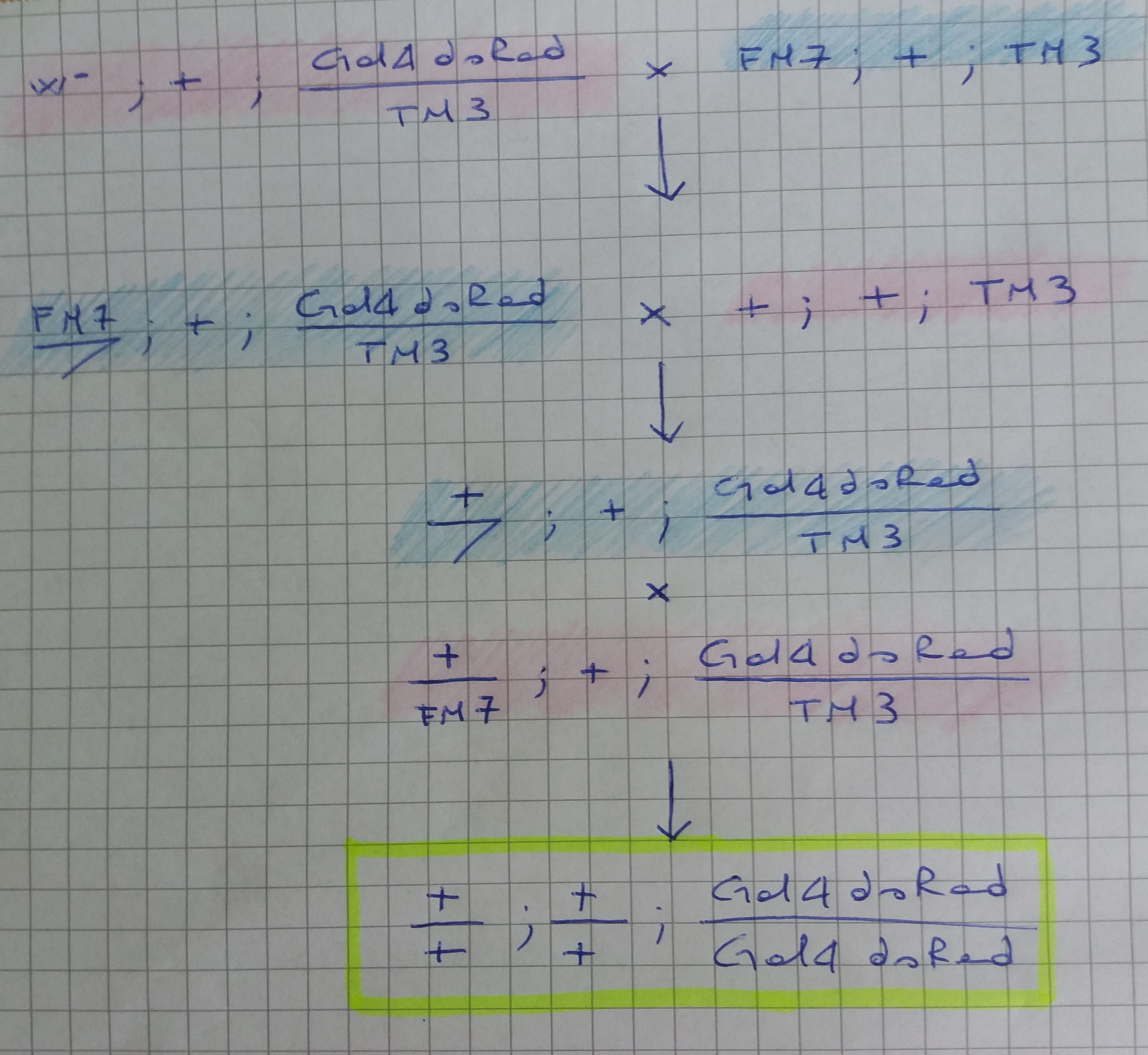
Crosses for isogenize FoxP-IsoB-Gal4 line
on Tuesday, June 19th, 2018 12:13 | by Ottavia Palazzo
Category: crosses, Foxp | No Comments