Updated results from JoyStick experiments with the “new” control driver line (and some OA flies)
on Monday, October 13th, 2025 12:46 | by Daniel Döringer
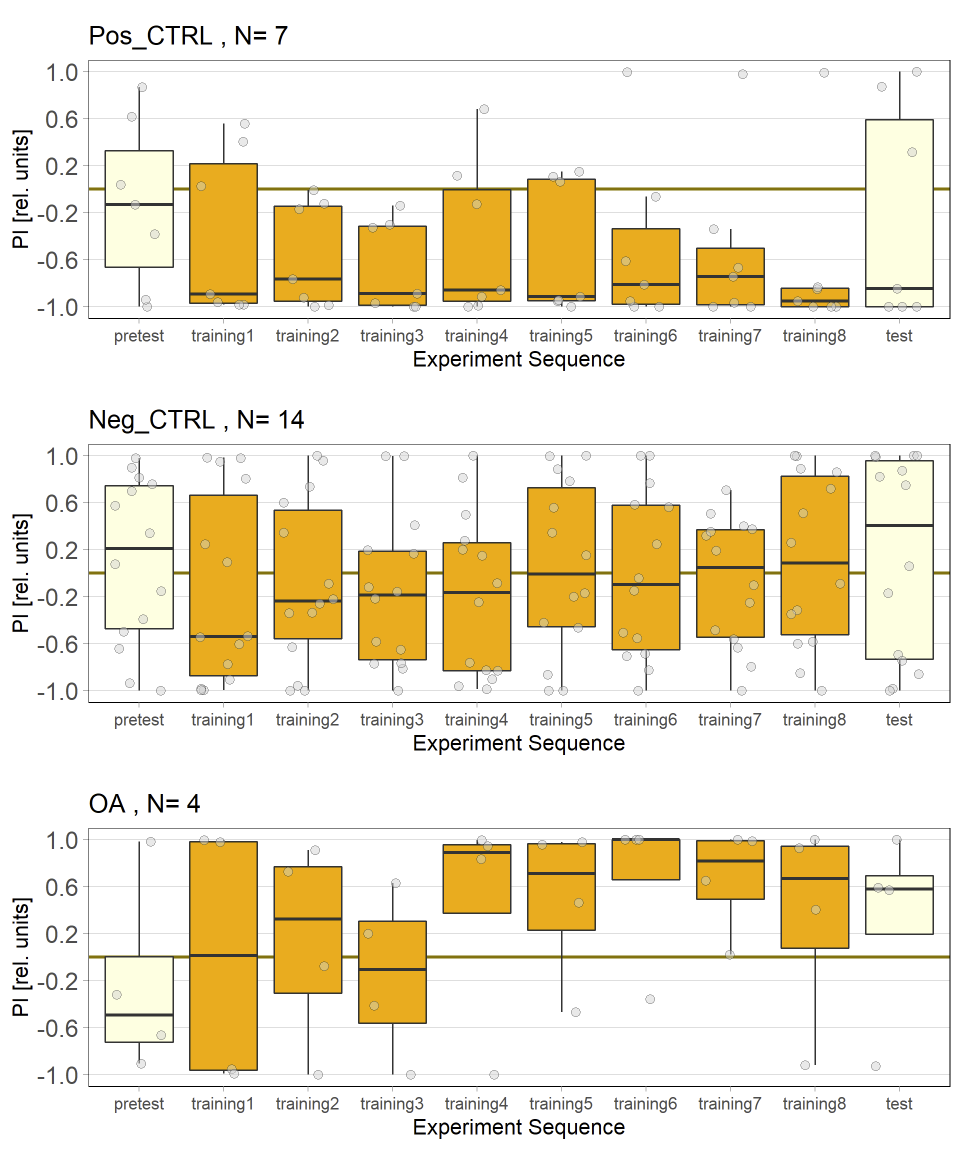
Unfortunately I am still dealing with the problem that flies from my negative control group avoided optogenetic activation, even when their optogenetic channel should not work without ATR supplementation. To tackle this problem I used a “new” effector line (I prepared a new stock from our stock collection) for crossings and tested the offspring, without any improvement concerning the avoidance. Unfortunately the “new” effector line I tested turned out to have lost its “NorpA” mutation which would ensure that the male offspring is blind, thus should rule out any phototaxis-bias. Since flies still avoided the light, a) the effector line does not seem to be the problem and b) the ability to see does not seem to affect the flies behavior in the JoyStick setting.
As a next step I targeted the driver line, as maybe a mutation might have lead to an increase in Gal4. Since we always observed a slightly negative values for our negative control group, hinting that at least some residual activation of the CsChrimson channel is possible even without ATR, an increase in Gal4 might lead to a higher expression of the optogenetic channel.
Residual activation + More channels = More residual activation = Our observed avoidance???
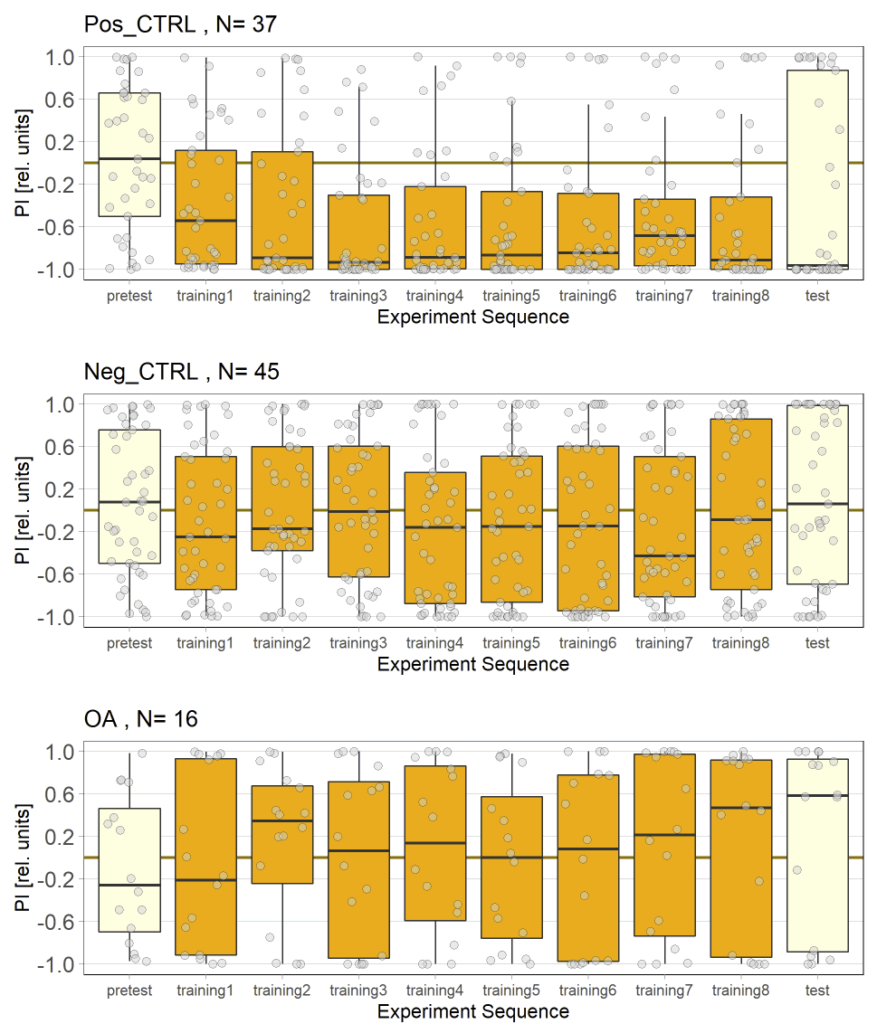
So positive control looks good, negative control is still slightly negative but to an extend that I would consider neglectable.
The additional group here called “OA” are OA;VuMA2 x NorpA, 20xUAS-Chrimson flies. It’s way too early to make any assumptions from the current data but I am looking forward to the results for this group.
Update 27/10/25: Added more flies

Category: Biogenic Amines, Optogenetics | No Comments
Salt (1.5 M) avoidance of 3rd instar larvae
on Sunday, October 12th, 2025 11:53 | by Radostina Lyutova
Category: Biogenic Amines, DAN, Food preference, Larve, neuronal activation, Optogenetics | No Comments
Almost there now…
on Tuesday, October 7th, 2025 9:57 | by Björn Brembs
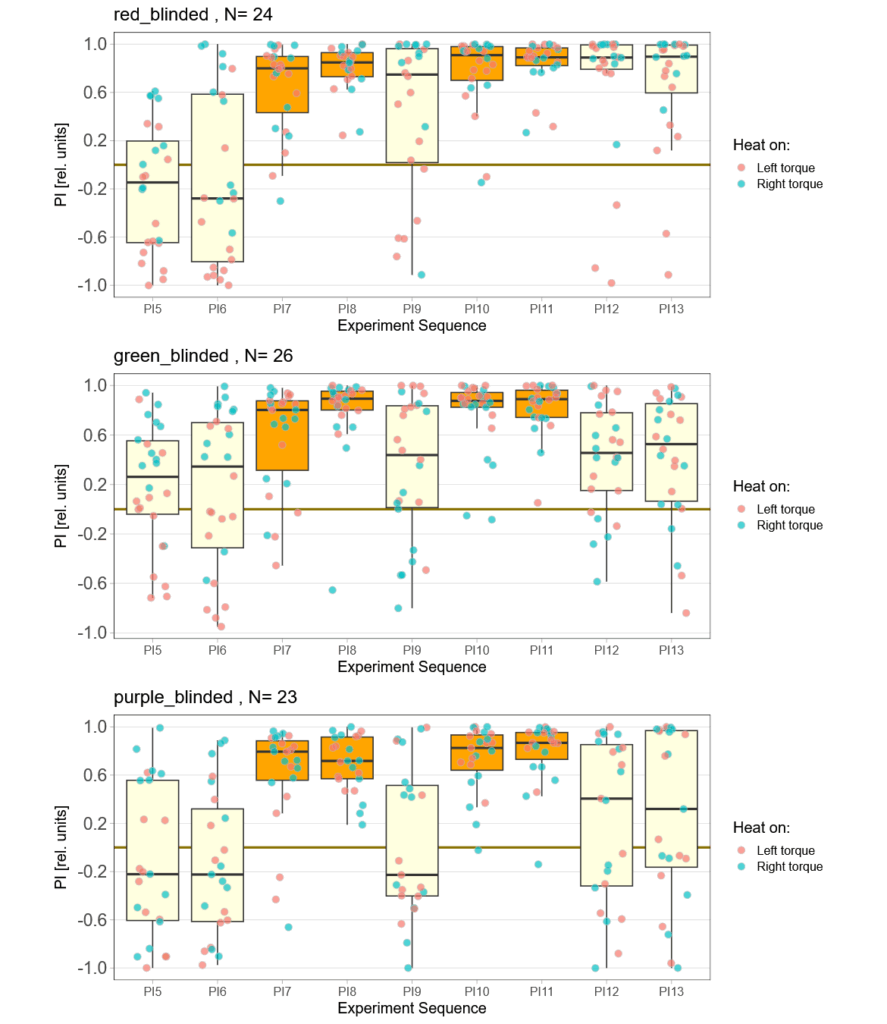
Getting close to a sample size of 30! One, maybe two weeks left, depending on how much time I find to measure. Time to break the code is drawing nearer. Here the current results:
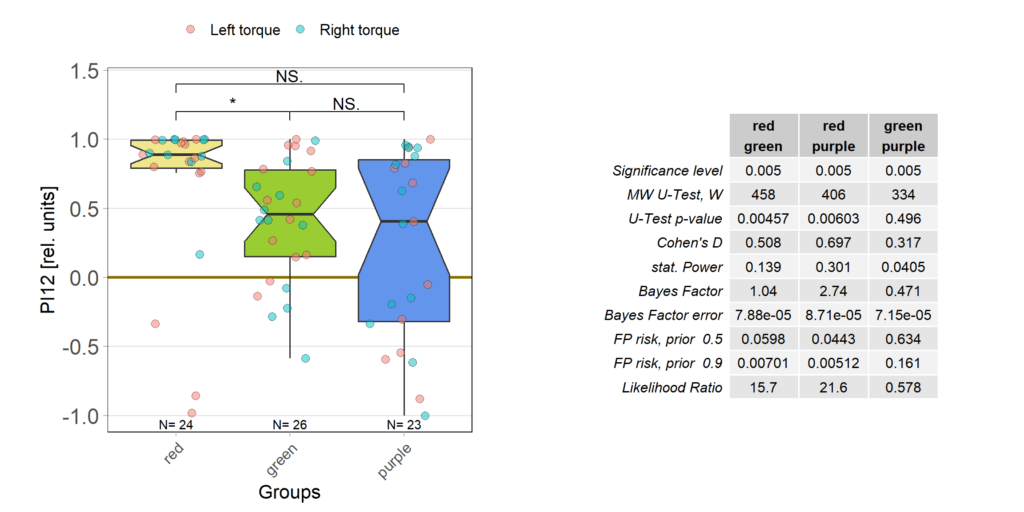
Some interesting statistics:
Category: operant self-learning | No Comments
2.Yt learning red line
on Monday, September 29th, 2025 1:01 | by Julia Schulz
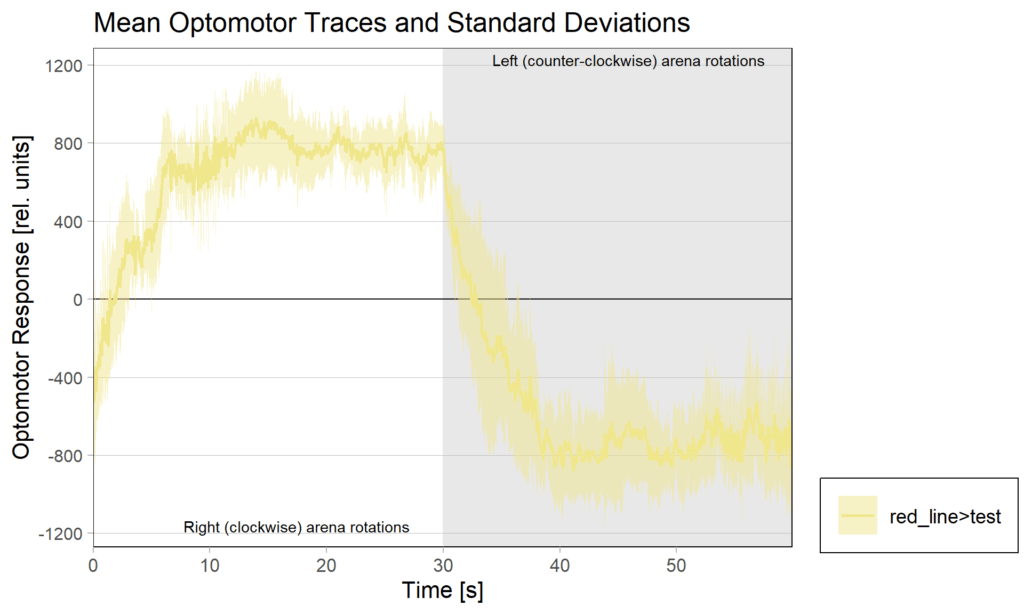
2.1 OMRs at start
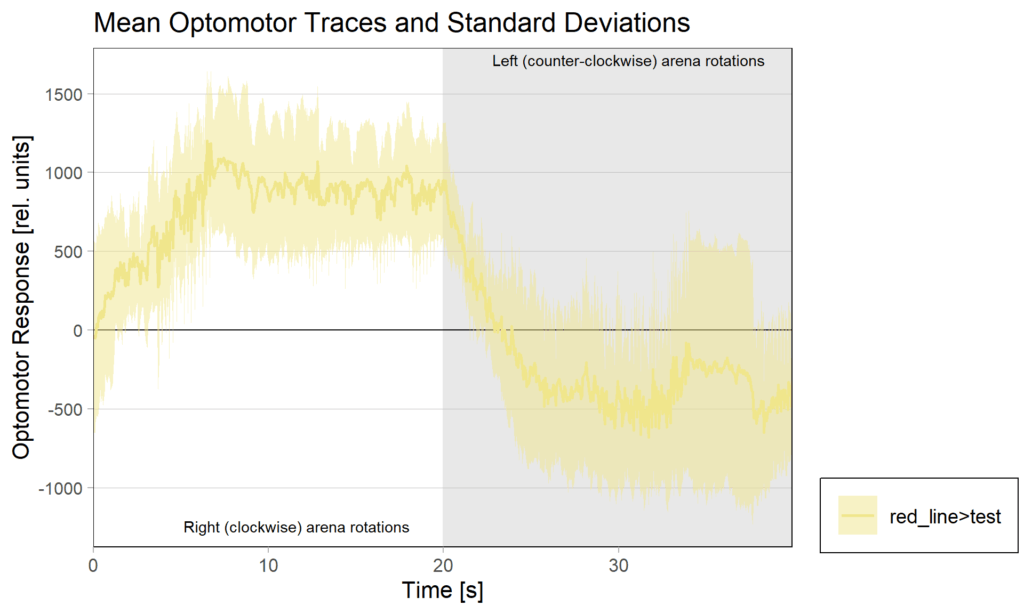
2.2 OMRs at end
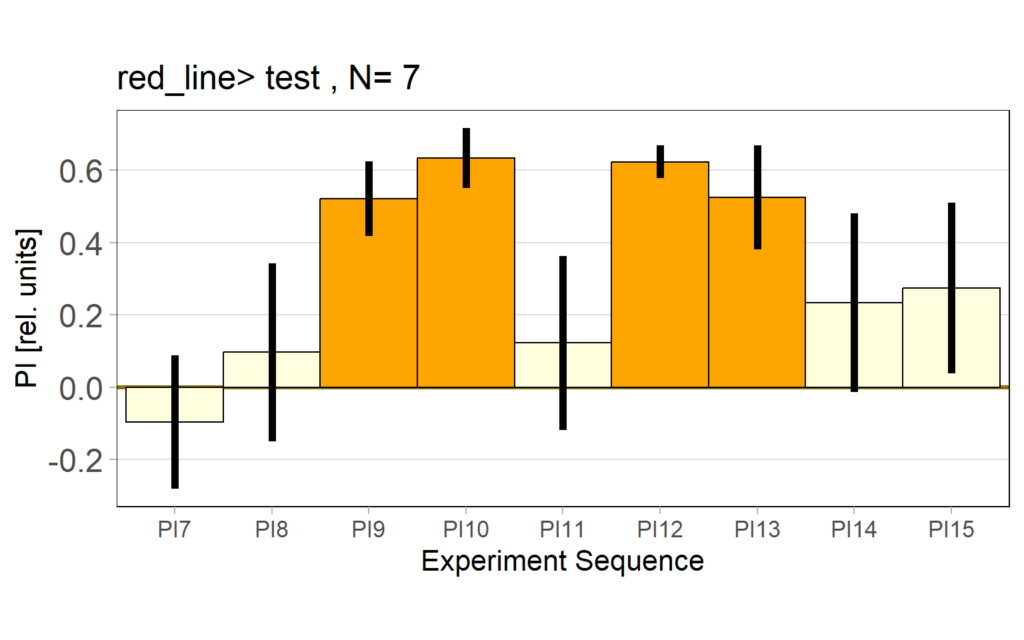
2.3 PI( preference subtractted)
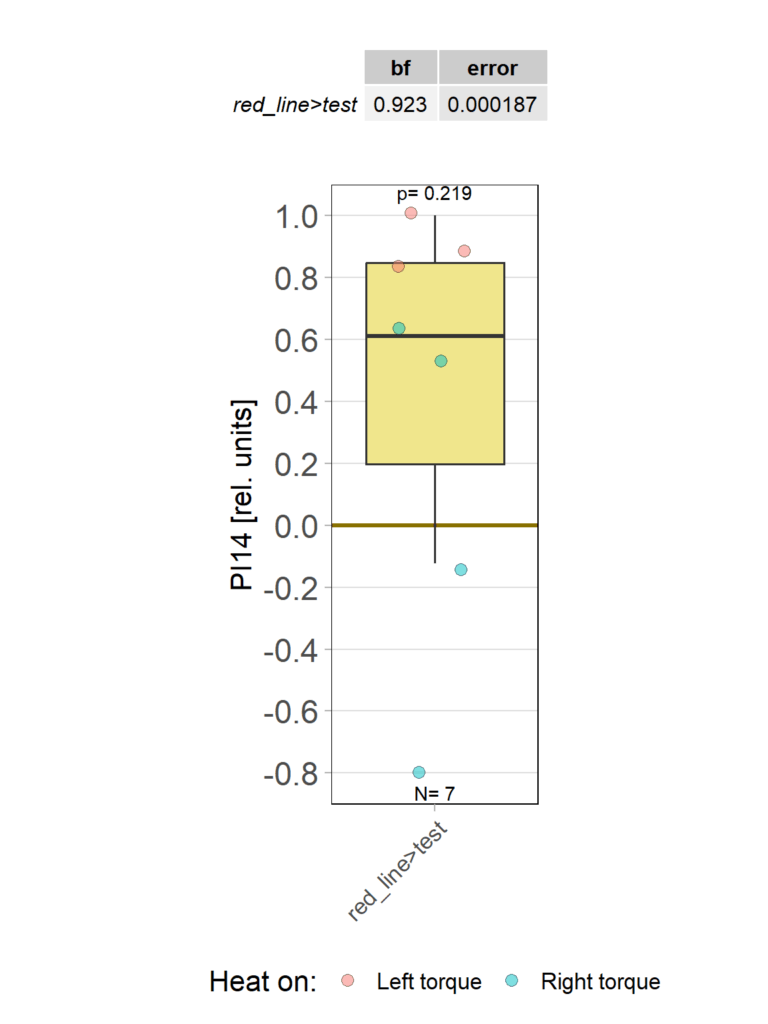
2.4 statistics
Category: Operant learning, operant self-learning | No Comments
1.Yt learning_WTB flies
on Monday, September 29th, 2025 12:58 | by Julia Schulz
1.1 OMRs at start
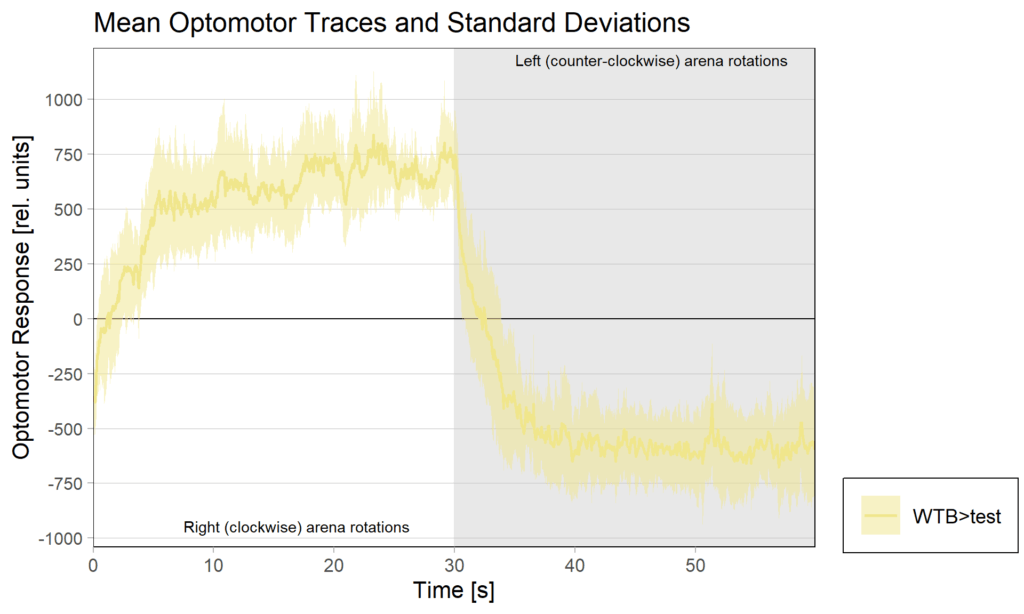
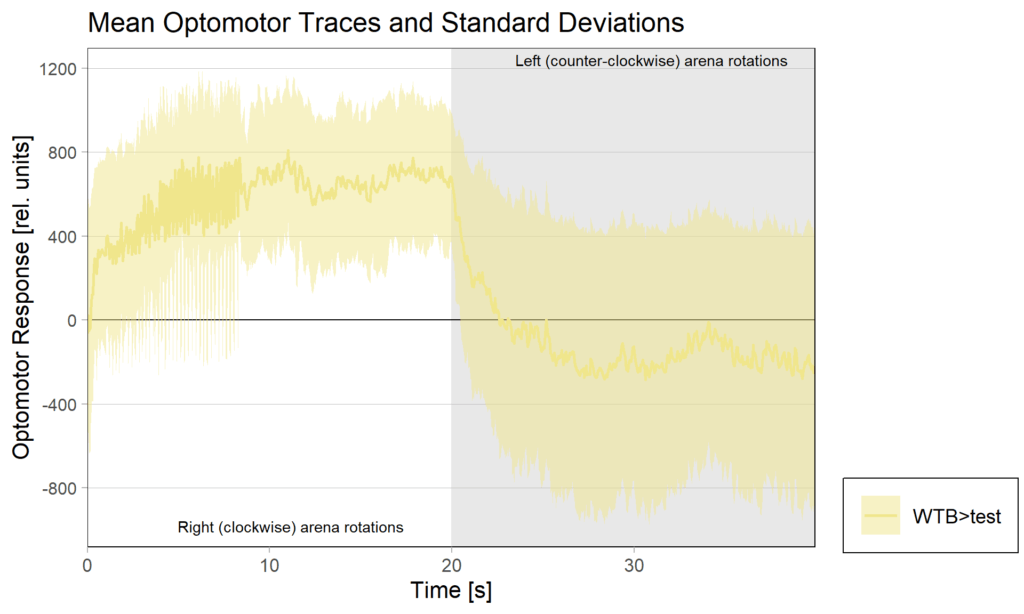
1.2 OMRs at end
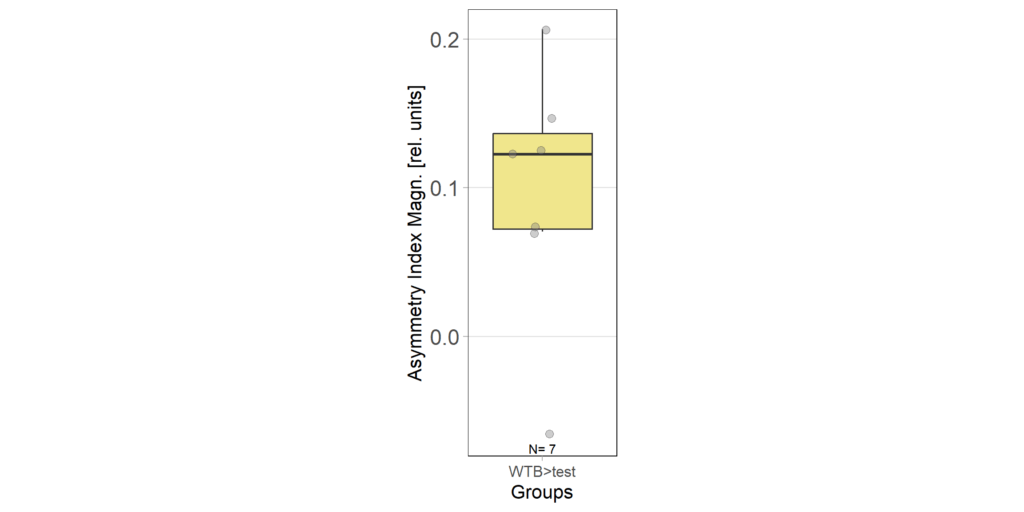
1.3 Asymmetry Index at start
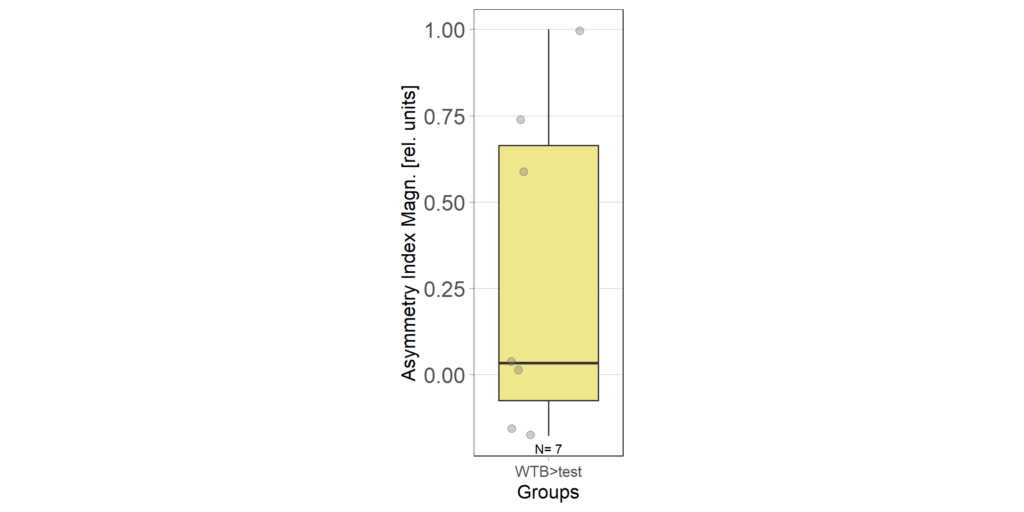
1.4 Asymmetry Index at end
1.5 PI (preference subtracted)
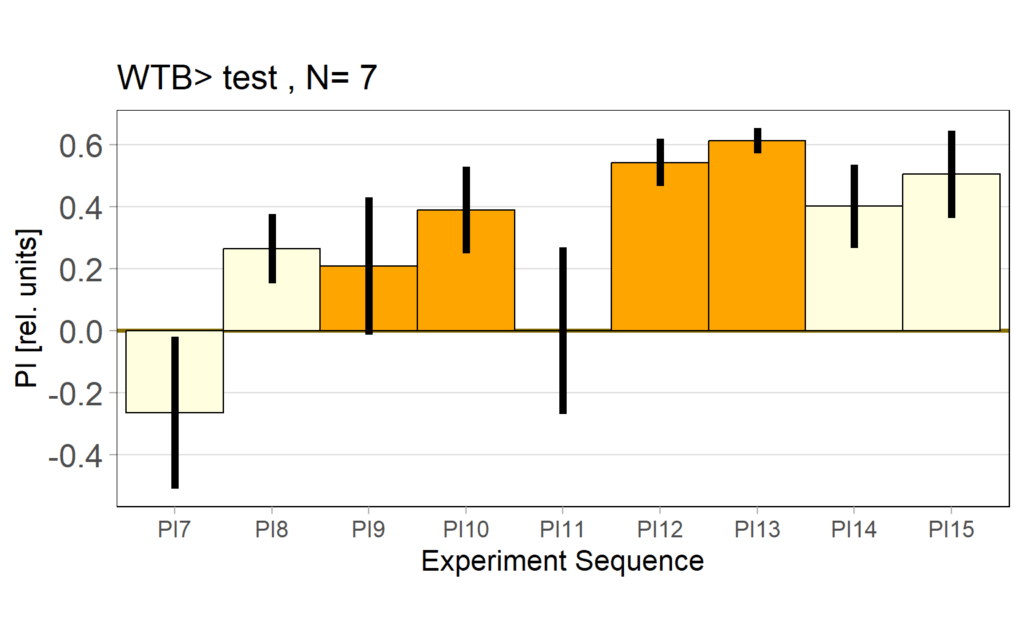
1.6 Statistics
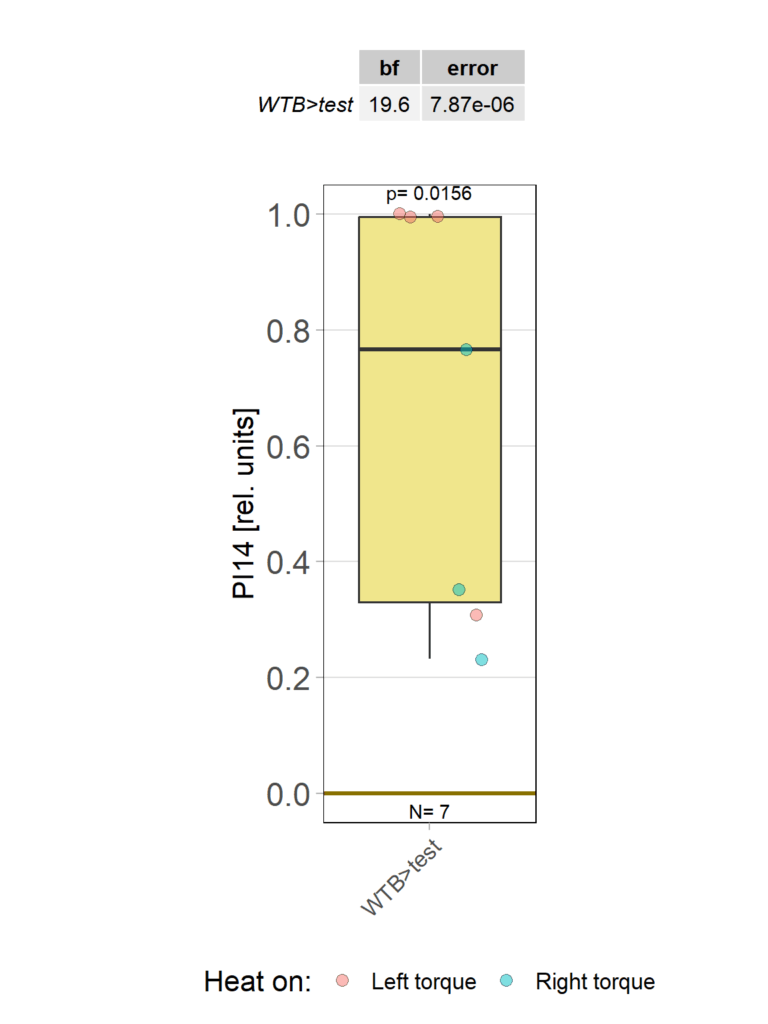
2.
Category: Operant learning, operant self-learning | No Comments
Salt (1.5 M) avoidance of 3rd instar larvae
on Sunday, September 28th, 2025 12:21 | by Radostina Lyutova
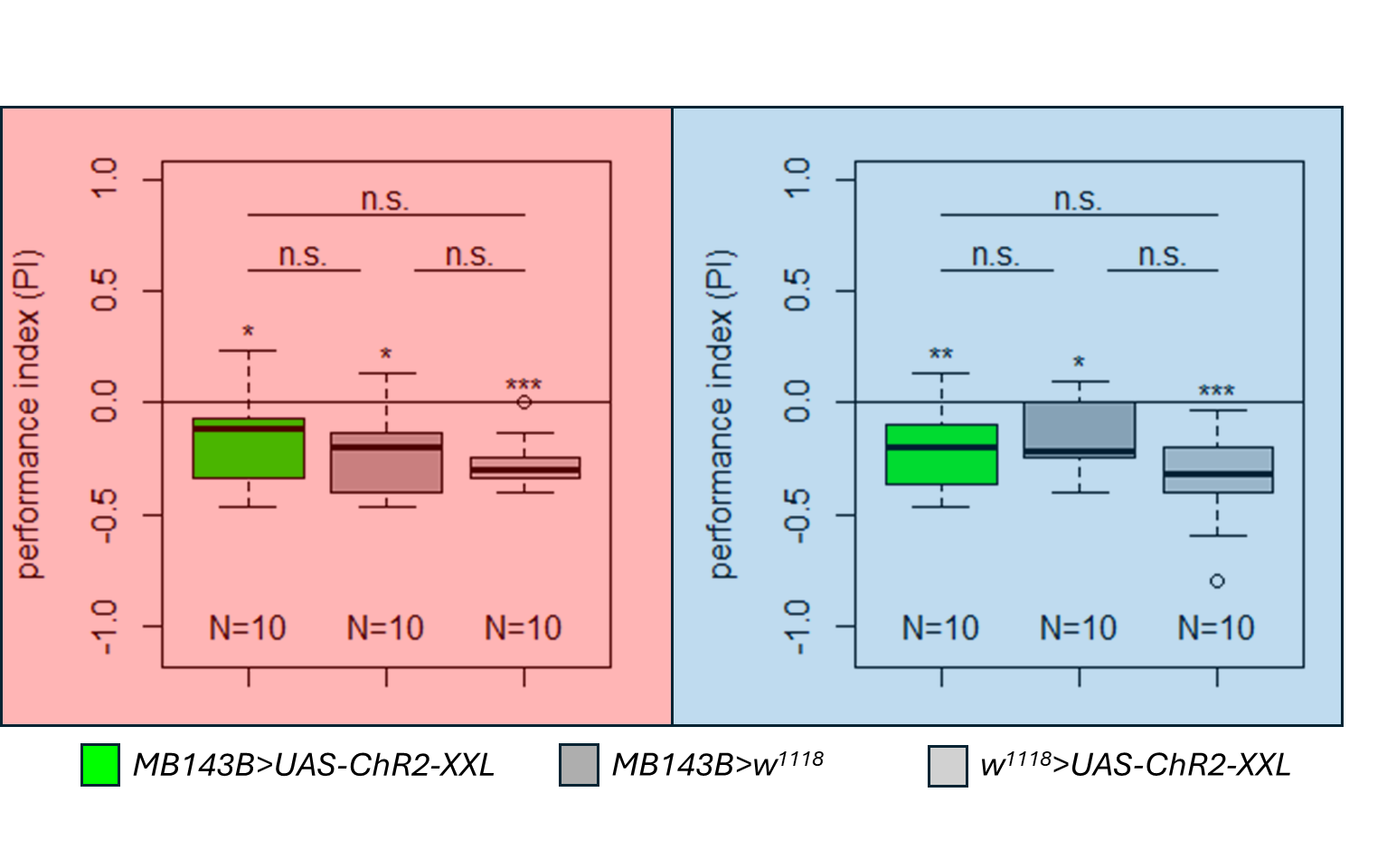
Category: Biogenic Amines, DAN, Food preference, Larve, Mushroom Body, neuronal activation, Optogenetics | No Comments
Massacre by quality control
on Friday, September 26th, 2025 3:45 | by Björn Brembs
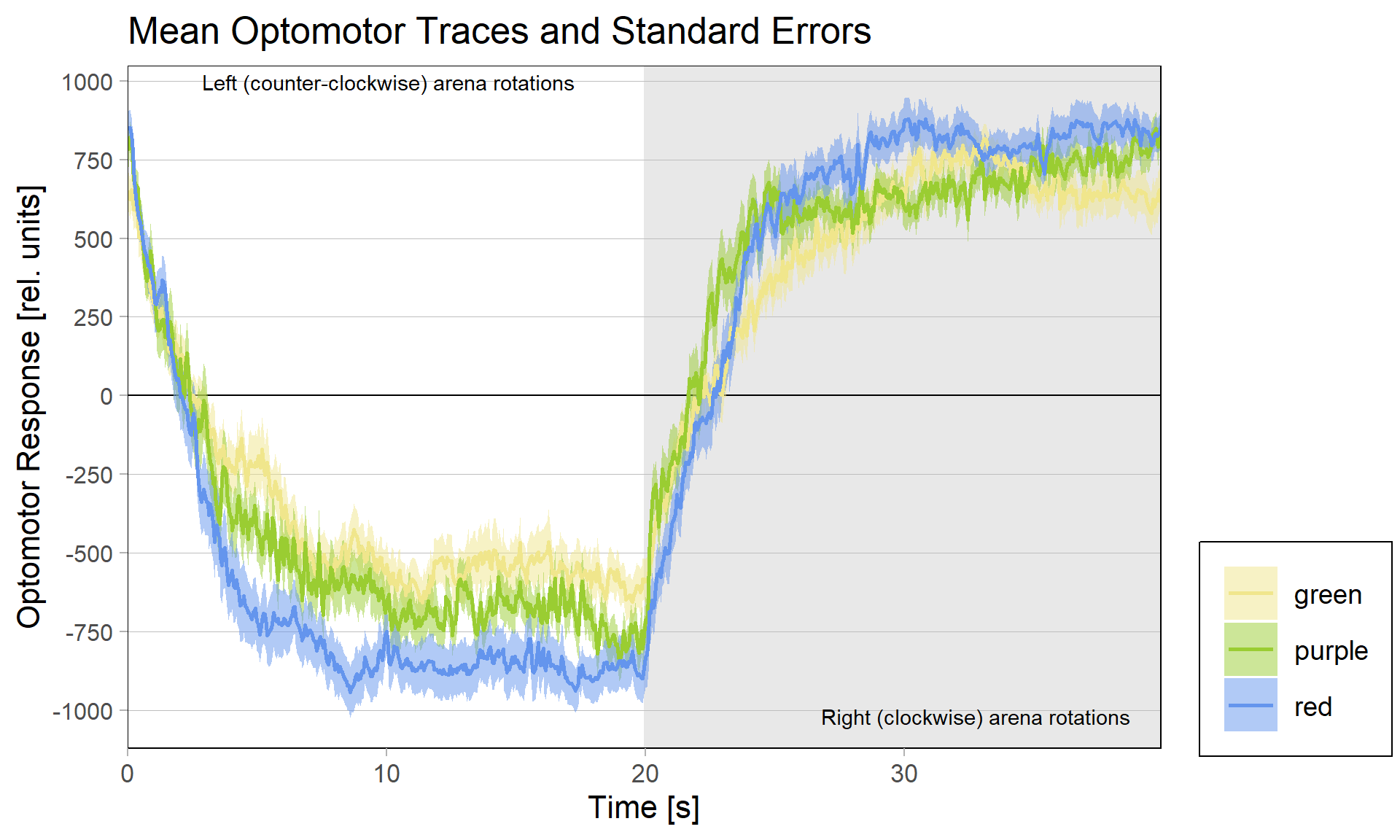
Finally found some time to go through all the individual fly data. All groups lost some flies that had to many or too long flight pauses, strong preferences already before training or some other screw-up during the experiment that I either failed to notice or only showed themselves in this quality control phase. And it was the red group, where I had thought everything just worked so fine, that lost most flies. More than a third of all the flies I had tested in this group failed the very basic quality control criteria – double the number of any other group. This is very annoying as it means there now are a lot more flies for me to test. Nothing to do about that, than to carry on. Here is the result after the massacre, where red lost 10 flies, green lost 5 and purple lost 2:
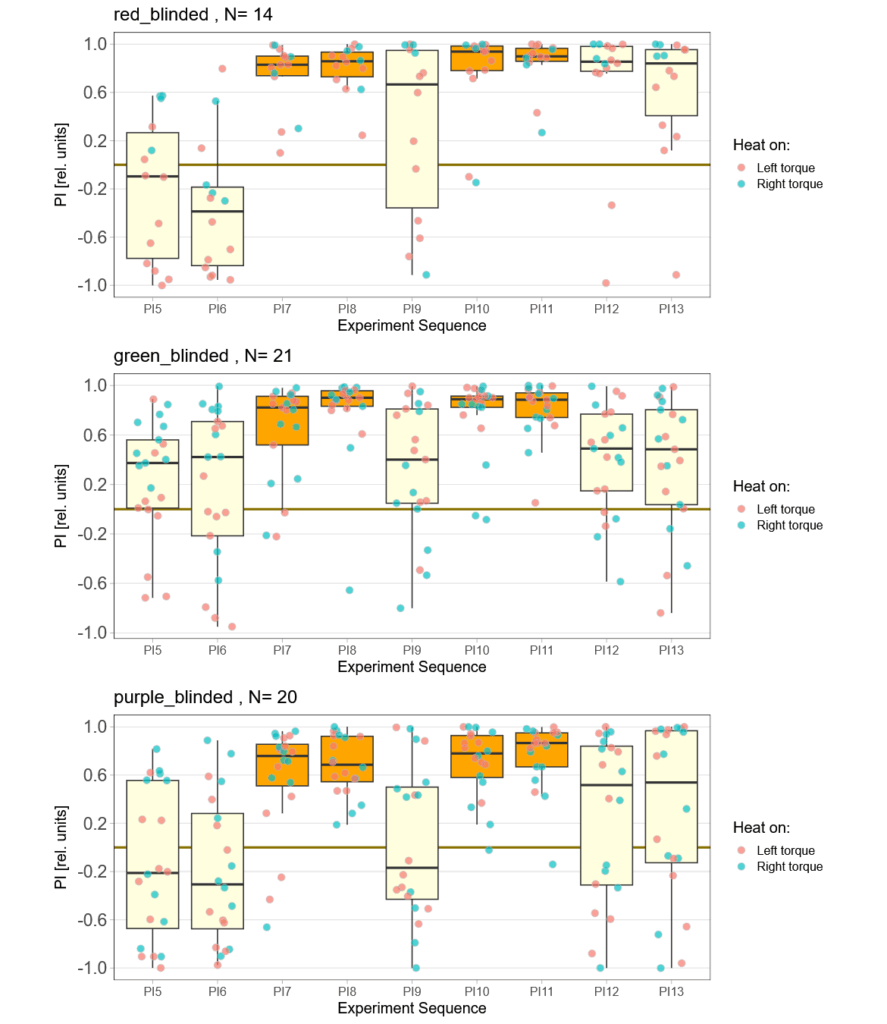
But even with so many flies removed, the red group still has the flies with the strongest optomotor response:
Category: Operant learning, operant self-learning | No Comments
Collecting ellipsoid-body self-learning data, week 2
on Wednesday, September 17th, 2025 9:23 | by Björn Brembs
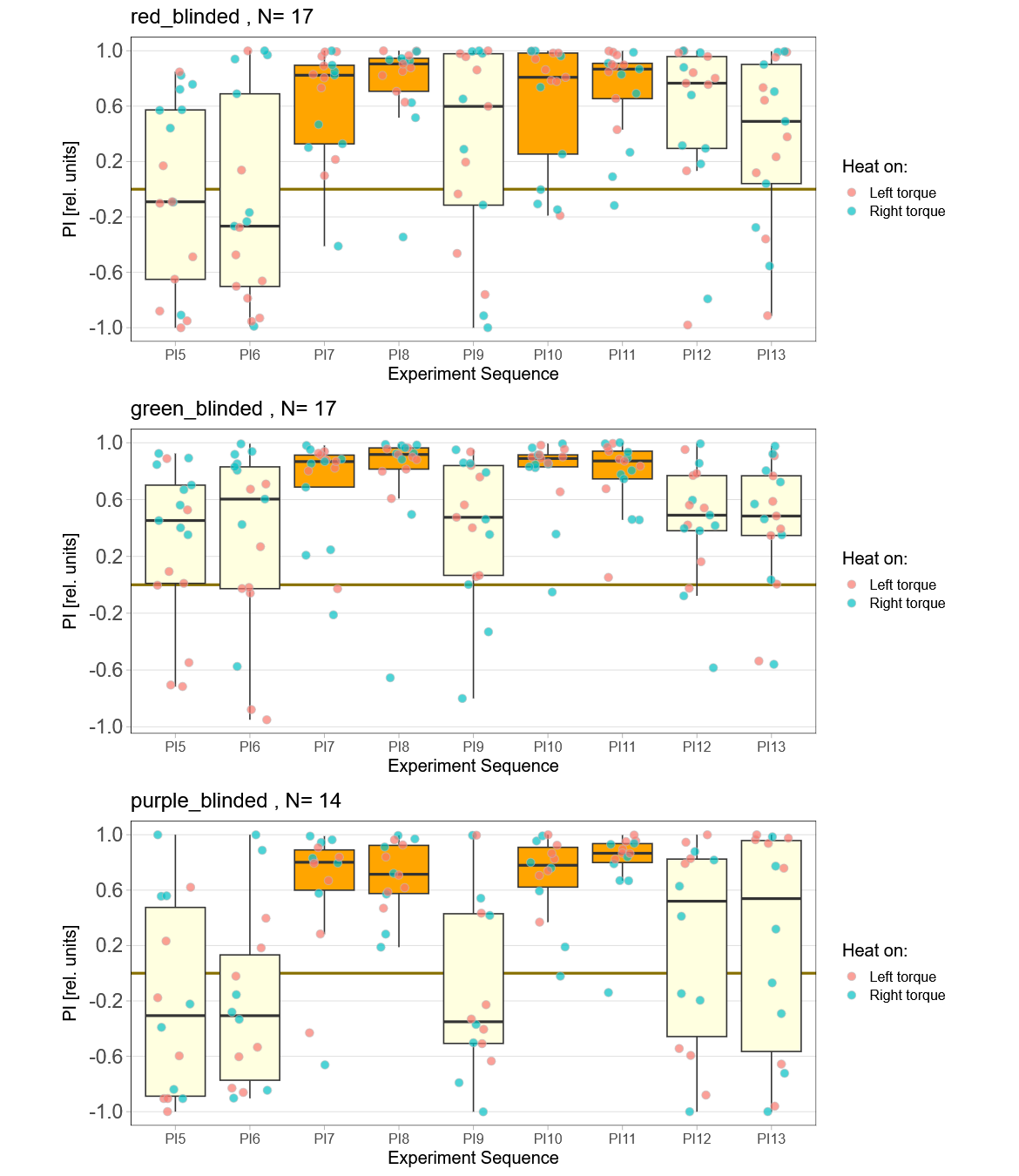
Now two weeks of data collection, but so far no time for quality control. This means a bunch of flies will likely drop out after I have been able to check for the quality of the reocrdings. So far, one group (red) seems to learn really well, while the other two are too early to tell.
Raw data avilable on the publication server.
Category: Operant learning, operant self-learning | No Comments
Trying to fix the negative control
on Monday, September 8th, 2025 12:57 | by Daniel Döringer
My previous JoyStick and T-Maze experiments revealed problems concerning our control groups. While control flies that were fed with ATR supplemented food avoided the light nicely, we also observed avoidance in our negative control who did not receive any ATR. In our experiments we use the CsChrimson channel, which should need ATR to be functional.
My hypothesis for why also our negative control now shows avoidance was, that some mutation in the gene encoding for the CsChrimson channel might have affected its sensitivity and now there was at least some residual activation, even without ATR.
As an attempt to identify the underlying problem I crossed new control flies, this time using NorpA;20xUAS-Chrimson flies from our stock. If there had been a mutation in the flies I used earlier the new flies should not show avoidance.
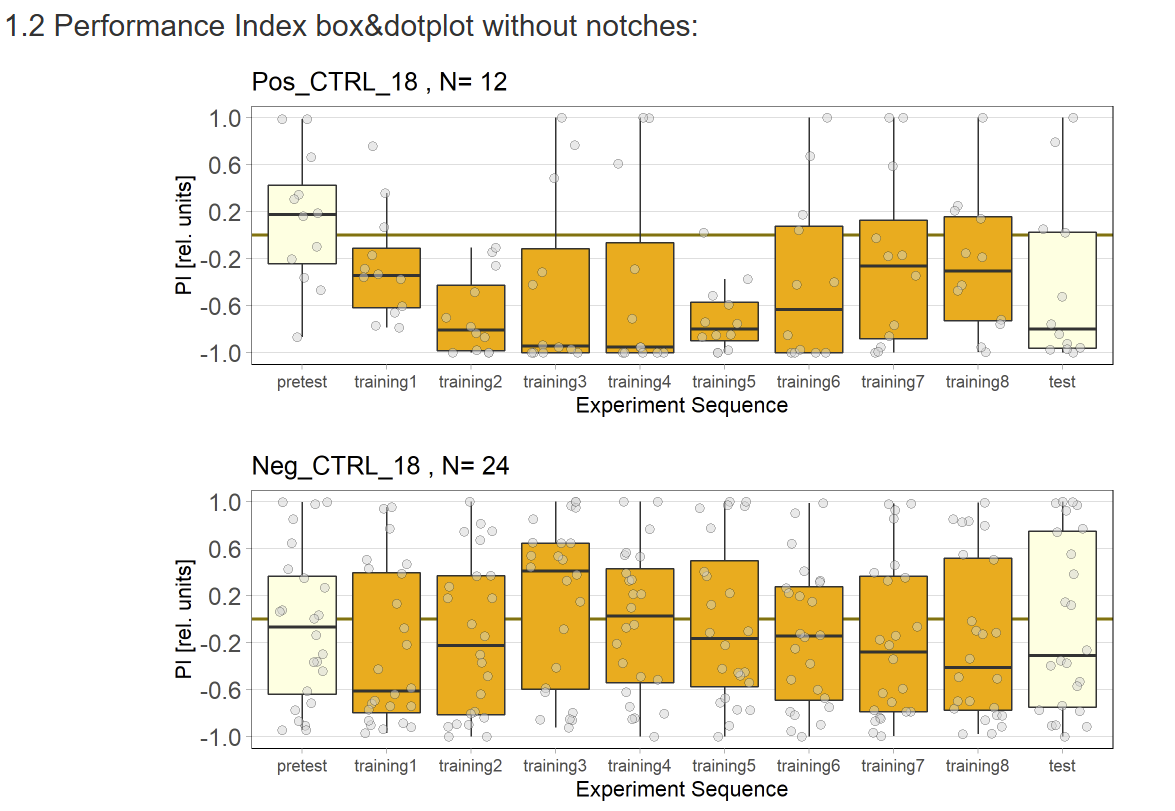
As of now, the results are hard to interpret. There seems to be also avoidance with the new flies, however this might also be due to low sample size. If increasing the sample size will only show more robust avoidance, we’ll have to think about other causes for the problem…
Update 17.09.25:
The flies used in the previous experiments unfortunately turned out to be not blind. I conducted a new set of experiments, this time with blind flies, and I also changed the light used to red light, at a peak intensity of 500 Lux.
With this setup the results look more like what we would expect from our negative control. Of course the sample size is too low for me to really be able to tell whether the negative control will not show a preference.
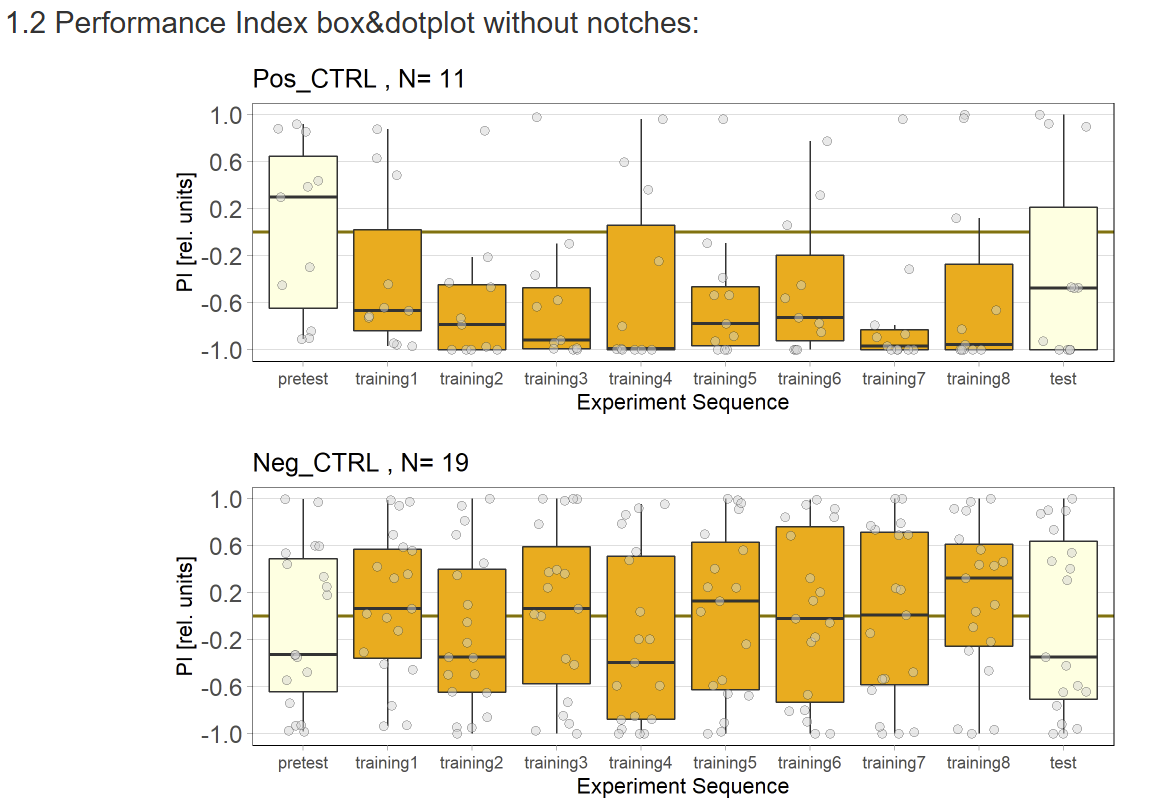
Update: 07/10/25: The results below were obtained from a new set of experiments. I reared new flies (this time the blind flies actually should be blind) and crossed them to Gr28bd-Gal4; TrpA1-Gal4 flies from our stock. If the problem was indeed the driver line, this negative control should not show avoidance. Its a bit early to say but for now it seems as I might be on the right track.
Category: Optogenetics | No Comments
Knock out of aPKC/FoxP intermediates using CRISPR/cas
on Monday, September 8th, 2025 11:03 | by Julia Schulz
Category: Operant learning, operant self-learning | No Comments