reinforcement scores
on Monday, July 23rd, 2018 2:21 | by Saurabh Bedi
Below is given the plot of effect-sizes of reinforcement of 30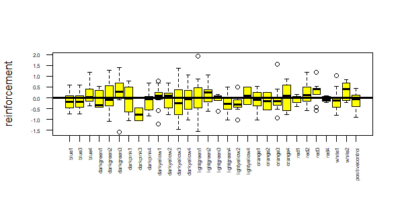 genotypes. On the y-axis are the PI values for learning effect sizes. These scores are calculated by taking the average of PI values of training periods and then subtracting pretest PI values from it.
Reinforcement scores = mean of training score – pretest PI score

Category: Operant learning, Optogenetics, Uncategorized | No Comments
wiggle difference
on Monday, July 16th, 2018 3:26 | by Saurabh Bedi
Below is a plot of all the flies of 18 genotypes for the wiggle difference. This is calculated by taking the sum of the difference of the tracepoint for each step. Thus, wiggle = sum(difference in tracepoint at each step). This is done for the entire 20 minutes time.
NOTE: The flies have not yet been separated into 2 categories based on pretest values.
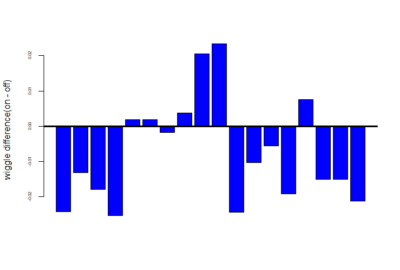
Now we wanted to measure the difference in on wiggle and off wiggle. On wiggle is the wiggle for when the fly was in the part which is supposed to have light on and similarly off wiggle is the wiggle when light is supposed to be off(that is in the portion in which we want to train it to be in). So below is the difference of on wiggle and off wiggle i.e – on wiggle – off wiggle:-
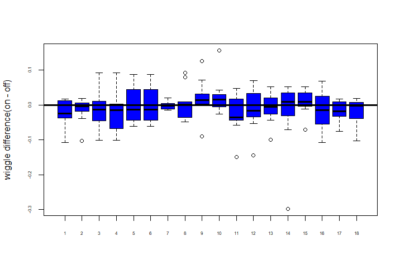
mean of this wiggle difference :-
Category: Operant learning, Optogenetics, Uncategorized | No Comments
reinforcement(without subtracting pretest)
on Monday, July 16th, 2018 3:22 | by Saurabh Bedi
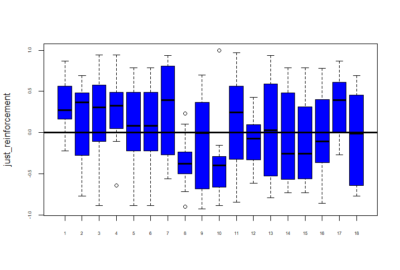
Below is given the plot of effect-sizes of reinforcement of 18 genotypes. On the y-axis are the PI values for learning effect sizes and this is without subtracting the pretest (without normalizing). These scores are calculated by taking the average of PI values of training periods. We are just comparing reinforcement without normalizing with the previous post showing graphs after subtraction of pretest PI’s.
Reinforcement(without normalizing) = mean of training PI values.
Category: Operant learning, Optogenetics, Uncategorized | No Comments
Wildtype flies and flight simulator Part 2
on Monday, June 11th, 2018 1:29 | by Anders Eriksson
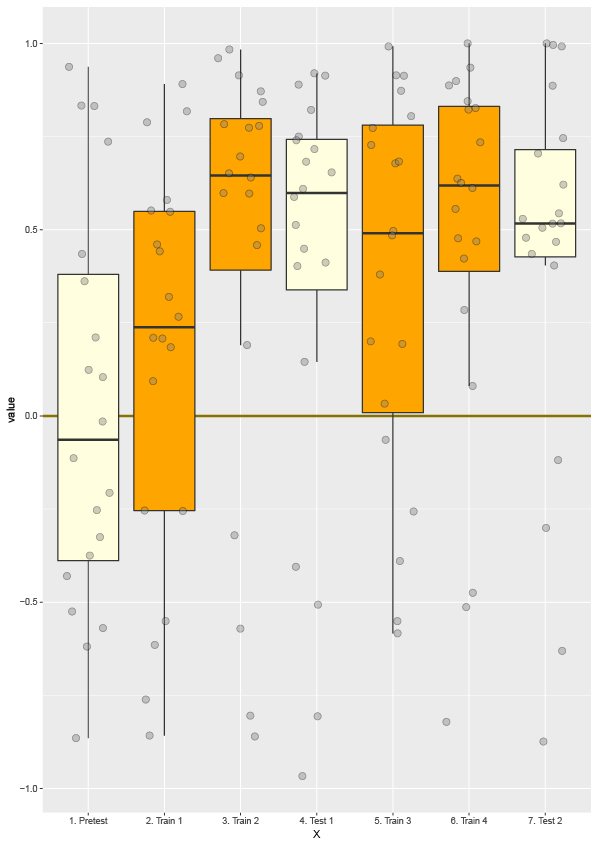
Replicated wild type berlin flies in the flight simulator
Category: flight, Memory, R code, Uncategorized | No Comments
Recurrence quantitative analysis
on Monday, October 30th, 2017 11:43 | by Christian Rohrsen
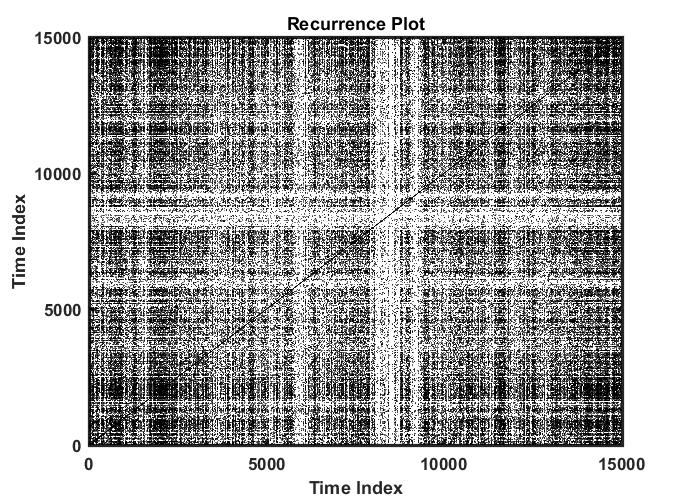
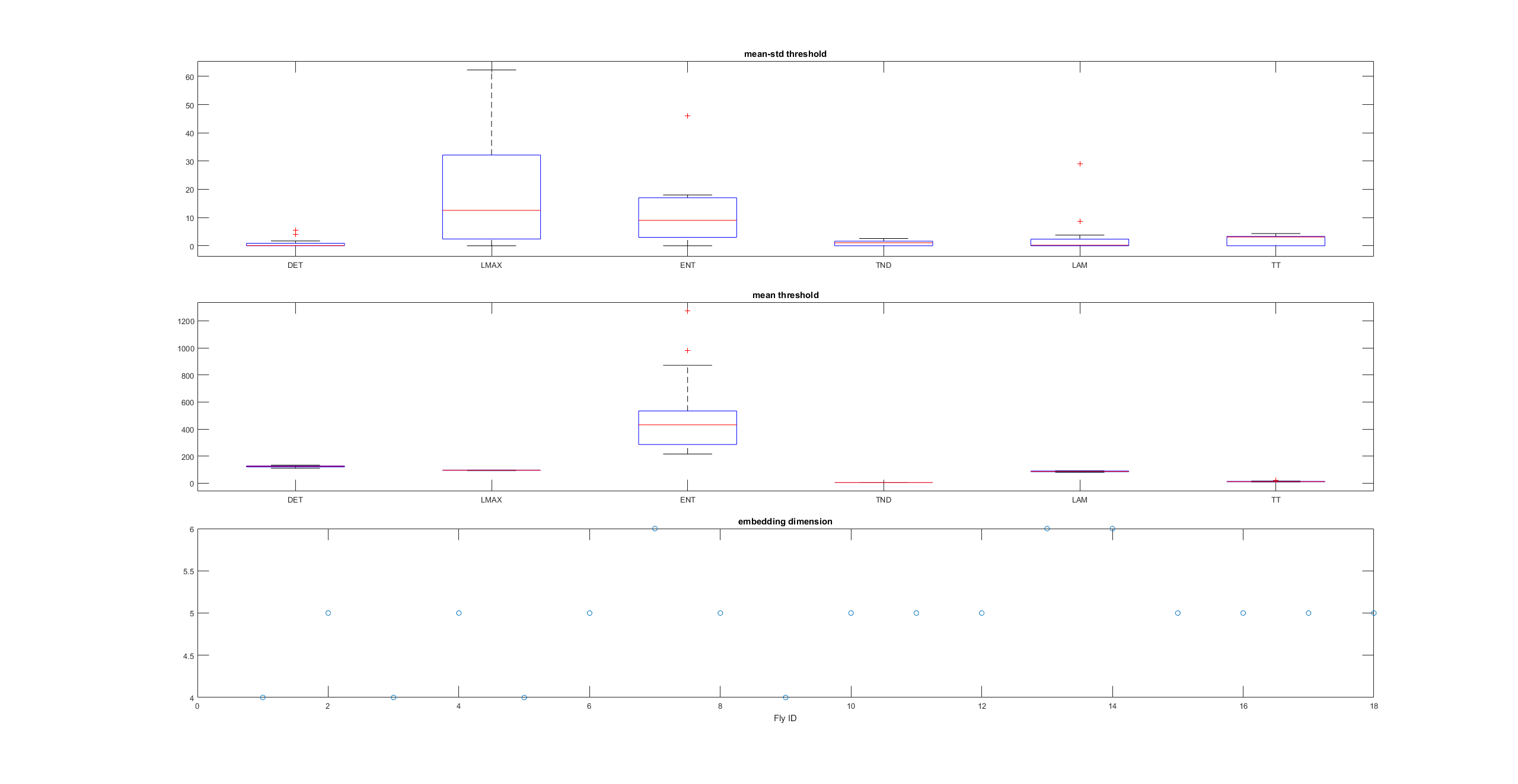
This is an example of a recurrence plot analysis. In the first graph is shown in single point in time in the optimal embedding dimension and the distance to the other points. For the recurrence plot analysis it is needed to put a threshold to make it binary. This is the second graph. From this second graph one can count many parameters like determinism, laminarity and so on. From what I see, the plots from the Strokelitude as well as Bjoern´s flight simulator in Maye et al 2007 show similar pattern (kind of crosses with vertical and horizontal lines).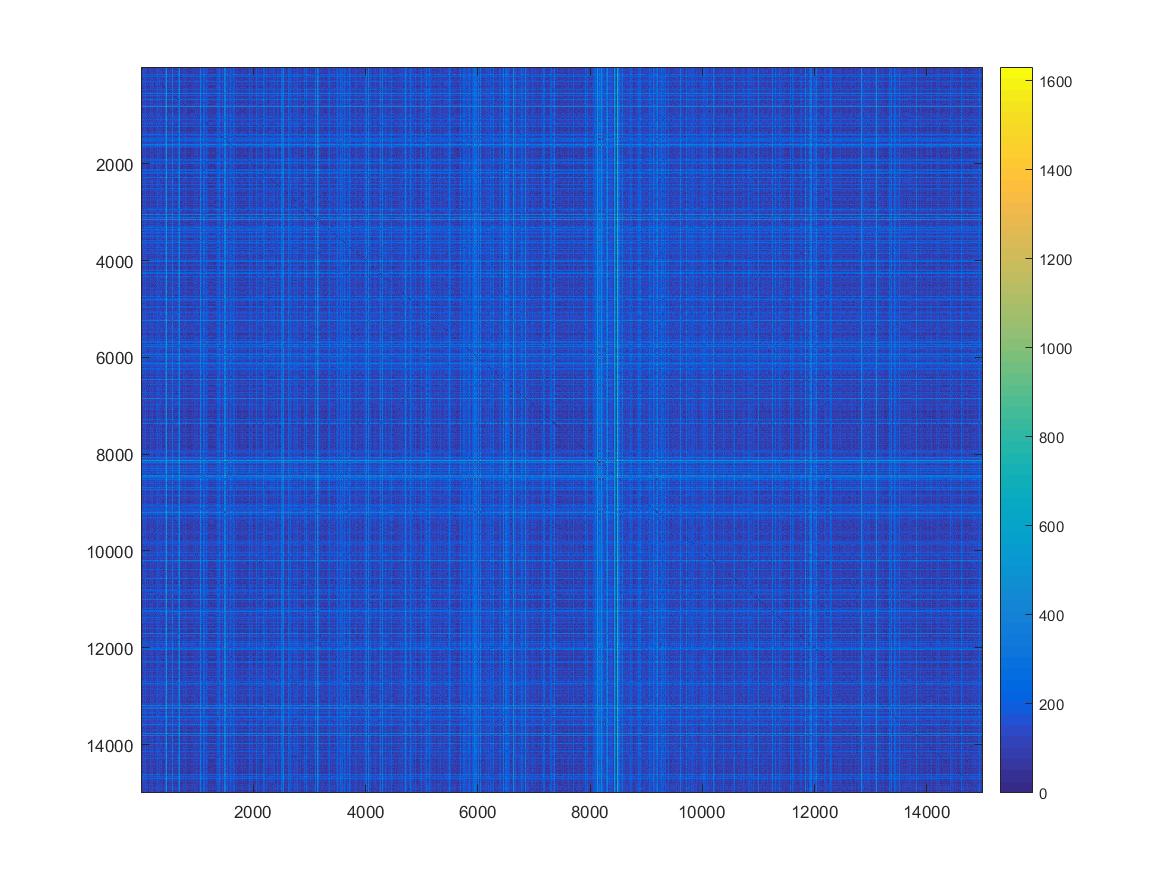
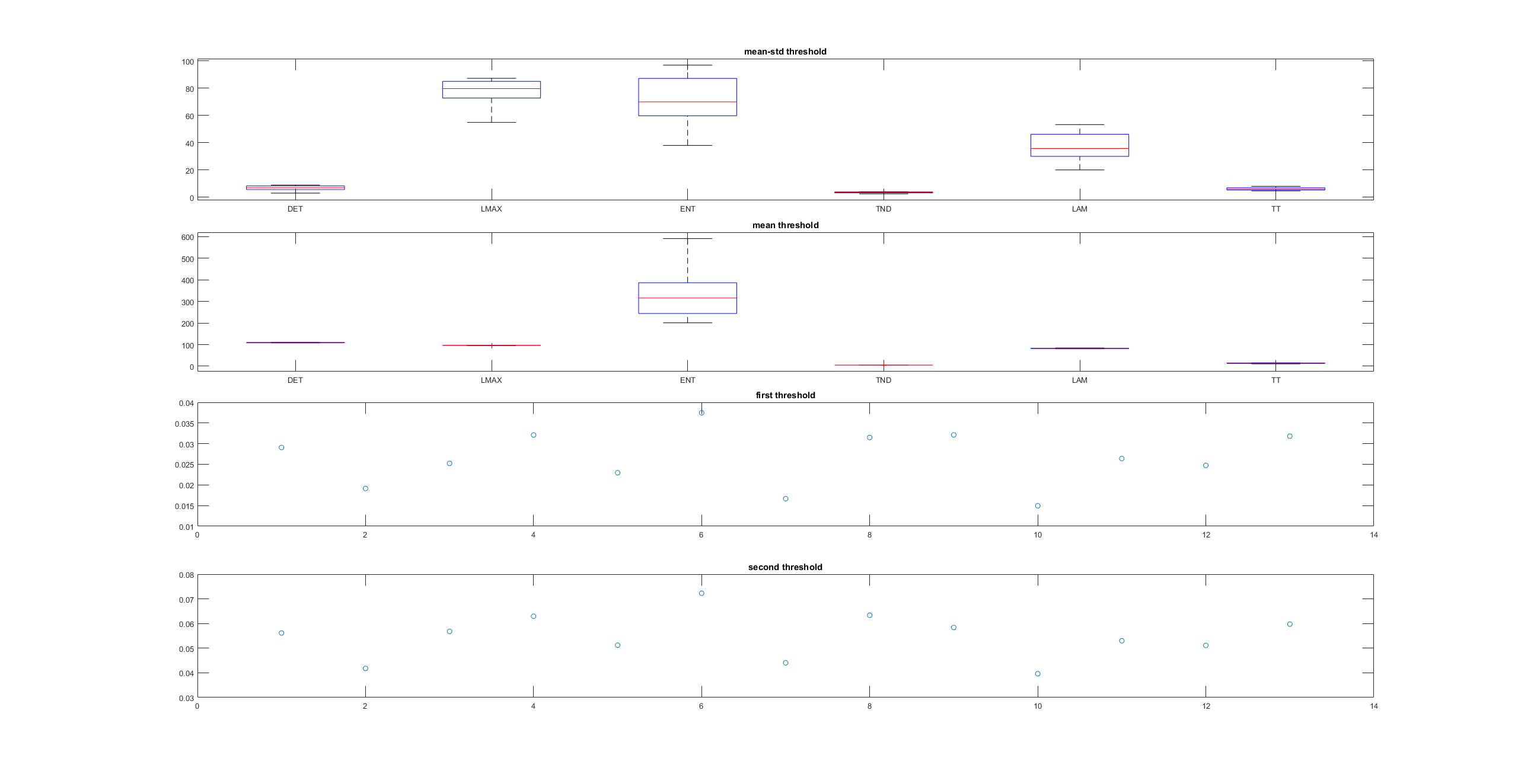
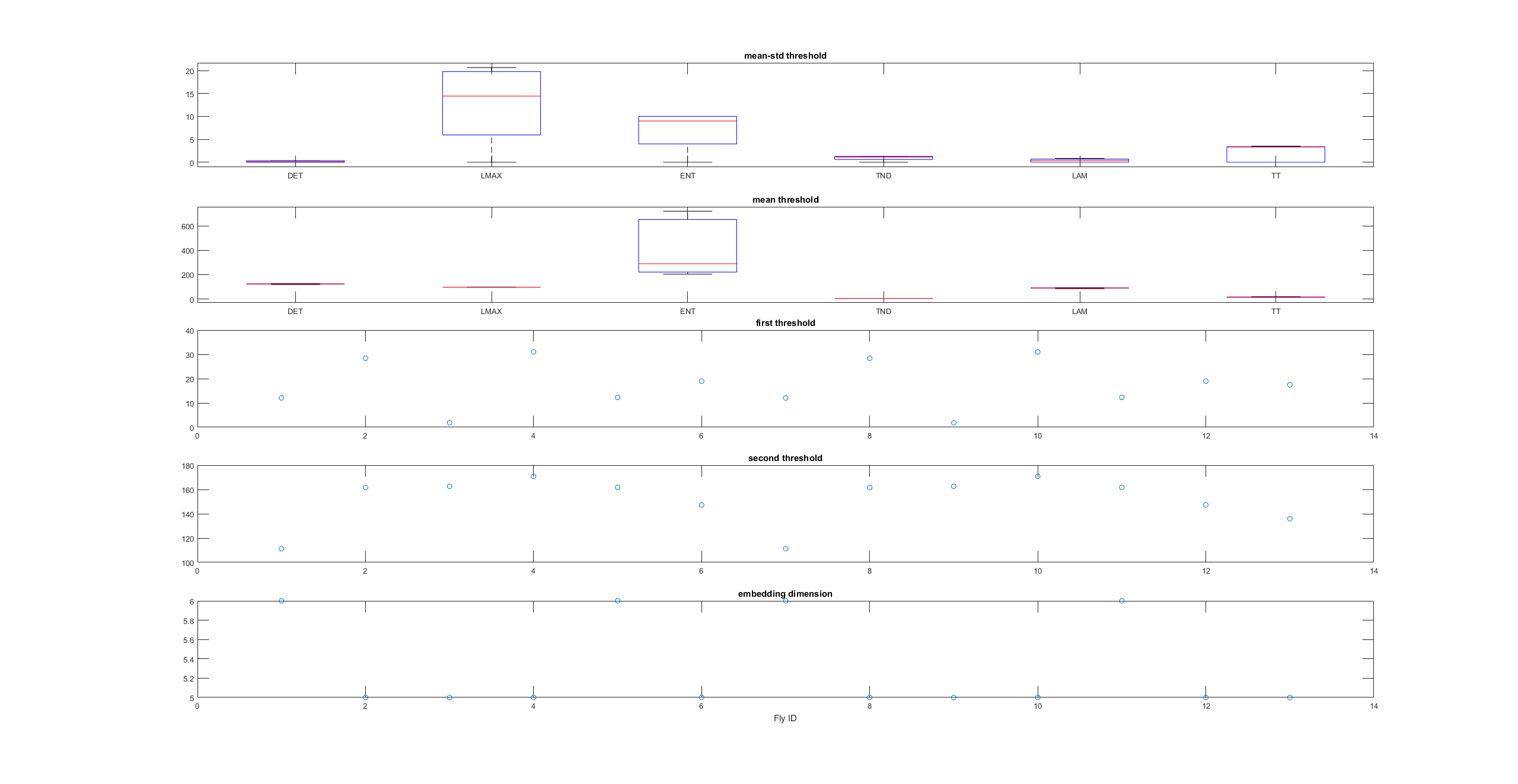
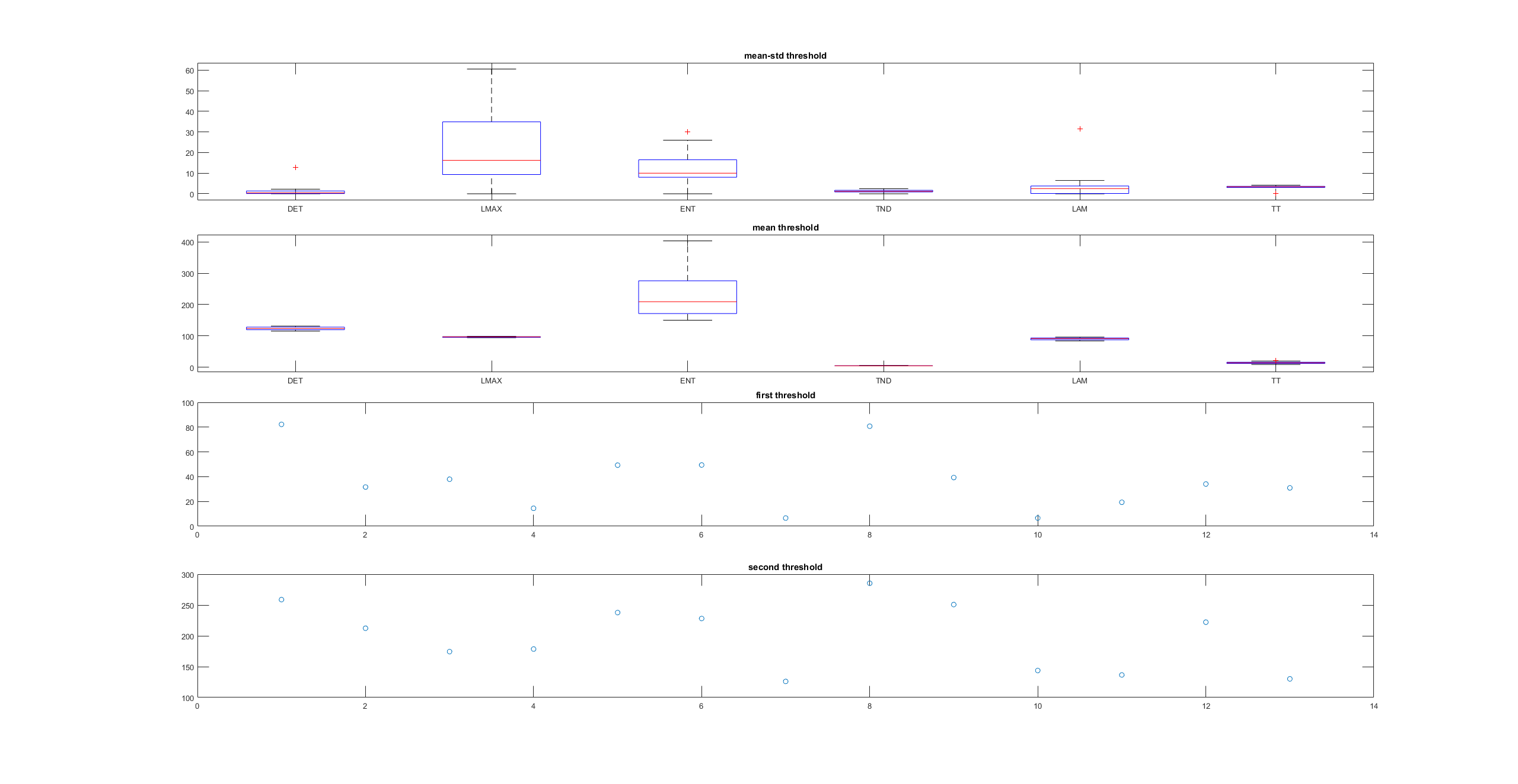
This is a measure of the Recurrence Quantitative Analysis of different groups. Recurrence threshold is a tricky and to some extent subjective measure, so this is why I tried two different ones.
DET: recurrence points that form a diagonal line of minimal length, the more diagonal, the more deterministic.
LMAX: Max diagonal line length or divergence. Sometimes considered as an estimator of max. Lyapunov exponent
ENT: Shannon entropy reflects the complexity of the system
TND: info about stationarity (trend)
LAM: Laminarity is related to laminar phases in the system (intermittency). It is tallied as vertical lines over a threshold.
TT: Trapping time, measuring the average length of vertical lines. Related to laminarity.
Automat
One stripe
Openloop
Uniform
Category: flight, Spontaneous Behavior, strokelitude, Uncategorized, WingStroke | No Comments
DMSO as a solvent
on Friday, July 21st, 2017 11:48 | by Saloni Rose

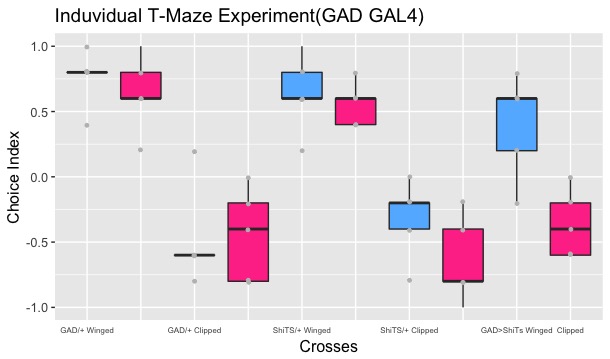
Videos of the GAD>Shi cross vs control
https://drive.google.com/file/d/0By0_Gagq_4TPN3kzMXRrT0VTX2s/view?usp=sharing
https://drive.google.com/file/d/0By0_Gagq_4TPUkRfZkM4amF1aDg/view?usp=sharing
Category: Uncategorized | No Comments
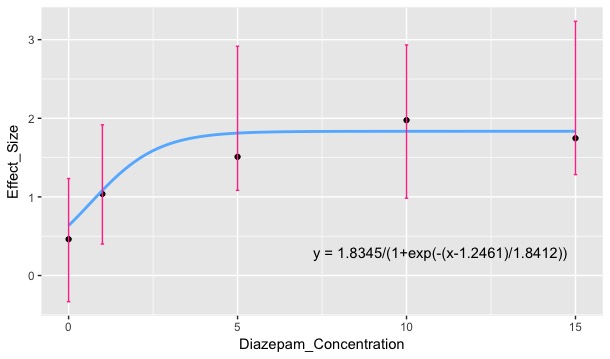
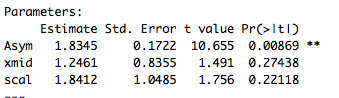
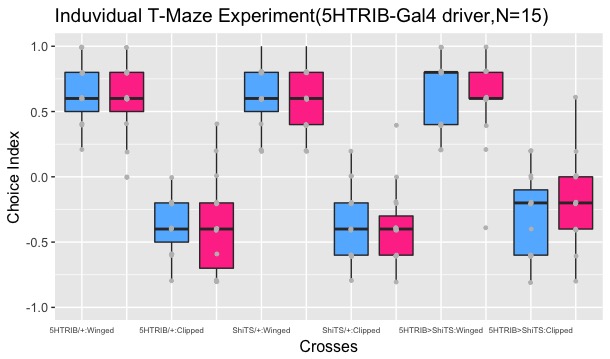
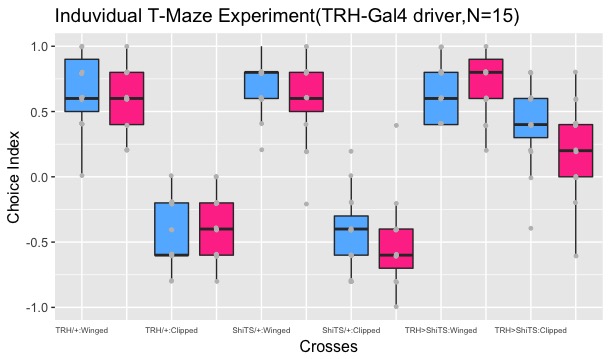
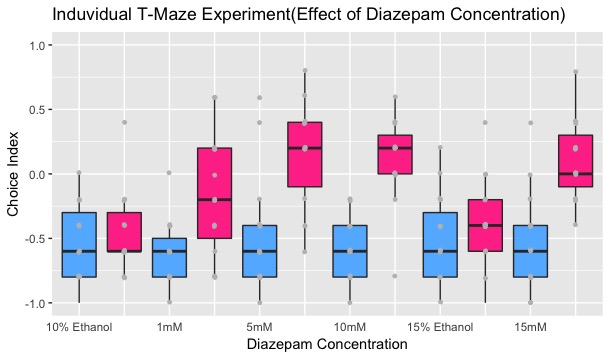
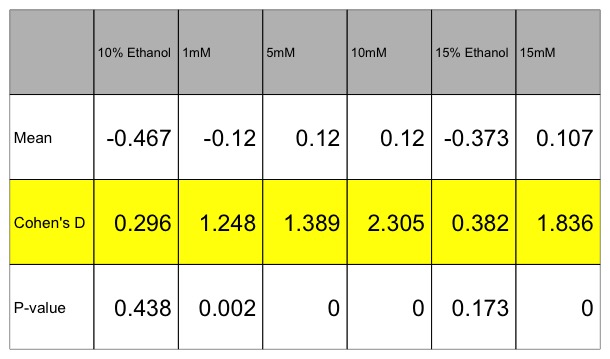
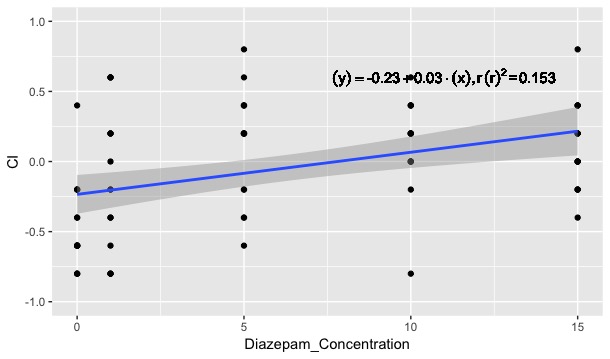
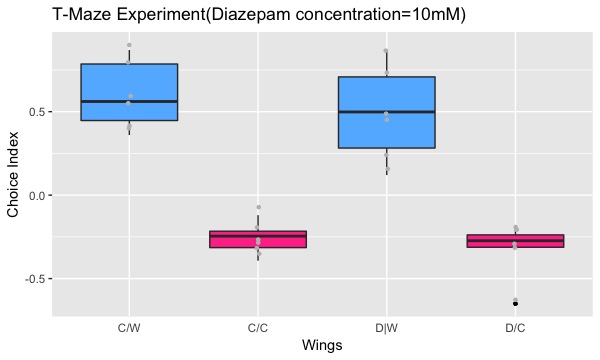
Effect of Diazepam Concentration
on Thursday, June 29th, 2017 12:14 | by Saloni Rose
Category: Uncategorized | No Comments
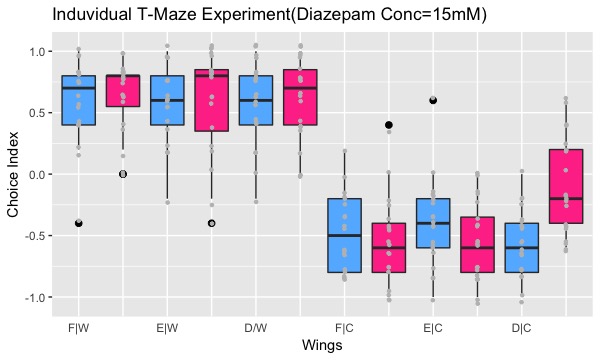
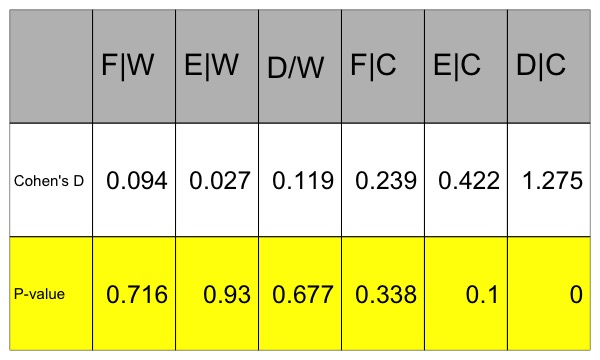
Update on Diazepam Experiement(15mM) and T-Maze Experiment
on Friday, June 16th, 2017 4:35 | by Saloni Rose
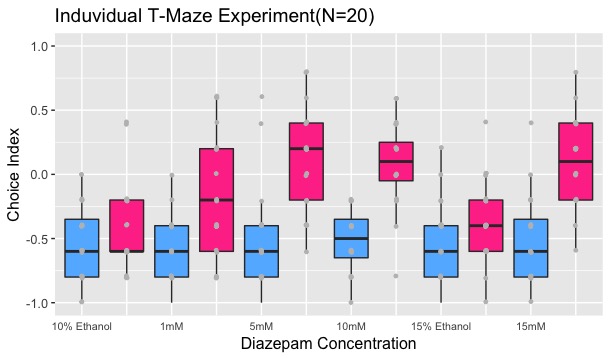
N=20
Category: Uncategorized | No Comments